Wrongful Death | Bakersfield, Kern County
How Hard Is It to Win a Wrongful Death Suit in California?
Every case turns on its own facts. Here is what shapes a wrongful death claim, and how Colvin Accident Lawyers approaches the families we represent in Kern County and nearby communities.
By Donald Norman Colvin · Published October 24, 2026
No lawyer can say in advance how a case will end. How hard it is depends on the facts, so this page explains what drives the difficulty in California.
If you are asking how hard is it to win a wrongful death suit, you are probably dealing with a loss you did not choose. This guide walks through the parts of the claim that matter most. It is written for families in Kern County, Fresno and the surrounding Central Valley and Antelope Valley.
What Winning a Wrongful Death Suit Means
Winning means proving that a wrongful act caused a death and that the family suffered losses the law recognizes. A wrongful death suit is a civil claim, not a criminal case. Under California’s survival statute, a decedent’s personal representative or successor in interest may recover the loss or damage the decedent sustained or incurred before death, including any penalties or punitive or exemplary damages the decedent would have been entitled to recover had the decedent lived (Code Civ. Proc. § 377.34(a)). Those damages do not include pain, suffering, or disfigurement, except as subdivision (b) of that section provides for the limited filing dates it covers.
Surviving family members bring the claim. They ask a court to award money for losses tied to the death. A good result can come through a settlement or a verdict. No lawyer can assure that outcome, because it turns on proof the family may not have yet.
For an overview of the practice area and the incidents it covers, read our wrongful death lawyer page.

Not sure what your next step is?
Talk it through with our team — the first consultation is free, confidential, and carries no obligation.
What a Wrongful Death Claim Must Prove
The person responsible owed a duty of care, broke that duty, and that break caused the death.
In plain terms, everyone must use ordinary care. Under Civil Code § 1714, a person is responsible for injury caused by want of ordinary care in managing their person or property. Cal. Civ. Code § 1714 reads: “(a) Everyone is responsible, not only for the result of his or her willful acts, but also for an injury occasioned to another by his or her want of ordinary care or skill in the management of his or her property or person, except so far as the latter has, willfully or by want of ordinary care, brought the injury upon himself or herself.”
The duties differ, though. A driver must yield to a pedestrian crossing within a marked crosswalk or an unmarked crosswalk at an intersection, though pedestrians must also use due care for their own safety, under Vehicle Code § 21950. A property owner’s duty looks different.
A claim can be challenged at any element, so each one needs its own supporting facts.
Why Proving Fault Is Often the Hardest Part
Proving fault is often the hardest part because the other side may deny responsibility or blame the person who died.
Under Code of Civil Procedure § 377.30, an action may be commenced by the decedent’s personal representative or, if none, by the decedent’s successor in interest.
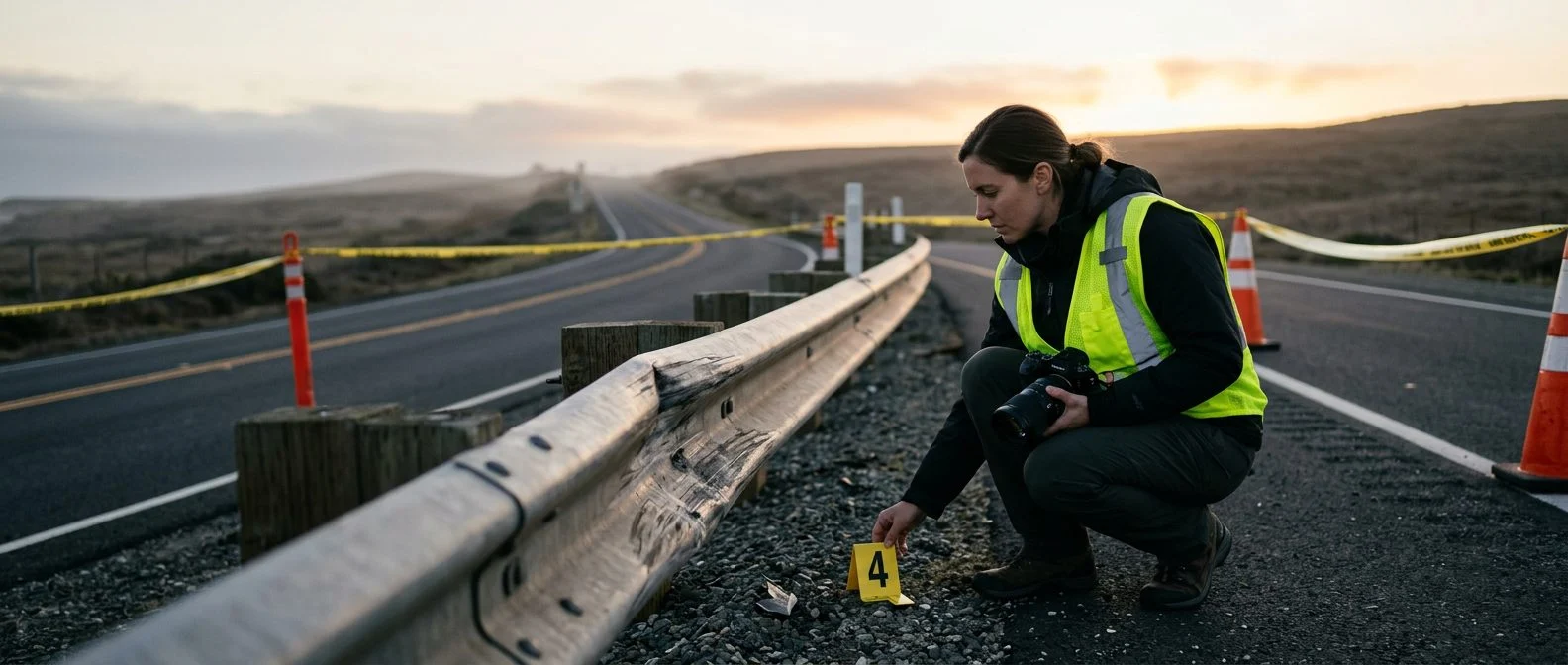
Useful proof often includes police and collision reports, witness statements, photos, video, vehicle or device data, and medical records. The other side can still rebut that presumption.
Some vehicle cases also face limits. Under Vehicle Code § 23152, it is unlawful for a person who is under the influence of any alcoholic beverage to drive a vehicle; Civil Code § 3333.4 separately bars certain non-economic recovery when the injured person was convicted of drunk driving under Vehicle Code § 23152 or 23153, or when the injured person was an uninsured vehicle owner or an operator who cannot establish financial responsibility. Under Vehicle Code § 23152, it is unlawful for a person who is under the influence of any alcoholic beverage to drive a vehicle. The exception for injured uninsured-owner claimants is in Civil Code § 3333.4: the bar does not apply when a drunk driver who was convicted of that offense injured a person described in the uninsured-owner category.
For a local example of how these facts change by incident type, see our Bakersfield pedestrian case page.
Damages in a Wrongful Death Case
Damages in a wrongful death case cover economic losses, such as medical and burial costs. They also cover non-economic losses, such as lost companionship.
Under Civil Code § 1431.2, economic losses include medical expenses, loss of earnings and burial costs. Non-economic losses include loss of society and companionship and loss of consortium. Non-economic damages are split among defendants by each one’s percentage of fault.
Two claims can apply. A wrongful death claim under Code of Civil Procedure § 377.60 belongs to the survivors for their own losses. A survival action under Code of Civil Procedure § 377.34 covers losses the decedent suffered before death. That survival claim generally does not include pain, suffering or disfigurement, though the statute has limited exceptions.
Have questions about what happened?
Ask our team directly. The first conversation is free, confidential, and there is no obligation to continue.
Who Can File and the Deadline to File
The general deadline is two years for an action for the death of an individual caused by the wrongful act or neglect of another (Code Civ. Proc. § 335.1).
Under Code of Civil Procedure § 377.60, a surviving spouse, domestic partner (someone who was in a registered domestic partnership with the decedent at the time of death), children and issue of deceased children may bring the claim, or, if there is no surviving issue, the people who would inherit the decedent’s property by intestate succession. Certain dependent relatives can too, including parents. The decedent’s personal representative may also file on their behalf.
The general deadline comes from Code of Civil Procedure § 335.1. It sets a two-year period for actions over a death caused by another’s wrongful act or neglect. Missing that period can bar the claim, so timing should be reviewed early.
Claims against a public entity move faster. Under Government Code § 911.2, a death claim against a public entity must be presented within six months after it accrues. Other exceptions can apply, so don’t assume the general rule fits your family’s facts without a review.
How Long a Wrongful Death Case Can Take
There is no fixed timeline. A case’s length follows its facts and the court’s calendar.
Several factors often extend a case. Fault may be contested. Professional witnesses may need to explain the crash, the medical facts or the cause of death. Insurance and records take time to gather. Multiple defendants mean more parties to bring in, and court schedules add their own delays.
Many cases resolve before trial through negotiation. Others go to a verdict. Both paths take time. Video, vehicle data and witness memories can change quickly, so early steps to preserve evidence matter.
What Happens If a Wrongful Death Suit Is Not Successful
A wrongful death suit can end without any recovery.
Common reasons include failing to prove fault or causation, not having enough evidence, or missing a deadline.
Appeals follow their own rules and deadlines and are not a second trial. Before you sign any agreement, ask for every term in writing, including how case costs are handled if there is no recovery.
Want to know where you stand?
Tell us what happened and our team will walk you through the options available to you, at no cost.
Talking Through Your Family’s Situation After a Fatal Incident
Whether a claim is hard to win depends on your family’s situation. That includes the type of incident, the evidence still available and the deadline that may be running.
You may be reading this while grieving, handling paperwork or making decisions you never wanted to make. Take the time you need. Families in Kern County can start with our Kern County wrongful death page, and families in Fresno can read the Fresno page.
Quick Answers
Who can file a wrongful death suit in California?
Certain close family members can, including a surviving spouse, domestic partner or children, under Code of Civil Procedure § 377.60.
How long do families have to file?
The general deadline is two years under Code of Civil Procedure § 335.1. Claims against a public entity have a six-month first step under Government Code § 911.2.
Does shared fault stop a family from recovering?
Every case turns on its own facts, so the answer depends on the specific circumstances.
If someone you love died in a crash, a fall or a dog attack, you should not have to sort out these questions alone. Your first consultation is free, confidential and comes with no obligation to continue. Contact Colvin Accident Lawyers to talk through your family’s facts.
Colvin Accident Lawyers, Bakersfield, California — responsible for this site. Responsible lawyer: Donald Norman Colvin.
What Shapes a Wrongful Death Claim
Proof of fault
A claim depends on showing how the death happened and who may be legally responsible for it.
Procedural steps
Wrongful death suits follow court and pre-filing requirements that can affect how and when a case moves forward.
Family involvement
Close family members often have an important role in the claim and in decisions made along the way.
Important Note
Results depend on the facts of each case and the law that applies to it, and results will differ when the facts differ. Reading this page does not create an attorney-client relationship.
How We Help Families Get Started
Listen first
We take time to learn how the accident happened and what your family has been going through.
Gather the evidence
Our team works to collect police reports, medical records, photos and witness information, and can coordinate accident reconstruction when needed.
Explain your options
We discuss the legal process, possible timelines and the questions you should ask, in plain language.
Stay in contact
We keep your family informed at each stage and answer questions as they come up.