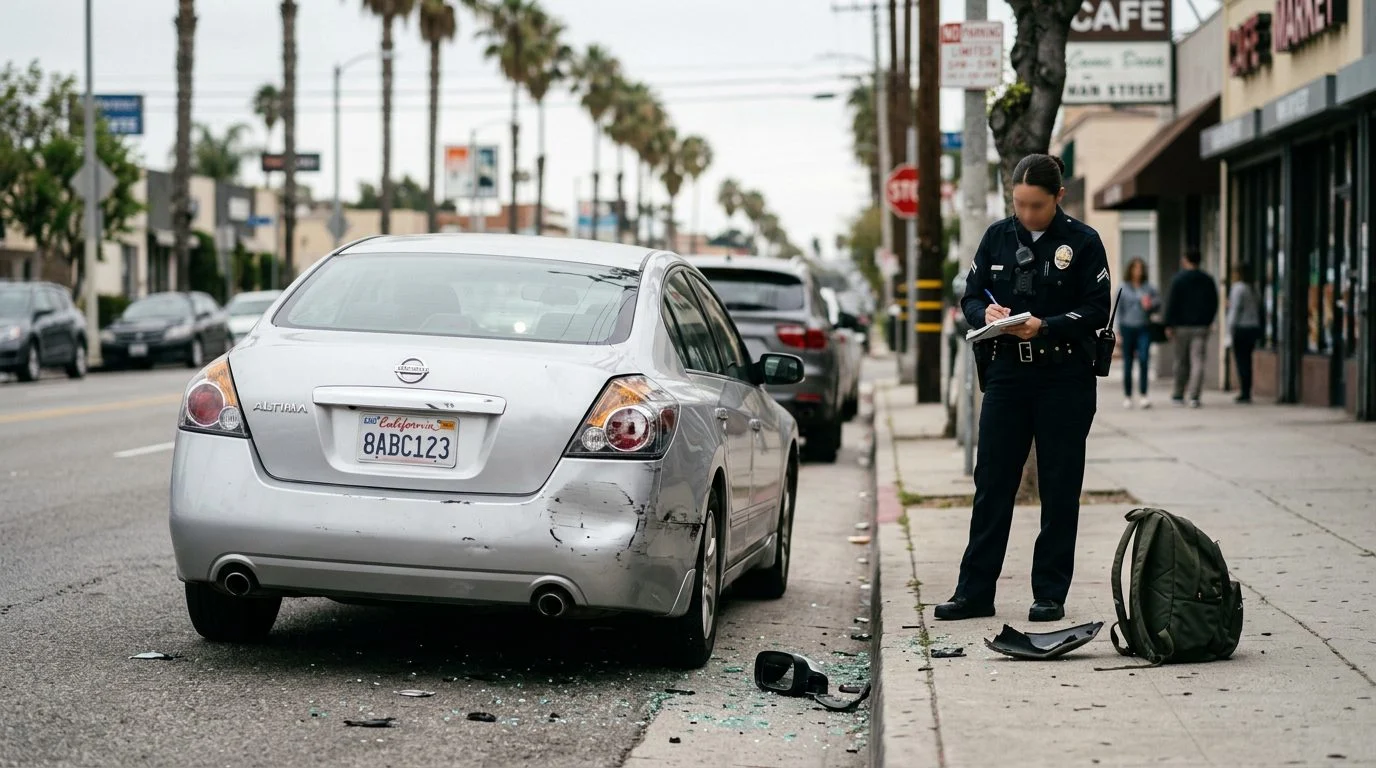
Bakersfield, CA | Hit-and-Run Accidents
Hit by a Driver Who Fled? Talk to Colvin Accident Lawyers
Hit-and-run cases raise hard questions about who was responsible and what your claim may involve. Start with a free, confidential first consultation, with no obligation to continue.
By Donald Norman Colvin · Published November 5, 2026
Short answer: there is no set dollar amount for a hit-and-run claim in California. How much you can sue someone for a hit-and-run turns on your losses, your injuries, and the insurance that applies. The driver’s crime and your civil claim are two separate things. This page explains the civil side in plain terms. You’ll see what damages may be included, how your own coverage can matter when the driver is never found, and which deadlines generally apply. Colvin Accident Lawyers is based in Bakersfield, California.
Can You Be Compensated for a Hit-and-Run in California?
Yes. An injured person can bring a civil claim against a driver who hit them and left, even though leaving the scene is a crime.
California law requires a driver in an injury crash to stop right away. Under Cal. Veh. Code § 20001, a driver who fails to do so can face jail or prison time and fines. Those penalties come from a criminal case brought by the state. That case does not pay you for your injuries or losses.
A civil claim is different. It asks for money to make up for the harm the driver caused you. The outcome of the criminal case does not set the amount of your civil claim. Each claim rests on its own losses, its own evidence, and the insurance that applies.
That is why there is no fixed dollar figure for a hit-and-run. Any value turns on the specific harm and facts in your case. No one can say a number before the evidence is in.
If a driver left you hurt or left your family grieving, you may have a claim, and you don't have to sort it out alone. Reach out for a free, confidential first consultation. Talk it through with our team — the first consultation is free, confidential, and carries no obligation.

What Damages Can a Hit-and-Run Claim Include?
A hit-and-run claim can seek economic losses, property damage, and non-economic losses. Each group covers different harm.
California defines economic damages as objectively verifiable monetary losses. These include medical expenses, loss of earnings, and burial costs, under Cal. Civ. Code § 1431.2. Medical bills, ambulance and medication costs, and wages lost during recovery all fit here. So can lost employment opportunities if injuries keep you from work.
Property damage covers repair or replacement of your vehicle and other property the crash destroyed. Personal items inside the car may count too.
Non-economic damages cover losses that are subjective. The same statute lists pain, suffering, inconvenience, emotional distress, and loss of society and companionship. Doctors’ notes and people who know you well help show what changed.
When a crash kills someone, the claim becomes a wrongful death case. Certain family members may bring it under Cal. Code Civ. Proc. § 377.60, including a surviving spouse, children, and certain dependent relatives. You can read more on our wrongful death lawyer page.
How Uninsured Motorist Coverage Can Apply When the Driver Is Never Found
If the driver is never found, your own uninsured motorist coverage may be a key source of payment. Whether it pays in your case turns on your policy’s written terms.
California requires bodily injury liability policies to include uninsured motorist coverage, unless the insurer and the applicant agree to delete the coverage completely or to delete it when a motor vehicle is operated by a natural person or persons designated by name. Under Cal. Ins. Code § 11580.2, that coverage protects you for sums you are legally entitled to recover from the owner or operator of an uninsured motor vehicle not owned or operated by you or a resident of your household, within the limits established by law. The statute also lets the insurer and the policyholder agree in writing to a lower amount. That amount can’t fall below the state’s financial responsibility requirements.
That is why the written limits matter. Your policy sets the ceiling for this coverage, so read the declarations page and any endorsements.
Liability coverage works differently for your own injuries. The California Department of Insurance auto guide explains that liability coverage does not cover injuries to the insured or household members. Medical payments coverage can be bought for them. Check whether your policy includes it.
Keep the police report number and the date you filed the report. Send notice to your insurer promptly, and keep a copy of everything you send and receive.
When the At-Fault Driver Is Identified
If the at-fault driver is identified, you may pursue a claim against that driver and the driver’s liability insurer. The driver’s insurance limits often set the practical ceiling.
California sets minimum liability limits. For policies issued or renewed on or after January 1, 2025, the minimums are $30,000 for one person’s bodily injury or death, and $60,000 for two or more people in one accident. See Cal. Veh. Code § 16056.
These are minimums. When injuries are serious, a driver’s policy may not cover all of the harm. A judgment above available insurance can be hard to collect. That is one reason your claim is weighed against the at-fault party’s coverage.
When more than one party shares fault, each defendant is liable for non-economic damages only in its own share, under Cal. Civ. Code § 1431.2.
Timing matters too. Our page on how long these cases can take gives a general view.
Factors That Shape the Value of a Hit-and-Run Claim
The main factors are how serious and lasting the injuries are, how strong the evidence is, and each person’s share of fault. Each of these shapes how much you can sue someone for a hit-and-run.
Medical records show how serious and lasting the injuries are. Doctors’ notes that tie each problem to the crash carry weight. Ongoing care needs can matter as much as the first emergency visit.
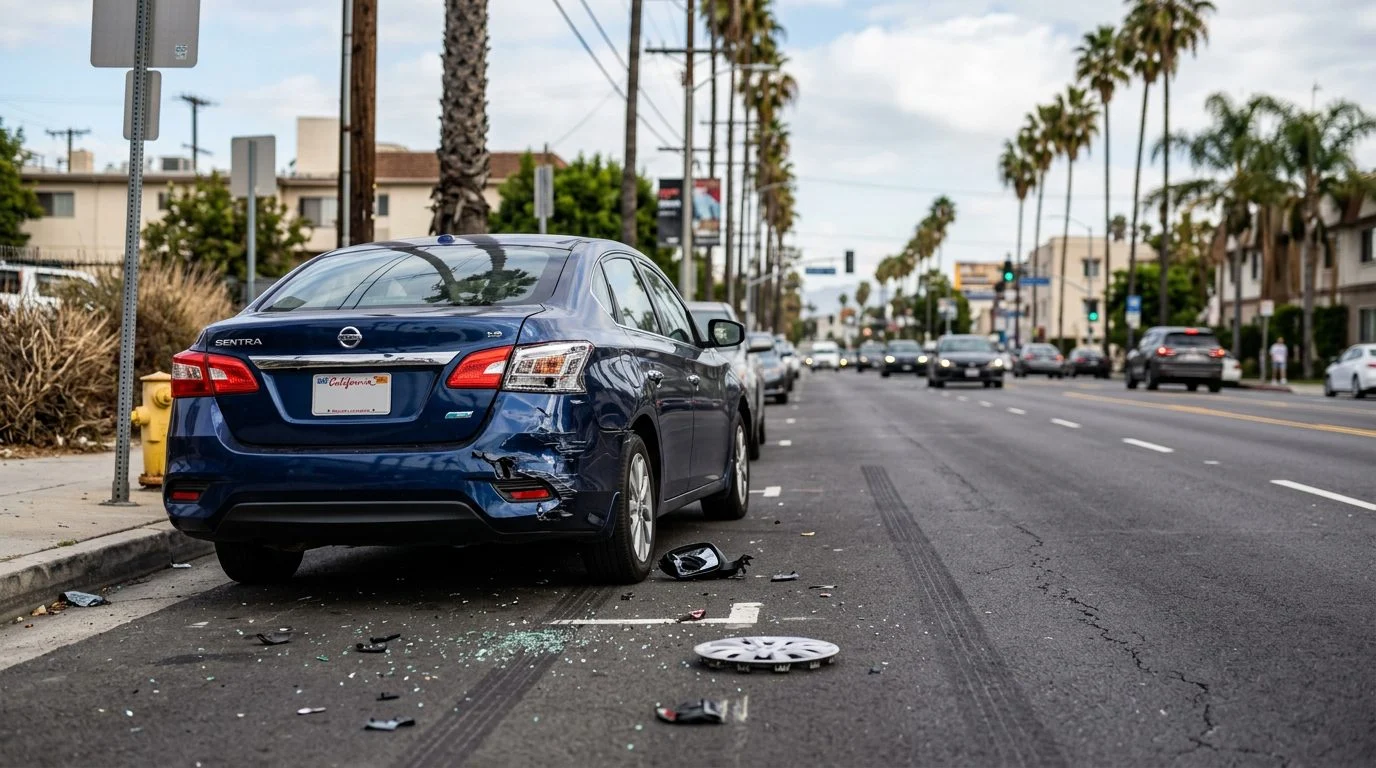
Evidence about how the crash happened matters too. Witness statements, nearby security video, damage patterns on the vehicle, and debris left at the scene can help.
Income records matter as well. Pay stubs, employer letters, and notes about missed shifts show how the injuries affect daily life.
Every case carries risks. Our pages on what happens if you lose a wrongful death lawsuit and common reasons a judge might dismiss a wrongful death claim explain some of them.
Filing Deadlines for Hit-and-Run Claims in California
For injury and wrongful death, California generally allows two years to file (Code Civ. Proc. § 335.1).
Cal. Code Civ. Proc. § 335.1 sets a two-year limit for an action for injury to, or death of, an individual caused by another’s wrongful act or neglect.
The California Courts Self Help Guide notes that personal injury suits generally must be filed within two years. Exceptions and tolling rules can change that date.
Review the dates early. A late filing can end a claim that would otherwise have been valid.
Not sure what your next step is?
Talk it through with our team — the first consultation is free, confidential, and carries no obligation.
Evidence to Preserve After a Hit-and-Run Crash
Photos, witness details, police records, and medical and income records are the core items to keep. Start collecting them as soon as you can.
Take photos of the scene, your injuries, and your vehicle as soon as it’s safe. Note the road, the lighting, and the direction you were traveling. Write down what you remember about the other vehicle, such as color, make, partial plate, or how it moved.
Collect names and phone numbers of witnesses. Record the police report number and the investigating agency’s name.
Save all medical records, bills, and provider notes. Ask providers to describe how the crash caused each injury. Keep records of missed work, lost pay, and out-of-pocket costs like rides and prescriptions.
Security video can be the most helpful and the most fragile evidence. Cameras at nearby businesses may record over old footage quickly. Note where cameras were located, and ask about footage right away.
Talk With Colvin Accident Lawyers About Your Situation
A hit-and-run can leave you with a crash, medical bills, and a driver who got away. That is a lot to carry, especially if you’re hurt or caring for someone who is. You don’t have to work out the claim alone.
Colvin Accident Lawyers is based in Bakersfield, California. The firm represents accident victims and families in car, pedestrian, bicycle, motorcycle, and wrongful death cases. If you want to talk through what happened, contact Colvin Accident Lawyers. The first consultation is free, confidential, and carries no obligation to continue.
Frequently asked questions
Can you sue a hit-and-run driver in California?
Yes. An injured person can bring a civil claim against the driver, separate from any criminal case.
How long do you have to sue after a hit-and-run?
For injury and wrongful death, California generally allows two years.
Does uninsured motorist coverage pay for a hit-and-run?
It may. That turns on your policy’s written terms and the facts of the crash.
Donald Norman Colvin is the responsible lawyer for this site.
Colvin Accident Lawyers, Bakersfield, California — responsible for this site.
What Makes a Hit-and-Run Claim Different
Identifying the driver
When the at-fault driver leaves the scene, locating that driver can be a central part of the case.
Insurance questions
Your own auto policy, including any uninsured motorist coverage, may affect how an injury claim is handled.
Evidence and records
Police reports, medical records, photos, and witness accounts help show how the collision happened.
Families in wrongful death cases
When a hit-and-run causes a death, surviving family members may have questions about the claim and the process.
Don't Wait to Ask Questions
Video footage, witness contact information, and details about the vehicle can be harder to obtain as time passes. Contact us early so we can talk through your situation.
How Our Team Can Help
Free first consultation
Speak with our team confidentially about your accident. The first consultation is free, and there is no obligation to continue.
Reviewing the collision
We look at the police report, the scene, and the available evidence to understand how the crash happened.
Handling insurance issues
We help you understand the coverage that may apply, including your own policy, and how insurers may respond.
Pursuing a civil claim
We explain the options available for your injury or loss.