Wrongful Death | Bakersfield, California
Received an Insurance Offer After a Family Member's Death?
Adjusters often reach out soon after a loss. Here is how to slow down, protect your family, and decide your next step with clear information.
By Donald Norman Colvin · Published November 13, 2026
A letter from an insurance company can arrive while your family is still planning a funeral. Should you accept an insurance offer after a fatal accident in California? Usually, not right away. Early offers often come before the full losses and the cause of death are known.
Short Answer: Slow Down Before You Sign Anything
Take time to understand an offer before you respond. An early offer is the insurer’s opening position, not a final review of your family’s claim. It may be made before the losses are documented and before the crash investigation is finished.
Signing a release is hard to undo, so that decision deserves a careful look. Taking a few days to read the paperwork and write down your questions is a reasonable step. Waiting does not mean you are refusing to deal with the insurer. It means you are deciding with the facts in front of you.
Three separate decisions often get mixed together. You may be asked to give a recorded statement, to sign a release, and to accept an amount. Each one can be made on its own timeline. Keep copies of everything the insurer sends you.
If an insurer's letter and release form arrived while your family is still planning a funeral, you don't have to sort out the next step alone. We can help you review them. Talk it through with our team — the first consultation is free, confidential, and carries no obligation.

What a Signed Release Does
Settlement papers sent after a crash deserve careful review before anyone signs them. Read it before you sign anything.
A release may use broad language. Look for wording about future medical bills, funeral and burial costs, and claims by other relatives. Don’t assume the release covers only what the letter describes.
Some offers arrive as a check. Ask whether a release is attached to the check, and read any terms before you cash or deposit it. Ask the insurer to explain in writing what the payment is for. If a term is unclear, write the question down and bring it to a consultation before you sign.
Why Early Offers Often Come Before the Losses Are Known
Early offers usually come before a family knows its full losses. Some costs show up quickly, like funeral and burial expenses. Other losses take weeks or months to become clear.
Lost income is one example. So is the household support the person provided, and the loss of companionship and guidance. The person’s role in the family is part of the picture too. Bills, pay records, and tax filings often show losses later.
An insurer’s first number may reflect only the information it had at that time. Under California law, a wrongful death award may be what the court finds just under all the circumstances. The court also decides how the award is shared among the people entitled to bring the claim (Code Civ. Proc. § 377.61). Whether any offer is fair depends on the facts of the case. A single number cannot answer that question alone.
The Cause of Death May Not Be Known Yet
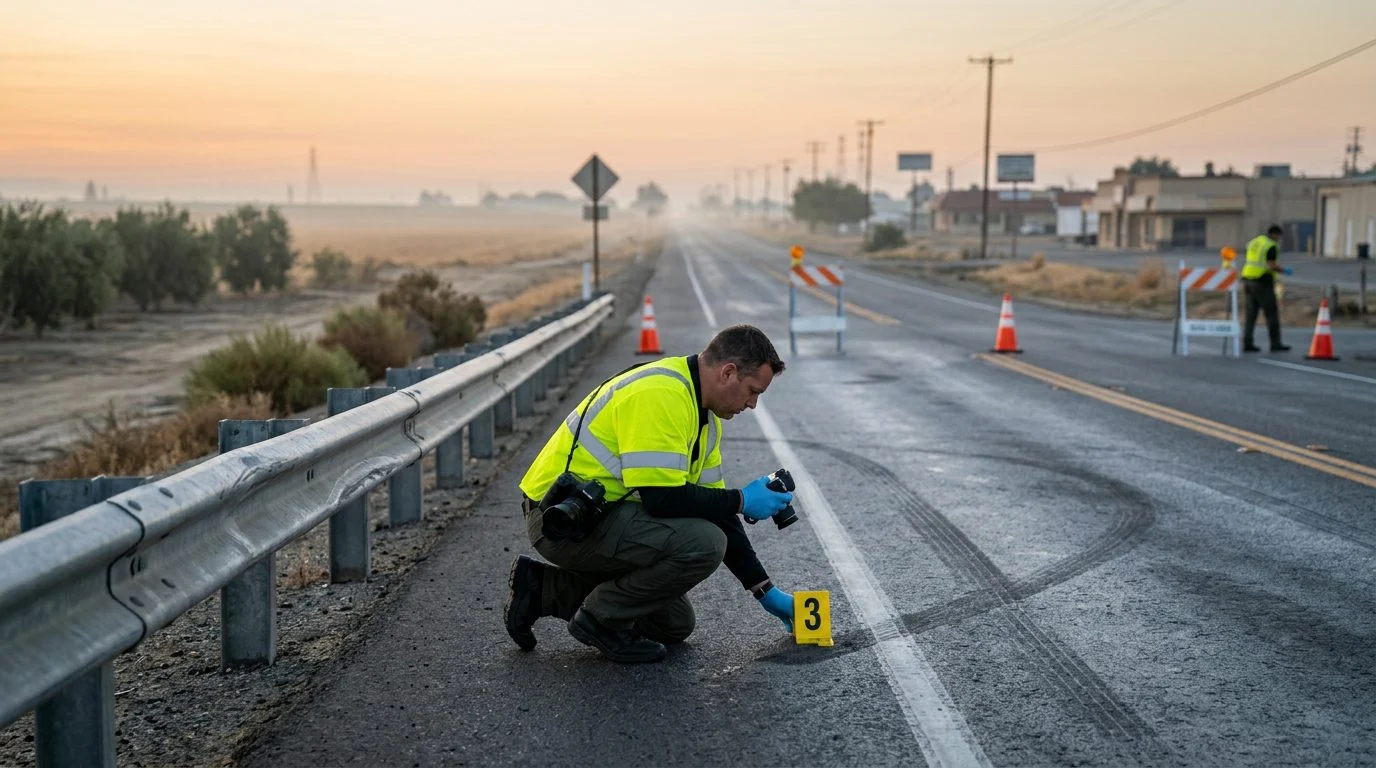
The cause and circumstances of a fatal crash may still be under investigation when an offer arrives. Early versions of events can change as the facts come in. Ask for the police report number early, because the report can record the parties, the collision details, and the officer’s findings.
Under California law, a driver in a crash that causes more than $1,000 in property damage to any one person, or injury or death, generally must report it to the DMV within 10 days, on a form the DMV approves; a report is not required if the vehicle was owned or leased by, or under the direction of, the United States, this state, another state, or a local agency (Veh. Code § 16000).
An insurer may argue the person who died was partly at fault.
Alcohol and commercial vehicles can change the picture. It is unlawful to drive with 0.08 percent or more, by weight, of alcohol in the blood (Veh. Code § 23152). The limit for a commercial motor vehicle is 0.04 percent. When impairment or a commercial vehicle may be involved, the record and the liability questions can shift.
Recorded Statement Versus Accepting a Claim
A recorded statement is an interview an adjuster asks you to give. Giving one is not the same as accepting an offer. The adjuster may ask how the crash happened, how fast the vehicles were moving, and whether anyone was using a phone.
The adjuster may also ask about the person’s health and activities before the crash. Answers become part of the insurer’s file and can be used to evaluate the claim. Before you agree, ask what the statement is for. Ask whether an attorney should review the request first.
Answer only what you know firsthand. Say “I don’t know” instead of guessing about times, speeds, or medical history. Ask for written confirmation of any deadline the adjuster mentions. Cal. Ins. Code § 790.03(h)(15) lists “Misleading a claimant as to the applicable statute of limitations” among unfair claims settlement practices, when committed knowingly and with such frequency as to indicate a general business practice (Ins. Code § 790.03). Written dates protect you if a question comes up later.
Who Can Bring a Wrongful Death Claim in California
Under California law, specific family members may bring a wrongful death claim. The person who receives the insurer’s call may not be one of them.
Under Cal. Code Civ. Proc. § 377.60(a), a wrongful death claim may be brought by the decedent’s surviving spouse, domestic partner, children, and issue of deceased children, or, if there is no surviving issue of the decedent, by the persons, including the surviving spouse or domestic partner, who would be entitled to the decedent’s property by intestate succession. Some dependent family members may also bring it. These include stepchildren and parents, if they depended on the decedent, and, if the parents would have been entitled to bring the claim but have died, the decedent’s legal guardians, who may bring it as if they were the parents. A minor may bring it if the minor lived in the decedent’s household for the previous 180 days and relied on the decedent for half or more of support.
Because more than one person may have an interest, an offer sent to one relative can affect the others. A personal representative may commence the action for the estate, or, if there is none, the decedent’s successor in interest may do so (Code Civ. Proc. § 377.30). A successor must file a sworn affidavit and attach a certified death certificate (Code Civ. Proc. § 377.32). Damages for pain and suffering are generally not recoverable in the estate’s survival action, but they may be recoverable if the action was granted a preference under Code Civ. Proc. § 36 before January 1, 2022, or was filed on or after January 1, 2022, and before January 1, 2026 (Code Civ. Proc. § 377.34). Deadlines also apply. A personal injury or wrongful death action generally must be brought within two years (Code Civ. Proc. § 335.1).
Not sure what your next step is?
Talk it through with our team — the first consultation is free, confidential, and carries no obligation.
Questions to Bring to a Consultation
Bring the offer, the release, and any check to your first conversation. Add the police report number, the death certificate, funeral receipts, and records of the person’s income and household role. Write down what you don’t understand.
Ask what the release covers. Ask whether other insurance may apply. Ask whether the offer accounts for losses that aren’t known yet.
Uninsured motorist coverage can matter when the at-fault driver has no insurance. Under California law, this coverage covers sums, within its limits, that an insured can legally recover for bodily injury, including death, from the owner or operator of an uninsured motor vehicle not owned or operated by the insured or a resident of the same household, and an uninsured motor vehicle includes an underinsured motor vehicle (Ins. Code § 11580.2). Under Ins. Code § 11580.2(h), an insured entitled to recovery under the uninsured motorist endorsement or coverage must be reimbursed within the conditions stated in the statute, without being required to sign any release or waiver of rights to which they may be entitled under other applicable insurance coverage. Whether this coverage applies depends on the policy and the facts of the crash.
Frequently Asked Questions
Here are short answers to common questions about an insurance offer after a fatal accident in California.
What should I not tell my insurance company after a family member dies?
Stick to basic facts and avoid guessing about speed, fault, or health. Don’t agree to a recorded statement or sign a release until you understand it.
Can I accept a payment now and still bring a claim later?
Often not. Read any document carefully before you accept a payment, and contact our team for a free, confidential first consultation to review it.
Does an insurer have to offer a fair amount?
An insurer’s offer is its own proposal. Whether it reflects your family’s losses depends on the facts of the case.
Is it worth pursuing uninsured motorist coverage after a fatal crash?
That depends on the policy terms, whether the at-fault driver had insurance, and the facts of the crash. A consultation can review those details.

Talk With Colvin Accident Lawyers Before You Respond
If an insurer’s letter and a release form arrived while your family is still arranging a funeral, you can talk it over before you reply. Colvin Accident Lawyers is based in Bakersfield, California. Donald Norman Colvin is the attorney responsible for this page.
We can review the offer, the release, and the crash facts with you before you respond to the insurer. Our first consultation is free, confidential, and carries no obligation to continue. To reach us, visit the Colvin Accident Lawyers contact page. For background on these claims, see our wrongful death lawyer page.
How to Protect Your Family While You Decide
Pause before you sign
Do not sign a release or any settlement paperwork until you understand exactly what it gives up.
Limit what you say
Stick to basic facts. Avoid guessing about speed, fault, or health, and think carefully before giving a recorded statement.
Keep every record
Save letters, emails, voicemails, and offer forms in one place so you can review the full history of the claim.
Involve your family
Decisions about a wrongful death claim affect everyone who depends on the person who died. Review the offer together.
Warning: Read Before You Accept Any Payment
An early offer may not reflect the full impact of your family's loss, and accepting a payment can affect what you are able to pursue later. Speak with a lawyer before you accept money or sign any document.
Questions to Ask Before You Respond
Who is the offer for?
Confirm which family members or estate representatives the offer is meant to cover, and who would sign for them.
What are you giving up?
Ask whether signing ends all future claims, and whether any other people could later bring a claim of their own.
Are there other costs?
Look for medical bills, funeral expenses, or other amounts that may need to be addressed before any payment is made.
Is the offer final?
Ask in writing whether the amount can change as more information about the loss comes to light, and get the answer on paper.