Wrongful Death | Bakersfield, California
Is Wrongful Death a Civil Matter? California Law Explained
Losing someone in an accident caused by another person raises hard questions about what comes next. Here is how California's civil courts approach these cases.
By Donald Norman Colvin · Published November 17, 2026
Losing someone to a crash, a fall, or a dog attack leaves most families with more questions than answers. Is wrongful death a civil matter? In California, yes. It is a civil claim for money damages, not a criminal case.
Short Answer: Yes, Wrongful Death Is a Civil Matter
A wrongful death claim in California is a civil lawsuit. The decedent’s surviving spouse, domestic partner, children, or other persons listed in the statute, or the decedent’s personal representative on their behalf, may bring the civil wrongful death suit against the person or party they say caused the death. The lawsuit asks who should pay for the loss. Penalties and punitive or exemplary damages that the decedent would have been entitled to recover had the decedent lived are recoverable only in an action by the decedent’s personal representative or successor in interest on the decedent’s own cause of action under Cal. Code Civ. Proc. § 377.34(a), not in the survivors’ wrongful death suit.
California law allows the claim when a death is caused by “the wrongful act or neglect of another,” under Cal. Code Civ. Proc. § 377.60. Our wrongful death guide for families covers the broader picture.
If you're trying to understand what a loss in your family means legally, you don't have to sort it out alone; talk with our team about the facts of your situation. Talk it through with our team — the first consultation is free, confidential, and carries no obligation.
How a Civil Wrongful Death Case Differs From a Criminal Case
The state brings criminal charges. The family or estate brings the civil wrongful death suit only if it is one of the persons the statute lists, or the decedent’s personal representative on their behalf. That split is the first difference most families notice.
- Who brings it. A prosecutor files criminal charges for the state. Survivors or the estate file the civil claim only if they are among the persons the statute lists, or the decedent’s personal representative files it on their behalf.
- Possible outcomes. A criminal case can lead to jail, prison, or fines. A civil case seeks money damages for the people entitled to bring it.
- Two separate tracks. One death can lead to a criminal investigation and a civil claim at the same time. The two move on different schedules.
Families often wait for a police report or a criminal decision before asking about the civil side. The civil claim runs on its own timeline, so questions are worth asking early.
Who Can File a Wrongful Death Claim in California
Under Cal. Code Civ. Proc. § 377.60, the decedent’s surviving spouse or registered domestic partner, children, and issue of deceased children may bring the claim. So may the putative spouse, children of the putative spouse, stepchildren, parents, or legal guardians (if the parents are deceased) if they were dependent on the decedent. A minor may also bring the claim if, at the time of death, the minor had lived in the decedent’s household for the previous 180 days and depended on the decedent for half or more of the minor’s support. If there is no surviving issue, the heirs who would inherit under intestate succession (inheritance without a will) may bring it.
Dependents can also bring the claim if they were dependent on the decedent and are the putative spouse, children of the putative spouse, stepchildren, parents, or the legal guardians of the decedent if the parents are deceased. The law includes stepchildren, parents, and a putative spouse, meaning the surviving spouse of a void or voidable marriage whom the court finds to have believed in good faith that the marriage was valid. A minor can bring it too, if the minor lived in the decedent’s household for the previous 180 days and depended on the decedent for one-half or more of their support.
Eligibility turns on family ties and financial dependence, so each family’s facts matter.
Under Cal. Code Civ. Proc. § 335.1, an action for a death caused by another’s wrongful act or neglect must be brought within two years. The California courts deadline guide states that an action for assault, battery, or injury to, or for the death of, an individual caused by the wrongful act or neglect of another must be brought within two years (Cal. Code Civ. Proc. § 335.1). Don’t wait to learn your deadline.
What a Wrongful Death Lawsuit Must Show
A wrongful death plaintiff must show the defendant owed a duty, broke that duty, and caused the death. Under Cal. Civ. Code § 1714, everyone is responsible for an injury caused by “want of ordinary care or skill.” That is the core rule. Cal. Civ. Code § 1714 reads: “(a) Everyone is responsible, not only for the result of his or her willful acts, but also for an injury occasioned to another by his or her want of ordinary care or skill in the management of his or her property or person, except so far as the latter has, willfully or by want of ordinary care, brought the injury upon himself or herself.”
Take a fatal crosswalk crash. Under Cal. Veh. Code § 21950, a driver must yield the right-of-way to a pedestrian crossing within any marked crosswalk or any unmarked crosswalk at an intersection, except as otherwise provided in that chapter. Under Cal. Veh. Code § 22350, a driver may not go faster than is reasonable or prudent for the conditions. Either failure can be the breach at issue.
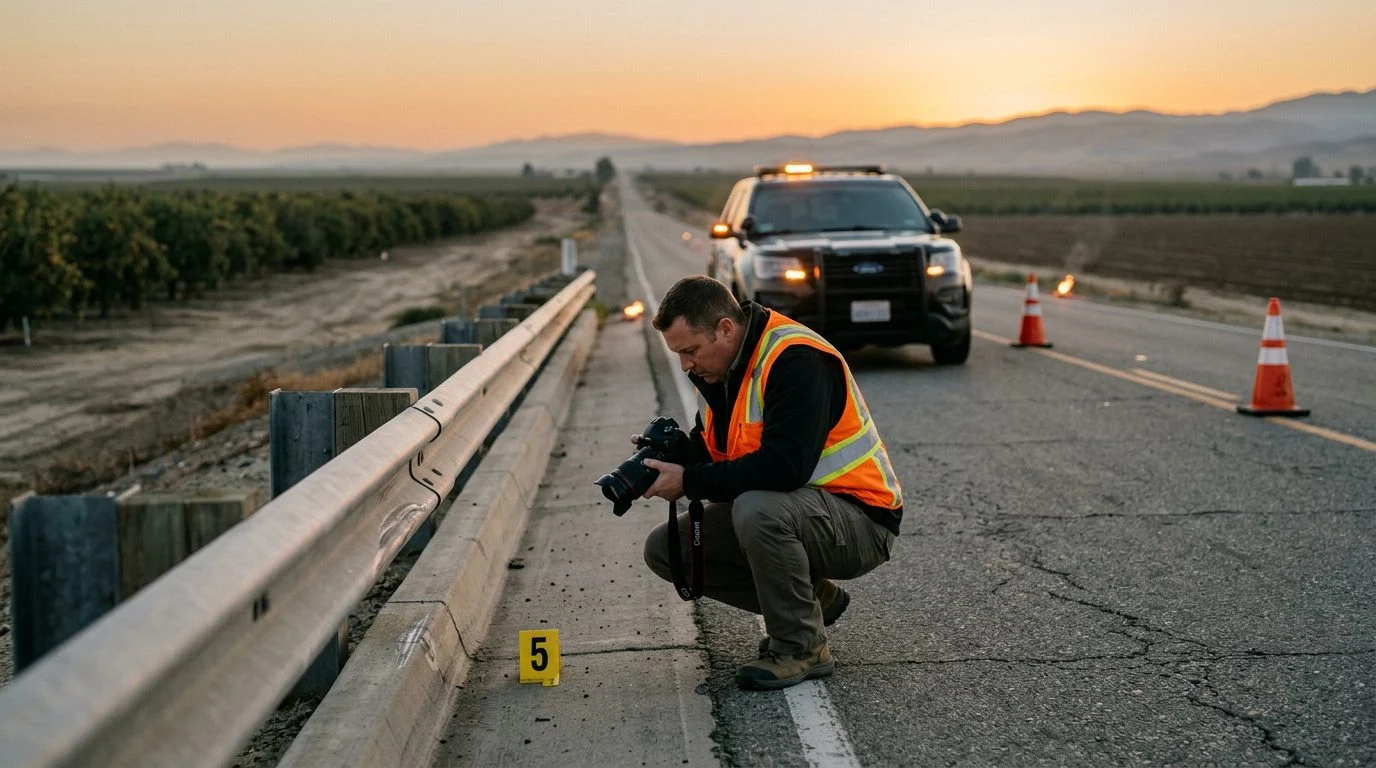
Proof comes from police reports, witness statements, and medical records. Writing down witness names and saving records early helps.
The defendant may argue that the person who died was also at fault. The court then calculates the actual reduction.
Common Situations That Lead to Wrongful Death Claims
Wrongful death claims commonly come from four kinds of events.
- Traffic collisions. Fatal crashes involving cars, trucks, motorcycles, bicycles, and buses, where a driver’s carelessness is at issue.
- Premises falls. A fatal fall from an unsafe condition on property. According to the Judicial Council of California’s civil jury instructions, a person who owns, leases, occupies, or controls property is negligent when that person does not use reasonable care to keep the property in a reasonably safe condition. That person must use reasonable care to discover any unsafe conditions and to repair, replace, or give adequate warning of anything that could be reasonably expected to harm others.
- Dog attacks. Under Cal. Civ. Code § 3342, a dog owner is liable for damages to a person bitten in a public place or lawfully on private property, but the statute does not authorize such an action against any governmental agency using a dog in military or police work in the circumstances it lists. That liability applies regardless of the dog’s former viciousness or the owner’s knowledge of it.
Each event raises its own questions about who owed the duty and who controlled the situation.
Types of Losses a Wrongful Death Claim Can Seek
California separates two kinds of recovery: losses the decedent suffered before death, and the wrongful death award to eligible survivors.
- Losses before death. Under Cal. Code Civ. Proc. § 377.34, in a claim brought by the personal representative or successor in interest, recoverable damages are limited to the loss or damage the decedent sustained or incurred before death, including any penalties or punitive or exemplary damages the decedent would have been entitled to recover had the decedent lived. Those damages generally do not include pain, suffering, or disfigurement. The statute also sets a narrow exception for certain cases filed within specified dates.
- The wrongful death award. Under Cal. Code Civ. Proc. § 377.61, damages may be awarded that, under all the circumstances of the case, may be just, but may not include damages recoverable under Section 377.34. The court decides how the award is shared among those entitled to sue.
Results will differ if the facts differ. Families who understand these two categories are better prepared for the conversations ahead.
Not sure what your next step is?
Talk it through with our team — the first consultation is free, confidential, and carries no obligation.
Talking With Colvin Accident Lawyers About Your Situation
If a family member died in a crash, a crosswalk, a fall, or a dog attack, you may need to know whether a civil claim exists. You may also need to know who in the family can act.
You may be reading this while grieving. You may be handling a loss you did not choose and learning a process you have never faced.
Donald Norman Colvin is the responsible lawyer for this site. Colvin Accident Lawyers is based in Bakersfield, California, and handles wrongful death and related accident claims.
La consulta inicial es gratuita, confidencial y sin compromiso de continuar.
Common Questions
How long do you have to sue?
Generally two years under Cal. Code Civ. Proc. § 335.1, subject to exceptions and tolling.
Can a dog owner be liable if the dog had never bitten anyone?
Yes. Under Cal. Civ. Code § 3342, the owner is liable for damages to a person bitten by the dog in a public place or lawfully on private property, regardless of the dog’s former viciousness or the owner’s knowledge of such viciousness, but the statute does not authorize such an action against a governmental agency using a dog in military or police work in the circumstances it lists.
If you’re trying to understand what a loss in your family means legally, you don’t have to sort it out alone. Reach out to our team to talk through the facts of your situation.
Colvin Accident Lawyers, Bakersfield, California — responsible for this site. Responsible lawyer: Donald Norman Colvin.
Why Families Start With Colvin Accident Lawyers
Free first consultation
Our initial consultation is free, confidential, and comes with no obligation to continue.
Support during a difficult time
A wrongful death case involves grief as well as practical questions. We take the time to listen before discussing next steps.
Rooted in Kern County
We represent accident victims and families from our Bakersfield office and throughout Kern County and nearby communities.
Plain-language explanations
We explain how civil claims work so you can make informed decisions for your family.
Key Point: Criminal and Civil Cases Are Separate
How the Civil Side of a Wrongful Death Matter Typically Unfolds
Looking into what happened
Police reports, witness accounts, and medical and vehicle records can help clarify how a death occurred.
Preserving evidence
Early steps to protect photos, records, and other proof often matter in serious cases.
Understanding the losses
Families often have questions about the losses a civil claim may involve. We explain those questions in plain terms.
Choosing a path forward
Some matters resolve through negotiation, while others proceed to court. We walk you through each option.