Car Accident Claims | Bakersfield, CA
Should You Give an Insurance Company a Recorded Statement?
An adjuster may call soon after a crash and ask to record your account. Learn what to weigh before you answer.
By Donald Norman Colvin · Published November 22, 2026
A claims adjuster calls and asks for a recorded statement about a crash that hurt you or someone you love. Your first instinct may be to answer every question and get it over with.
So, should you ever give a recorded statement to an insurance company? Usually, you can ask for time, ask for the request in writing, and decide with care before anything goes on the record.
Why Does an Insurance Company Ask for a Recorded Statement?
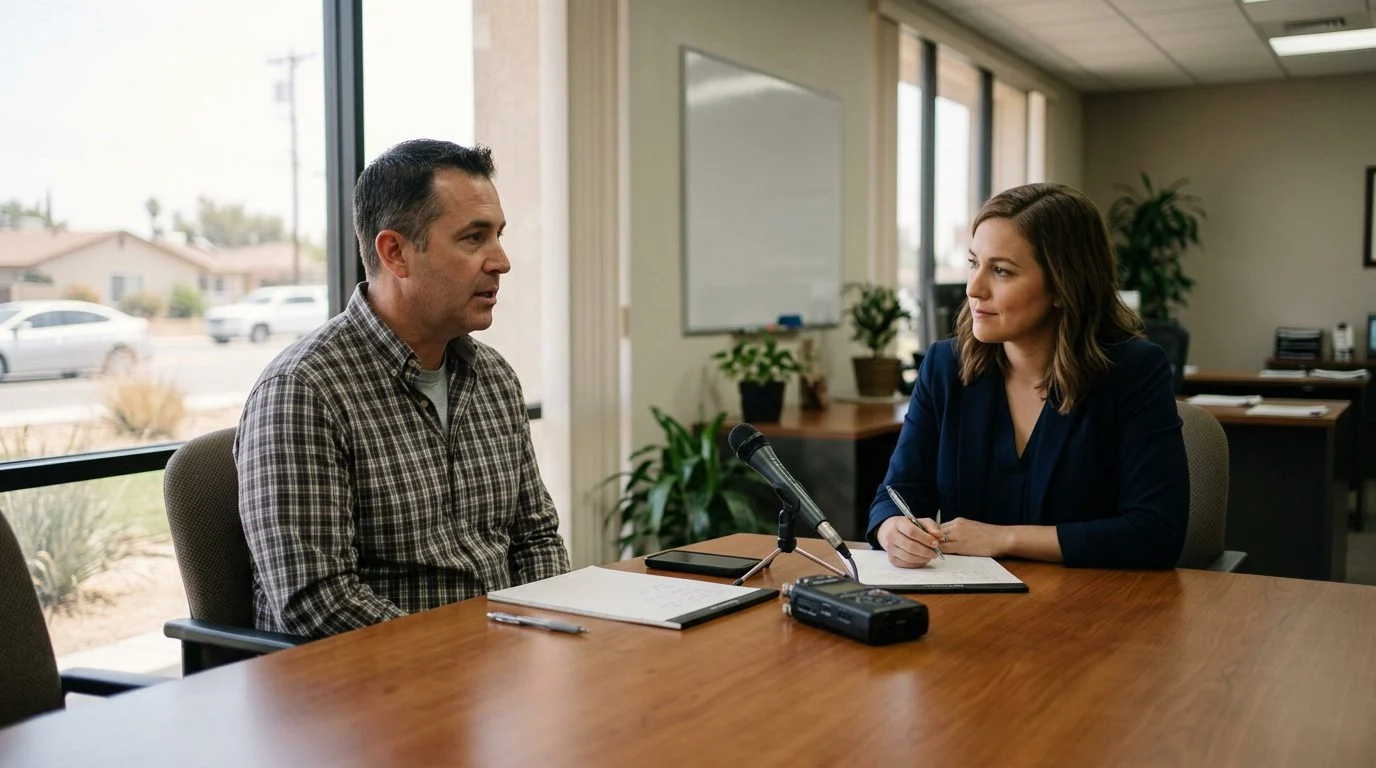
An adjuster asks for a recorded statement to create a word-for-word record of what you remember about the crash, the people involved, and your injuries at that moment.
Adjusters work from a claim file, and they need facts they can point to later. A recording captures your exact words and the order you describe events. It also fixes your account before you have seen medical records, the police report, or photos.
Two insurers can be involved, and they are different. Your own insurer is bound by your policy, which may include duties to cooperate after a loss. The other driver’s insurer is not your insurer, so its request is a request, not a term of your own policy.
After a death, the call may reach a spouse, parent, or adult child. That person then describes the decedent’s last day and the events before the crash. California’s wrongful death law says who may bring that claim, in Code of Civil Procedure § 377.60.
If an adjuster has asked you or a family member for a recorded statement, you do not have to face that call alone. We are glad to talk through your situation with you. Talk it through with our team — the first consultation is free, confidential, and carries no obligation.
Do You Have to Give a Recorded Statement to the Other Driver’s Insurer?
Usually, you can decline a recorded statement for now, and you can ask the adjuster to put the request in writing.
Declining is not the same as ignoring the claim. You can give the adjuster the police report number and your contact details. You can say you need time to review your records before answering questions about the crash.
Your own insurer may expect prompt notice and cooperation under your policy. That duty comes from your contract, not from the other driver’s adjuster. Read your policy’s duties before you respond to your own company.
If you hire a lawyer, ask that all contact go through that lawyer. Your lawyer can handle the adjuster’s questions so you don’t have to.
What Questions Do Adjusters Ask, and How Are the Answers Used?
Adjusters ask about the crash, your injuries, your health history, and your recent activities. Every answer can become part of the file and be used later.
Guesses cause trouble. If you guess at speed or distance, that guess can be quoted back to dispute fault or your injuries.
California uses comparative fault. If the defendant proves that you share responsibility for the accident, your damages are reduced by your percentage of fault.
Common mistakes include saying “I’m fine” before your injuries have been checked, describing a loved one’s condition before the facts are known, and agreeing to a summary you did not write. Ask for a copy of the recording or transcript, and correct any error in writing.
What Should You Do Before Speaking to the Insurance Company?
Write down the facts you saw yourself before any call. Notes made close to the event are easier to check against records later.
Record the date, time, and location. Write down the adjuster’s name, company, and direct phone number. Note the police report number, and list any witnesses.
Gather photos, medical records, bills, and repair estimates. Mark which facts you saw yourself and which you heard from others. “I heard” is not the same as “I saw.”
You can ask for questions in advance, and you can ask for a break to review documents. Saying “I don’t know yet” is acceptable when it is true.
When injuries are serious or someone has died, talking with a lawyer before any recorded statement is a practical step.
How Long Do You Have to Report the Accident and File a Claim?
Some reports are due within 10 days, some government claims within six months, and most injury and death lawsuits within two years. Write these dates down now.
Drivers in a crash that causes injury, death, or property damage over $1,000 to any one person must report it to the DMV within 10 days, unless the vehicle was owned or leased by, or under the direction of, the United States, California, another state, or a local agency. The report can be made personally or through an insurance agent, broker, or legal representative. See Vehicle Code § 16000.
A claim against a government entity, such as a public transit agency, must be presented within six months for death or injury. See Government Code § 911.2.
A lawsuit for injury or death caused by another’s wrongful act generally must be filed within two years. See Code of Civil Procedure § 335.1.
If the other driver is uninsured, your own uninsured-motorist claim has its own steps.
Notice to your own insurer and a claim against the other driver’s insurer are separate steps. Under Insurance Code § 11580.2, no uninsured-motorist cause of action accrues unless one of the required actions is taken within two years from the date of the accident, so don’t assume you have time.

Talking With Colvin Accident Lawyers Before You Decide
You can get answers about your own situation before any recorded statement is given.
You may be juggling grief, medical appointments, and an insurance process you have never dealt with. Sometimes you are acting for someone who cannot speak for themselves.
Colvin Accident Lawyers is a personal injury firm based in Bakersfield, California. Donald Norman Colvin is the responsible lawyer for this page. The firm handles car, truck, motorcycle, bicycle, pedestrian, bus, dog bite, premises liability, catastrophic injury, and wrongful death cases.
The initial consultation is free, confidential, and carries no obligation to continue. La consulta inicial es gratuita, confidencial y sin compromiso de continuar.
Can I refuse a recorded statement?
Usually, yes. You can ask for time or ask for questions in writing.
Can I get a copy of my recorded statement?
Ask for one in writing. Correct any error in writing as well.
Does refusing hurt my claim?
Adjusters can still review the police report, photos, and medical records you provide.
Families facing a death claim can also review our wrongful death lawyer information.
If an adjuster has called about a crash or a loss in your family, you do not have to sort it out alone. Reach out through our contact page to talk about your situation before anything goes on the record.
Colvin Accident Lawyers, Bakersfield, California — responsible for this site.
Before you answer an adjuster's questions
Know who is calling
The adjuster works for the insurance company, not for you. Their goal is to evaluate and manage the claim.
Remember that the recording is evidence
What you say is recorded and becomes part of the claim file, where it can be reviewed and quoted later.
Be careful about injuries
Injuries can appear hours or days after a collision. Describing yourself as fine too early can affect how your condition is later understood.
Get advice first
A brief conversation with a lawyer can help you decide how to respond and what to say, and what to hold back.
Pause before you agree to a recorded statement
Adjusters often ask for a recorded statement within days of an accident, before you have seen a doctor or know the full extent of your injuries. Speculation, guesses about speed or fault, and incomplete descriptions can be used against you later. Asking for time to gather your thoughts is a reasonable request.
Questions to think through
Have you seen a doctor?
Medical evaluation often reveals injuries that are not obvious at the scene. Tell your doctor about every symptom, even minor ones.
Do you know the facts?
Memory of a crash is often incomplete in the first days. Answering from memory without reviewing the police report or photos can lead to errors.
Who is asking, and why?
Confirm the caller's name, the company they represent, and the claim number before discussing details. Ask what the statement will be used for.
Would writing be easier?
Asking for questions in writing gives you time to review them and respond accurately. A lawyer can help you prepare a clear written response.