Wrongful Death | Bakersfield, CA
Wrongful Death Lawsuits in California, Explained One Step at a Time
Losing someone in an accident raises questions you may not have expected. Here is how the process typically unfolds, so you know what to expect.
By Donald Norman Colvin · Published November 22, 2026
When someone you love dies because of another person’s carelessness, questions pile up fast. What happens next, and who handles it? A California wrongful death lawsuit moves through a set of stages: investigation, filing, discovery, settlement talks, and, if the case does not settle, trial. Each stage has its own rules. This guide walks through them in order, with the legal basis for each point.
What Is a Wrongful Death Lawsuit in California?
A wrongful death lawsuit is a civil case that eligible family members bring after a person dies because of another party’s wrongful act or negligence. It asks for money damages, not criminal punishment.
A civil case is separate from any criminal case against the person responsible. The two run on different tracks, so the family’s claim follows its own steps.
California also has a survival claim. Under Cal. Code Civ. Proc. § 377.20, a cause of action is not lost because the person died. It survives, subject to the applicable deadline. Families often hear these two claims described together, so it helps to know the difference. For a broader overview, see our wrongful death lawyer page.
Who Is Allowed to Bring the Claim?
The decedent’s surviving spouse or domestic partner and children may bring the claim under Cal. Code Civ. Proc. § 377.60. The children of a child who has died may also sue. If there is no surviving issue of the decedent, the persons, including the surviving spouse or domestic partner, who would be entitled to the property of the decedent by intestate succession may bring the case.
Other people can qualify too. Stepchildren, parents, and others may sue if they depended on the person who died. A minor can qualify if the minor lived in the decedent’s household for the previous 180 days and received half or more of their support from the decedent.
A personal representative may file the case on behalf of the heirs. Several heirs may have a stake in the same claim, so the process can get more involved than families expect. A common mistake is assuming the closest relative controls the case automatically. The statute names several groups, and under Cal. Code Civ. Proc. § 377.61, the court determines the respective rights in any award of the persons entitled to assert the cause of action.
How Long Do You Have to File?
The general deadline is two years for an action for the death of a person caused by another’s wrongful act or neglect, under Cal. Code Civ. Proc. § 335.1. California Code of Civil Procedure § 335.1 provides that an action for assault, battery, or injury to, or for the death of, an individual caused by the wrongful act or neglect of another must be brought within two years.
So can you still sue after 10 years? Generally, no. A suit filed long after the deadline is usually barred, and any exception turns on the specific facts of the case.
Public entities have a shorter clock. Under Cal. Gov. Code § 911.2, a claim for death must be presented not later than six months after the cause of action accrues. That short window is easy to miss. Missing a deadline can end a claim, so the timing of the first steps matters.
What Happens in the Investigation Stage?
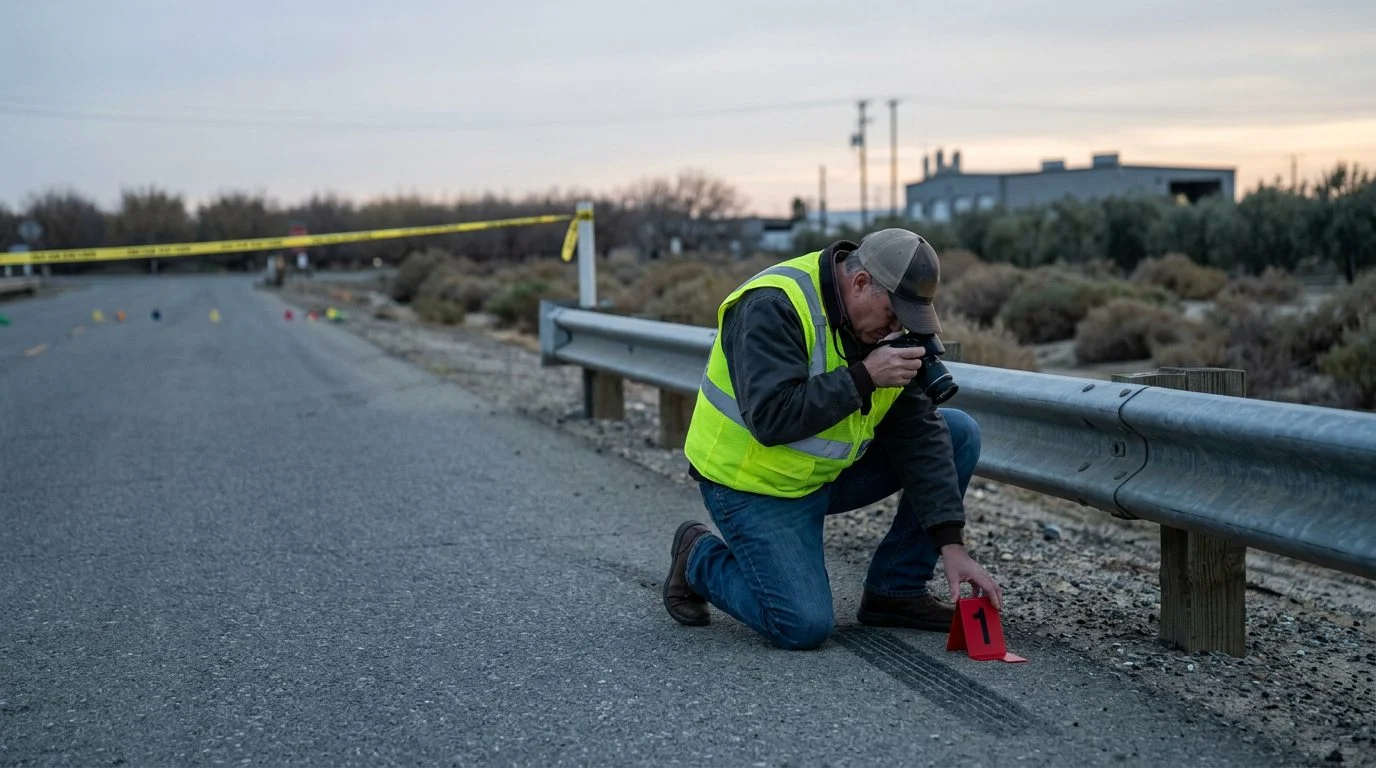
The first stage is investigation. The case team gathers records that show how the death happened and who may be responsible.
The usual records include the police or crash report, coroner or medical examiner findings, and medical records. Photographs, witness names, and vehicle or property data also matter. Autopsy and toxicology results are added where they exist.
Liability is the central question. Clear liability means the facts strongly point to one party. Disputed liability means the sides disagree about fault, so the case needs more proof.
Here is what often goes wrong early. A vehicle is repaired or sold, a scene changes, or electronic data is overwritten. Once evidence is gone, it is hard to replace. Written requests to preserve vehicles, data, and records are among the first steps to take. Families can help by keeping every letter, bill, and record they receive.
How Does a Lawsuit Start?
The case starts when a complaint is filed in the superior court. The complaint names each defendant and states the legal basis for the claim.
Service gives the defendant formal notice that the case exists. The defendant then responds. The response may be an answer that denies liability, or a motion that challenges parts of the complaint.
If a public entity is a defendant, one more rule applies.
Defendants may deny fault from the start. That turns the next stage into a contest over proof.
What Is Discovery and Pretrial Motions?
Discovery is the formal process where both sides exchange information before trial. It is where each side learns what the other side knows.
Tools include interrogatories, which are written questions, and requests for documents. Depositions are sworn interviews. They may include the at-fault party, eyewitnesses, medical providers, and investigators. Witness reports are also exchanged during this stage.
Pretrial motions ask the court to decide issues before trial. A motion might address whether certain evidence can be used, or whether parts of the claim can go forward. Those rulings can narrow what a jury hears.
The court may set a trial date and deadlines. The pace of this stage rises with how complex and contested the case is.
Can a Wrongful Death Case Settle Before Trial?
Yes. Some wrongful death cases settle through negotiation or mediation, where a neutral mediator helps both sides talk through a resolution.
A settlement is voluntary. The heirs decide whether to accept an offer, and no one can make them accept it. Before answering any offer, it helps to know what the case has already shown about liability and losses.
Before money reaches the family, attorney fees, case costs, and any valid liens are resolved. Dividing the money among eligible heirs can cause disagreement. That is one reason the court may become involved.
Settlement can happen at any point in the case. It is not limited to the end of discovery.
What Happens at Trial and Verdict?
If the case does not settle, a civil jury trial decides fault and damages.
Trial starts with jury selection, then opening statements. Witnesses testify, exhibits are shown, and closing arguments follow. The judge reads jury instructions on the law before deliberations.
After the verdict, the court enters judgment. Trial is one possible path, not the only one, and each case reaches its own end.
What Factors Can Speed Up or Slow Down the Timeline?
No one can give a fixed length for a wrongful death case, because each one moves at its own pace.
Several factors tend to move a case faster. Clear liability helps. Organized, available evidence helps too. A defendant willing to negotiate and a court calendar with room can shorten the path.
Other factors slow it down. Disputed fault, several defendants or insurers, and complex medical or accident reconstruction questions add time. Government claim requirements, crowded court schedules, and appeals do too.
The steps families control most are early ones. Keeping records, preserving evidence, and watching the deadlines all help. The timeline varies from case to case.
What Damages Can Heirs Seek?
Under Cal. Code Civ. Proc. § 377.61, damages may be awarded that are just under all the circumstances. Those damages may not include the survival damages covered by § 377.34.
The survival claim is narrower. Under Cal. Code Civ. Proc. § 377.34(a), its damages cover the loss the decedent sustained or incurred before death. They do not include pain, suffering, or disfigurement.
Many families expect a wrongful death case to include the victim’s pain. Subdivision (b) of § 377.34 allows pain and suffering damages only in actions granted a preference before 2022, or filed from January 1, 2022 through the end of 2025.
It does not end the claim.
Talk With Colvin Accident Lawyers About Your Family’s Situation
If you’re reading this after a sudden loss, you may be handling funeral plans, coroner paperwork, and hard questions about what comes next. That is a lot to carry at once.
Can You Still Sue After 10 Years?
Generally, no. A wrongful death suit filed years after the two-year deadline is usually barred (Code Civ. Proc. § 335.1).
How Long Does a California Wrongful Death Lawsuit Take?
No fixed length applies to every case. The timing varies with liability, evidence, and the court’s schedule.
If someone else’s carelessness may have caused your loved one’s death, you may have a claim to explore, and our team can talk it through with you. La consulta inicial es gratuita, confidencial y sin compromiso de continuar. Request a free case consultation
Colvin Accident Lawyers, Bakersfield, California — responsible for this site. Responsible lawyer: Donald Norman Colvin.
Why Families Start with Colvin Accident Lawyers
A Free, Confidential First Consultation
La consulta inicial es gratuita, confidencial y sin compromiso de continuar. You can talk through your situation without obligation to move forward.
Plain-Language Guidance
We explain each stage of a wrongful death case in terms you can follow, so you can make informed decisions at your own pace.
A Focus on Wrongful Death and Serious Injury
Our practice focuses on wrongful death, catastrophic injury, and accident cases, including car, truck, motorcycle, bicycle, pedestrian, bus, premises, and dog bite matters.
Support for Families Across the Region
Our team works with families in Kern County and nearby communities, keeping them informed at every stage of the process.
The Stages of a Wrongful Death Case
1. Initial Consultation
You share the facts of your loss, and we listen closely. We discuss the questions in front of your family and what the next steps could look like.
2. Investigation and Evidence
We gather accident reports, medical and billing records, photographs, and witness accounts. Careful documentation builds the foundation for every decision that follows.
3. Claim Preparation and Filing
We prepare the legal paperwork and notify the responsible parties and their insurers. Each step is reviewed with you before anything is filed.
4. Negotiation, Settlement, or Trial
Many cases are resolved through negotiation. If a fair resolution cannot be reached, we are prepared to take the matter to court. You decide how to proceed at each point.
Act Early to Protect Evidence
Records, photographs, vehicle data, and witness memories can be lost or change over time. Speaking with a lawyer early helps preserve what matters for your family's case.