Wrongful Death · Kern County
After a Fatal Crash in Kern County, You Don't Have to Face the Next Steps Alone
Colvin Accident Lawyers helps families in Bakersfield and throughout Kern County understand what comes next, one step at a time.
By Donald Norman Colvin · Published November 22, 2026
After a fatal crash in Kern County, two offices usually start working at the same time. The police agency looks at how the crash happened, and the coroner looks at how and why the person died. Knowing which office answers which question helps families make sense of the calls, forms, and waiting that follow. If you’re reading this for someone you love, you’re not alone in these questions. This guide walks through each step in plain order.
What Happens First at the Scene of a Fatal Crash
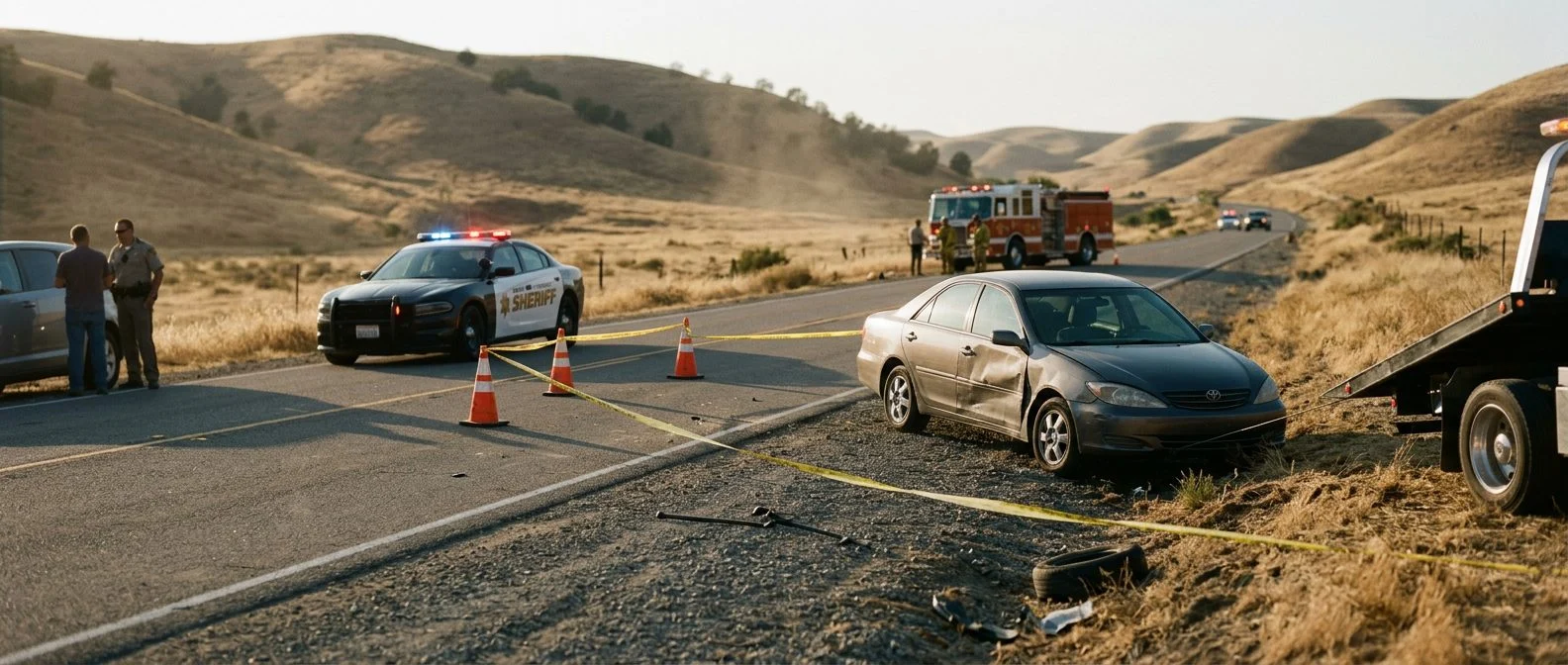
Emergency crews and the investigating law enforcement agency respond first and secure the scene. Officers measure the roadway, photograph the vehicles, and note where each person was positioned. They may also take statements from drivers and witnesses. Officers may ask family members to identify the person, which can be hard to face. You can ask for one point of contact so you aren’t getting calls from many people at once.
The person who died stays under the control of authorities until they release the body. Families are usually told through official channels, so it helps to write down who called and when.
State law also sets a reporting duty for drivers. A driver of a vehicle other than a common carrier vehicle in a crash that causes injury or death must make a written report within 24 hours, either to the California Highway Patrol or, for a crash inside a city, to that city’s police department (Veh. Code § 20008). If you learn the names of witnesses, write down their contact details. Keep any written information from officers in one folder.
If your family is facing these questions after a crash that killed someone, you don't have to sort them out alone. Colvin Accident Lawyers can talk with you about what may apply to your situation. Talk it through with our team — the first consultation is free, confidential, and carries no obligation.
When the Kern County Coroner Takes Over the Case
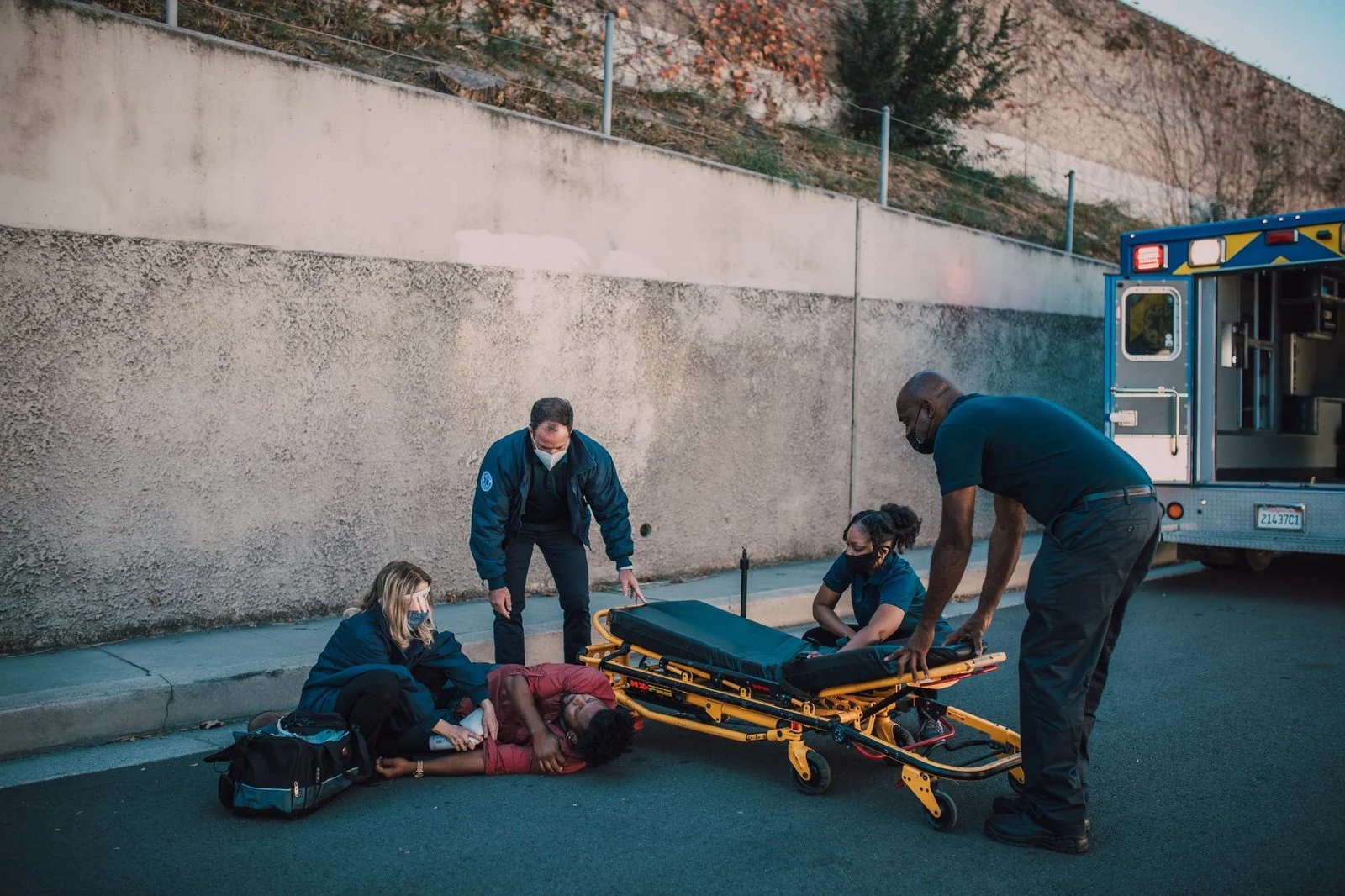
The coroner takes over the question of the death, while the police keep the crash investigation. Not every body goes to the coroner. A death under a doctor’s care, with a known cause, usually doesn’t. A sudden or violent death, such as one in a crash, usually does. Once the case comes in, the Kern County Coroner’s Office takes custody of the person, confirms their identity, and opens its own inquiry alongside the police investigation.
The two offices answer different questions. The coroner determines the cause and manner of death, meaning what medically caused the death and how it happened in the legal sense, such as accident or homicide. The police look at how the crash happened and whether any driver broke a traffic law. Their findings can overlap, but they are separate records. Keep both in mind as you talk to each office.
What the Coroner’s Investigation Involves
The coroner’s investigation focuses on the cause and manner of death. It is more than a quick look at the body. Investigators review scene information, the person’s medical history, and available records. They also perform an external examination. In some cases the coroner orders an autopsy and toxicology testing, and those results can take time.
Test results are not available the same day. Ask the coroner’s office what it needs from you, such as personal details or medical records, and respond promptly.
Once the investigation finishes, the cause and manner of death are recorded on the death certificate. Families may get updates along the way, but the timeline depends on how complex the case is and what testing is needed. Write down every call with the date and the name of the person you spoke with. These facts can matter later if a claim is considered.
Police Reports, Evidence, and Why Records Matter
The police collision report is the main written record of how the crash happened. The California Highway Patrol’s manual explains that officers document fatal crash details in narrative or supplemental reports (CHP Highway Patrol Manual, chapter 7). The CHP collision report page explains the request, identification, and payment steps.
Evidence can move. Vehicles may be held for inspection, then released or moved, so keep track of where the vehicle is and who has it. Keep copies of medical bills, funeral receipts, and records of the income of the person who died. Save phone photos, text messages, and social media posts about the crash. Avoid posting public statements about who was at fault, because those words can be read later by insurers and others.
Death Certificates, Release of Remains, and Next Steps for the Family
A death certificate records the cause and manner of death. Families often need certified copies for estate, insurance, and benefit matters. Under California’s rules for a successor in interest, the affidavit must attach a certified copy of the decedent’s death certificate (Code Civ. Proc. § 377.32). Ask the funeral home to help you order enough certified copies early.
Release of the remains to a funeral home usually happens once the coroner no longer needs to hold them for the investigation. If a funeral home asks for documents, bring your certified copies, the decedent’s identification, and any coroner paperwork you received.
Funeral planning and estate paperwork often run at the same time as the investigation. Decide early who will handle the estate’s paperwork and who will speak with the offices. Keep one timeline with dates of notices, calls, and documents. A clear timeline helps anyone who later reviews the case.
How a Wrongful Death Claim Connects to the Investigation
In California, a wrongful death claim can be brought by certain close family members, or by the decedent’s personal representative on their behalf. The statute names the surviving spouse, domestic partner, and children first. It also lists dependent parents, stepchildren, and others in certain situations (Code Civ. Proc. § 377.60).
Timing matters. California generally gives two years for an action for the death of a person caused by another’s wrongful act (Code Civ. Proc. § 335.1). Do not assume the time is unlimited. The facts of each case can change how the deadline applies, so early attention to the investigation helps.
The coroner’s and police findings can shape who may be responsible. Under California’s general negligence statute, everyone is responsible for an injury caused by a want of ordinary care, except so far as the injured person has, willfully or by want of ordinary care, brought the injury upon himself or herself (Civ. Code § 1714). California also follows comparative fault. If the defendant proves that the injured person was partly responsible for the harm, that person’s damages are reduced by the percentage of responsibility a jury assigns to them. (CACI No. 405) For the broader legal framework, see our wrongful death lawyer page.
Not sure what your next step is?
Talk it through with our team — the first consultation is free, confidential, and carries no obligation.

If You Are Trying to Decide What to Do Next
If you’re deciding what to do next, you don’t have to sort out the coroner, the reports, and the paperwork by yourself. A loss like this often arrives with grief, forms, and official calls all at once. Take the steps that feel manageable, and write down what you’ve done.
Donald Norman Colvin is the responsible lawyer for this page, with Colvin Accident Lawyers in Bakersfield, California. The first consultation is free, confidential, and carries no obligation to continue. To talk about your family’s situation, call Colvin Accident Lawyers or send a message through the contact page.
Quick Answers
Does every dead body go to the coroner?
Not every death does. Deaths under a doctor’s care with a known cause usually don’t, while sudden or violent deaths, including crash deaths, usually do.
Does a death certificate come after a fatal crash?
Yes. A death certificate is issued after the cause and manner of death are determined, and certified copies are needed for estate matters.
Who can file a wrongful death claim in California?
Certain close family members can, including a surviving spouse, domestic partner, and children, or the personal representative on their behalf.
How Colvin Accident Lawyers Can Help Your Family
Clear answers
We explain each stage of the process in plain language, so you know what to expect and why it matters.
Organized records
We help you gather and track the reports, notices and paperwork that come up after a loss.
Support for the whole family
We keep family members informed and make room for questions, including those from relatives who live outside the area.
Attention to your rights
We look closely at the facts of your loss and advocate for fair treatment from the insurance companies and other parties involved.
Respect during a hard time
We understand how painful a sudden death is, and we treat every family with patience and care.
Be Careful Before You Speak to an Insurance Company
Insurance adjusters may contact you soon after a crash and ask for a recorded statement. Speaking with a lawyer first can help you understand what to say and what to hold back while you are still grieving.
Ways We Can Support You
Initial conversation
Tell us what happened and who was involved. We listen, answer your questions and explain the options available to your family.
Case review
We review the facts of the crash and the injuries and losses your family has suffered, so you can make informed decisions.
Ongoing communication
You will hear from our team about important developments, and you can call with questions at any stage of your case.