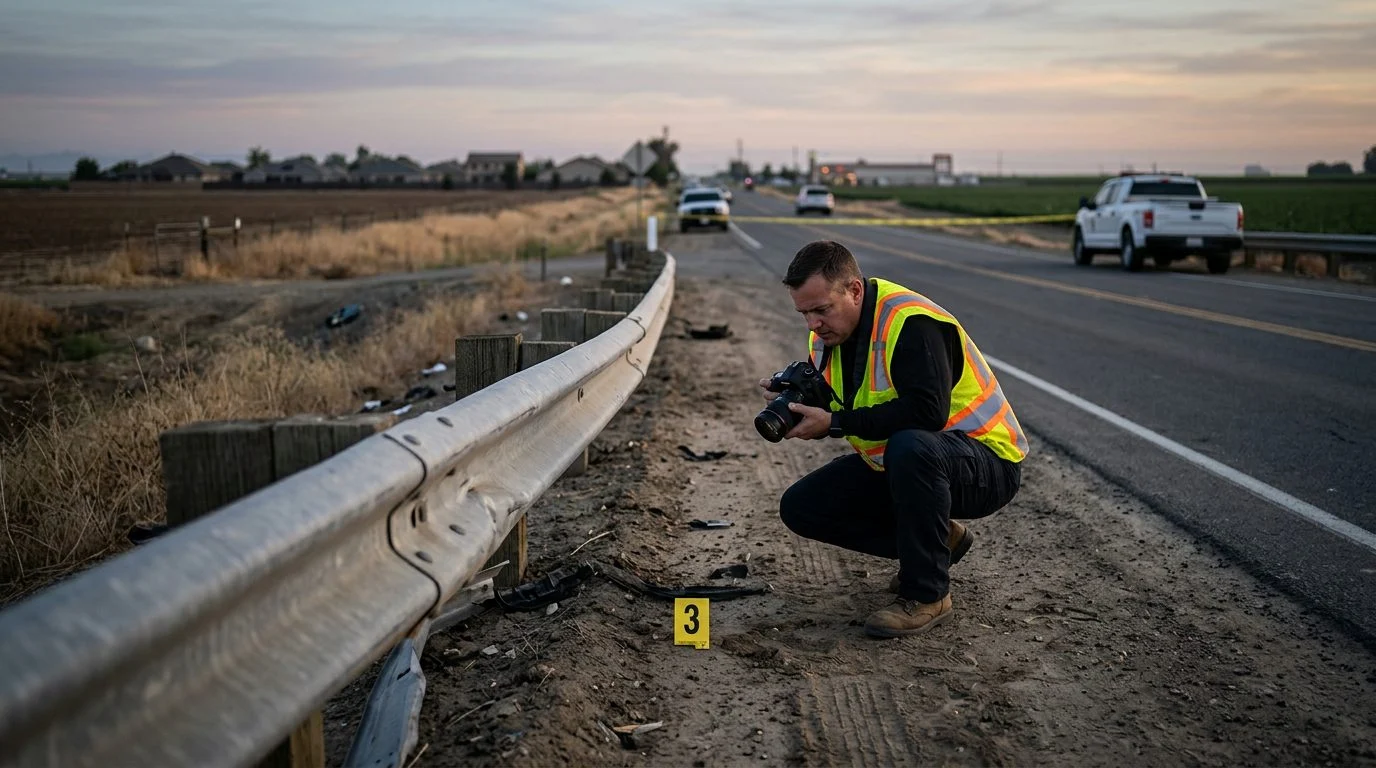
Wrongful Death | Bakersfield, CA
What a Wrongful Death Judgment Means for Your Family
Court decisions and legal terms can be hard to follow when you are grieving. Here is a clear walk-through of the steps, the people involved, and the questions families ask us first.
By Donald Norman Colvin · Published November 22, 2026
If someone you love died in a crash or another accident, you may have heard the words “wrongful death judgement” from a lawyer, an insurance adjuster, or a court form. A wrongful death judgement is the court’s formal order that resolves a wrongful death case. It states whether the responsible person or business is legally liable and, if so, what the court orders paid.
This guide explains the term in plain words. You’ll learn how a judgement differs from a lawsuit and a settlement, who may bring the claim, what it can cover, and why a judge may dismiss one. Colvin Accident Lawyers is a personal injury firm based in Bakersfield, California.
What a wrongful death judgement means in plain terms
A wrongful death judgement is the court’s final, formal order in a wrongful death case. It records the court’s decision on liability and on any money owed to eligible survivors.
The word judgement, also spelled judgment, names a court order. It is not a verdict on the life the person lived or the choices they made. The judge or jury answers the legal questions, and the judgement puts that answer in writing.
California’s rules start with Code of Civil Procedure § 377.60, which sets out who may bring a wrongful death action.
If you are sorting out a loss in your family, you do not have to face the legal questions alone, and we are glad to talk it through with you. Talk it through with our team — the first consultation is free, confidential, and carries no obligation.
Wrongful death lawsuit, judgement, and settlement: how they differ
A lawsuit is the case, a judgement is the court’s final order, and a settlement is a private agreement that usually ends the case before trial.
The wrongful death lawsuit is the civil case filed in court to seek money for the death. Eligible survivors bring it, or the decedent’s personal representative brings it on their behalf, under Code of Civil Procedure § 377.60.
A judgement comes at the end of that case. It follows a trial or another court ruling that resolves the claim.
A settlement is an agreement between the parties. Both sides agree to end the dispute, usually before trial. The result is a settlement agreement, not a judgement.
People often use all three words in conversation. Legal papers do not. The title of each document shows which one it is.
Wrongful death is a civil case, not a criminal one
A wrongful death judgement comes from a civil case, not a criminal one. The family or eligible heirs bring the civil claim against the person or business they believe caused the death. The goal is compensation for the loss.
In a criminal case, the government brings charges against a person. The goal is punishment under criminal law. The victim’s family does not bring those charges.
One crash can lead to both. A driver may face criminal charges while the family files a civil wrongful death claim. The two cases run separately, with different parties and different goals.
The civil court looks at its own proof of fault and harm.
Who may bring the claim and who receives the judgement
Under California law, the surviving spouse, registered domestic partner, and children of the person who died may bring the claim, as may issue of deceased children and, if they were dependent on the decedent, the putative spouse, stepchildren, parents, or legal guardians of the decedent if the parents are deceased.
If there is no surviving issue (descendants), the people who would inherit the property under intestate succession (the rules that apply without a will) may bring it.
Dependents can sue even if they fall outside that first group. The statute names a putative spouse (a person who believed in good faith the marriage was valid), stepchildren, parents, or legal guardians when the parents have died. A minor may sue if they lived in the decedent’s household for the previous 180 days and relied on the decedent for one-half or more of their support, per Code of Civil Procedure § 377.60.
Under Code of Civil Procedure § 377.61, the court decides the respective rights in an award of the persons entitled to assert the claim.
Whether you fall into one of these groups depends on the facts, including your relationship to the person and how they supported you.
What a wrongful death judgement can cover
A wrongful death judgement can award damages that the court finds just under all the circumstances of the case, under Code of Civil Procedure § 377.61.
California also allows a separate survival claim. It covers the loss or damage the decedent suffered before dying. Under Code of Civil Procedure § 377.34, those survival damages do not include pain, suffering, or disfigurement, except in limited cases the section describes.
The two kinds of damages stay apart. Wrongful death damages may not include the damages recoverable under section 377.34.
Punitive damages are a separate issue. Under Civil Code § 3294, in an action for breach of an obligation not arising from contract, a court may award them when clear and convincing evidence shows oppression, fraud, or malice.
The amount in any judgement rests on the evidence in that case. No general figure applies.
What the claim must prove: the four elements of negligence
Duty is the legal obligation a person or business owes to others. Under Civil Code § 1714, everyone is responsible for injuries caused by a lack of ordinary care, except so far as the injured person has, willfully or by want of ordinary care, brought the injury upon himself or herself. However, under subdivision (c), a social host who furnishes alcoholic beverages to any person may not be held legally accountable for damages resulting from the consumption of those beverages, except as provided in subdivision (d).
Breach means conduct that falls short of that standard. Think of a driver who runs a red light, or a property owner who ignores a known hazard.
Causation is the link between that conduct and the death. Damages are the losses the survivors suffered because of the death.
Intentional or reckless conduct may also support a claim. The facts decide which theory fits.
Not sure what your next step is?
Talk it through with our team — the first consultation is free, confidential, and carries no obligation.
Why a judge may dismiss a wrongful death claim
Timing matters a great deal. California generally requires a personal injury lawsuit within two years. Code of Civil Procedure § 335.1 sets two years for an action for the death of an individual caused by another’s wrongful act or neglect. Under California Code of Civil Procedure section 335.1, an action for injury to, or for the death of, an individual caused by the wrongful act or neglect of another must be brought within two years.
Standing is the second issue. Under Code of Civil Procedure section 377.60, a wrongful death cause of action may be asserted by the persons listed in that section or by the decedent’s personal representative on their behalf.
A dismissal ends the case without a judgement in the plaintiff’s favor. The specific reasons come from the court file in each case.
Write down every date, notice, and filing you receive. Those details can matter later.
Next steps if you are trying to understand a claim for your family
If you are reading this after a sudden loss, you do not have to sort out the legal terms alone.
Grief and paperwork often arrive at the same time. Start a folder. Keep the accident report, the death certificate, medical records, and every letter from an insurer or court.
Insurance companies may contact the family early. Be careful about what you say and sign while you are still learning the facts.
Our wrongful death lawyer page gives a broader overview of how these claims are handled.
Is wrongful death a civil or criminal case?
It is a civil case. The family or eligible heirs bring it, and the goal is compensation, not criminal punishment.
Who can file a wrongful death claim in California?
The surviving spouse, registered domestic partner, and children may file, along with certain dependents and heirs named in Code of Civil Procedure § 377.60.
How long do you have to file?
California generally requires an action for the death of a person caused by another’s wrongful act or neglect to be filed within two years, under Code of Civil Procedure § 335.1.
The first consultation is free, confidential, and carries no obligation to continue. If you are working through a loss in your family, you don’t have to face these questions alone. Call Colvin Accident Lawyers, or contact us here, to describe what happened.
Colvin Accident Lawyers, Bakersfield, California — responsible for this site. Responsible lawyer: Donald Norman Colvin.
Why Families Start With Colvin Accident Lawyers
Free first consultation
The first consultation is free, confidential, and carries no obligation to continue.
Plain-language answers
We explain the court process and your options in everyday terms, so you can make decisions with clear information.
Focused on wrongful death cases
Our practice covers wrongful death claims alongside car, truck, motorcycle, bicycle, pedestrian, bus, dog bite, premises liability, and catastrophic injury cases.
Direct contact
Call Colvin Accident Lawyers or reach out through our website to speak with our team about your situation.
A judgment is a court decision, not a check
A judgment states what the court decided. Turning a judgment into payment can involve further steps, and every case depends on its own facts. Review your situation with a lawyer before you make decisions.
Questions to Bring to Your Consultation
Who brought the claim?
Learn how a wrongful death case is filed, and which family members may be involved in the court process.
What did the court decide?
We can review the judgment with you and explain what each part means in plain language.
What happens next?
Ask about the practical steps that follow a decision, so you know what to expect.
How can we help your family?
Bring your questions, documents, and concerns. Our team will listen and talk through your options with you.