Personal Injury Guide | Bakersfield, CA
What Is Negligence in Torts? Elements and Types Explained
Learn how California law looks at careless conduct, what a claimant must show, and how the question plays out after an accident in Kern County and nearby communities.
By Donald Norman Colvin · Published November 23, 2026
You are probably reading this because someone was hurt, and you want to know who was responsible. Negligence is the legal idea that usually answers that question. It means failing to use reasonable care to prevent harm to yourself or to others, and it can make a careless person responsible for the injuries that follow.
This page explains negligence as a type of tort, the four elements a claim generally needs, and the main types you may hear about. It uses California law throughout.
Negligence Is the Failure to Use Reasonable Care
Negligence means failing to use reasonable care to avoid harming oneself or others. A person can act negligently by doing something a reasonably careful person would not do under the same circumstances, or by failing to do something such a person would do (California standard of care jury instruction). Courts ask what a reasonably careful person would have done in the same situation.
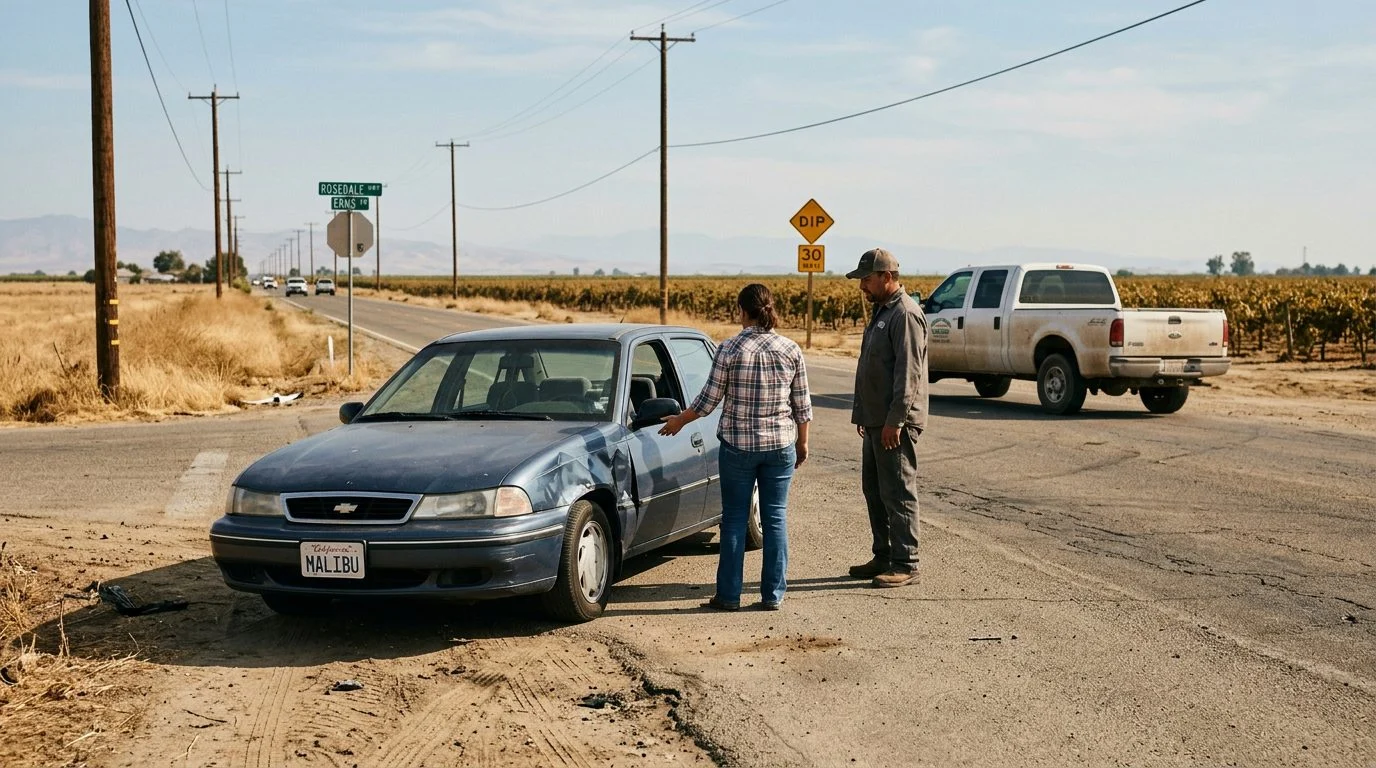
Here is an illustration. A driver glances at a phone, does not notice that the car ahead has braked hard, and rear-ends it. The driver did not plan a crash. The driver still did something a careful driver would not do, and that is the core of negligence.
Negligence can also mean failing to act. A property owner who ignores a broken stair, for example, may be negligent for not fixing it.
In everyday speech, people call any carelessness negligence. The legal meaning is narrower. It applies to a person who owes a duty of care to others, which is the next idea to understand.
If a crash, fall, dog bite, or death in your family has you asking who was at fault, you don't have to sort that out alone, and our team is glad to talk through the facts with you. Talk it through with our team — the first consultation is free, confidential, and carries no obligation.

Negligence Is One Type of Tort
California Civil Code section 3281 says a person hurt by another’s unlawful act or omission may recover money from the person at fault. That money is called damages (Civil Code § 3281).
Intentional torts are different. In both, the person meant to act. In negligence, the person may have meant no harm at all.
Some claims do not depend on carelessness. California’s dog bite rule is one example.
The Four Elements of Negligence
The injured person must prove each one.
- Duty of care: a legal obligation to act reasonably toward others.
- Breach of duty: conduct that falls below what reasonable care requires.
- Causation: the breach actually caused the harm.
- Damages: the injured person suffered a real loss.
If any element is missing, the claim generally fails. Premises claims follow the same structure. The California premises liability jury instruction lists these elements: that the defendant owned, leased, occupied, or controlled the property; that the defendant was negligent in the use or maintenance of the property; that the plaintiff was harmed; and that the defendant’s negligence was a substantial factor in causing the plaintiff’s harm.
Think of the list as a checklist. Each item asks a question about the facts you already know.
Duty of Care and Breach of Duty
Duty of care is the obligation to act reasonably toward people your actions could affect. Whether a duty exists depends on the facts of the situation. Property owners owe a duty to visitors. Drivers owe one to other people on the road.
Under the basic duty instruction, a person who owns, leases, occupies, or controls property is negligent if that person fails to use reasonable care to keep the property in a reasonably safe condition, and must use reasonable care to discover any unsafe conditions and to repair, replace, or give adequate warning of anything that could be reasonably expected to harm others. Anyone who owns, leases, occupies, or controls property has a duty to use reasonable care to find unsafe conditions and to repair or replace them, or to warn adequately of hazards that could reasonably be expected to injure others.
Breach happens when conduct falls below the standard a reasonable person would meet. Courts usually look at what was done or left undone, measured against the risks that were foreseeable. The CACI No. 1003 unsafe-condition instruction frames a property claim the same way. The owner knew or should have known of an unreasonable risk and failed to fix it or warn anyone.
Breach is often disputed. Two people can see the same event and disagree about what a reasonable driver or owner would have done. That is why facts, witness accounts, photos, and records matter.
Causation and Damages Explained
Causation links the careless act to the harm. Damages are the losses the injured person suffered as a result.
California measures damages by the detriment proximately caused. Civil Code § 3333 sets the amount for a breach of a non-contract obligation as the amount that compensates for all the detriment proximately caused, whether or not it could have been anticipated, except where otherwise expressly provided by this Code.
Damages fall into two groups. Economic damages are objectively verifiable money losses, such as medical bills and lost wages. Non-economic damages are subjective losses, such as pain, suffering, and emotional distress. In personal injury, property damage, or wrongful death actions based on comparative fault, Civil Code § 1431.2 limits each defendant’s liability for non-economic damages to its percentage of fault, and that liability is several, not joint.
In a wrongful death case, Code of Civil Procedure § 377.60 lets listed persons bring the claim, including a surviving spouse, domestic partner, and children, or the decedent’s personal representative on their behalf.
Negligence without a real loss generally does not produce a recoverable claim.
The Three Types of Negligence
Ordinary negligence is a failure to use reasonable care. It is the basic form described in the sections above.
In an action for breach of an obligation not arising from contract, Civil Code § 3294 does not reach ordinary negligence; it permits punitive damages solely where clear and convincing evidence shows the defendant was guilty of oppression, fraud, or malice. An employer is not liable for punitive damages based on an employee’s acts unless the employer had advance knowledge of the employee’s unfitness and employed them with conscious disregard of others’ rights or safety, or authorized or ratified the wrongful conduct, or was personally guilty of oppression, fraud, or malice; for a corporate employer, that knowledge, authorization, ratification, or conduct must be by an officer, director, or managing agent.
Comparative negligence is not a separate kind of carelessness. It is a rule for dividing fault when more than one person contributed to the harm. California follows a comparative fault rule: if an injured person shares some responsibility for the accident, their recovery may be reduced by that share, but their own fault does not on its own prevent them from recovering. Damages are reduced by that person’s share of fault.
If the defendant proves that the plaintiff’s own negligence contributed to the harm, the plaintiff’s damages are reduced by the plaintiff’s percentage of responsibility. (comparative fault instruction) When several people share fault, the percentages must total 100 percent.
Not sure what your next step is?
Talk it through with our team — the first consultation is free, confidential, and carries no obligation.
How Negligence Applies to Injury and Wrongful Death Claims
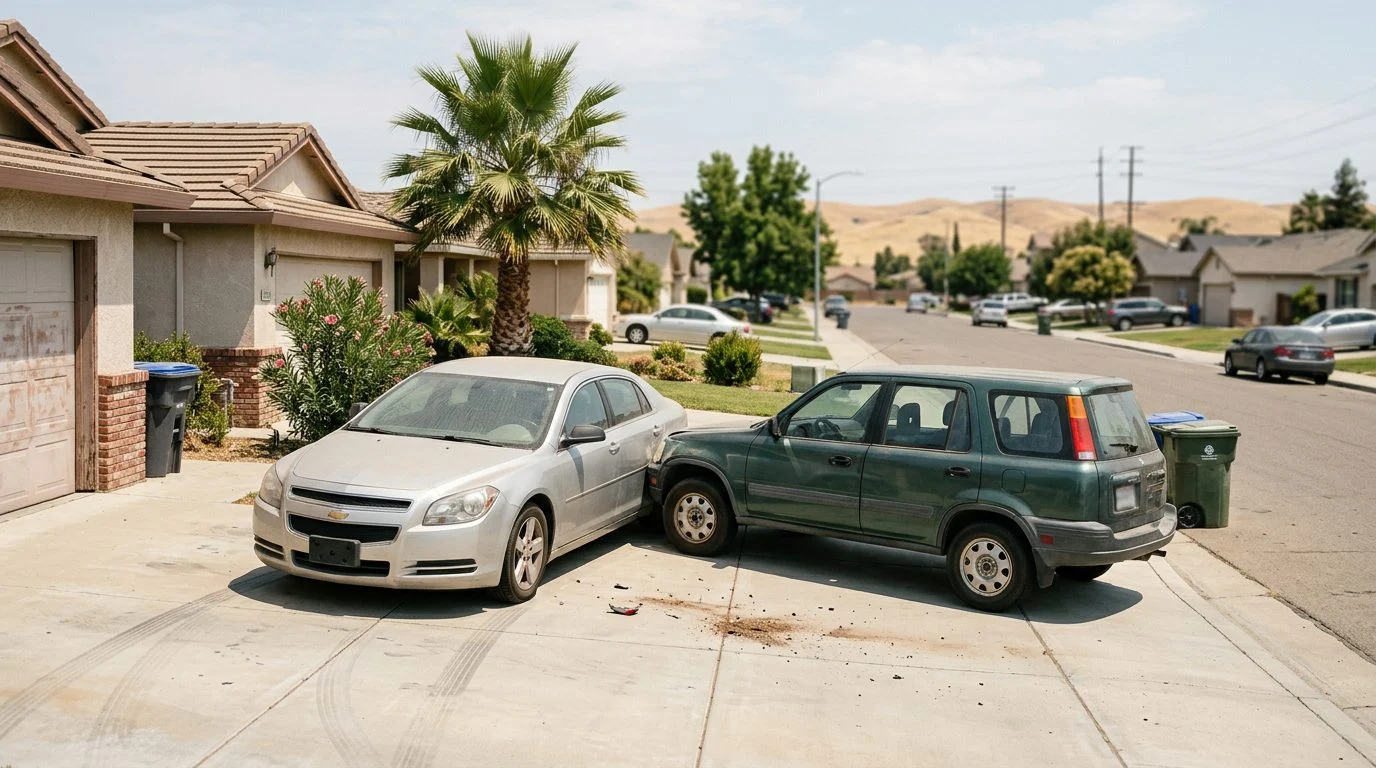
Negligence is often the central question in car, truck, motorcycle, bicycle, pedestrian, bus, and premises liability claims. The same four elements guide the analysis in each one. Dog bite claims can follow a separate rule, as explained above.
Our wrongful death lawyer overview explains how that kind of claim works.
Labels matter less than facts. A crash that seems minor can raise a serious negligence question. A serious-sounding event can turn on a few specific details. The facts decide the question, not the label.
California’s negligence rules apply in Kern County, Fresno, Visalia, Lancaster, Palmdale, Delano, Tehachapi, and across the state.
Quick answers
Is negligence the same as neglect?
In everyday speech the words overlap. In a claim, negligence is the legal term for failing to use reasonable care toward others.
Does negligence require an intent to harm?
No. The question is whether the person used reasonable care, not whether they meant to hurt anyone.
Can an injured person recover if they were partly at fault?
In California, yes. Their damages are reduced by their share of fault rather than barred.
Talk With Colvin Accident Lawyers About Your Situation
If you are trying to work out whether negligence played a part in an injury or a death, you can talk with Colvin Accident Lawyers about your facts. You may be reading this for an injured family member while you deal with an insurance company, medical bills, and legal words you have never heard before. That is a lot to carry at once.
Colvin Accident Lawyers is a personal injury law firm based in Bakersfield, California. It represents accident victims and families in car, truck, motorcycle, bicycle, pedestrian, bus, train, dog bite, premises liability, catastrophic injury, and wrongful death cases.
La consulta inicial es gratuita, confidencial y sin compromiso de continuar.
To talk through the facts of your situation, reach out through our contact page.
Colvin Accident Lawyers, Bakersfield, California — responsible for this site.
How Colvin Accident Lawyers Can Help
Focused Practice
Colvin Accident Lawyers focuses on accident injury claims, including car, truck, motorcycle, bicycle, pedestrian, bus, dog bite, premises liability, catastrophic injury, and wrongful death cases.
Serving Local Communities
We represent accident victims and families across Kern County, Fresno, Visalia, Lancaster, Palmdale, Delano, and Tehachapi.
Confidential Conversations
Tell us what happened in a private conversation. We will listen to the facts and explain the options that may apply to your situation.
Support for Families
Our team works with injured people and the families of those who have died, helping them understand each step of the process.
Reading Is Not a Substitute for Advice
This guide explains general legal concepts. Whether negligence applies to a particular accident depends on its specific facts, and the outcome of any claim cannot be predicted from general information. Contact us to discuss the details of your situation.
Accidents That May Involve Negligence
Car and Truck Accidents
Collisions on Kern County roads and highways, including crashes involving commercial trucks, are often analyzed through the lens of driver negligence.
Motorcycle and Bicycle Accidents
Riders and cyclists share the road with drivers. Questions of reasonable care arise when a driver fails to see or yield to them.
Pedestrian and Bus Accidents
Walkers and bus passengers may be hurt when a driver, bus operator, or other party fails to take reasonable precautions.
Premises and Dog Bite Cases
Property owners and animal owners may be asked whether they took reasonable steps to prevent a hazard or a bite from causing injury.