Lost a Family Member to a Driver’s Fault? Here’s What Comes Next.
By Donald Norman Colvin · Published November 22, 2026
Losing someone in a crash is hard. When the driver who caused it has also died, many families ask what happens if the at-fault driver dies before a wrongful death claim in California can move forward. In California, a wrongful death claim generally does not end when the at-fault driver dies. The details still decide how the claim moves, so it helps to learn the main rules early.
The Short Answer: The Claim Generally Survives the Driver’s Death
A claim against a driver generally survives that driver’s death. Under Code of Civil Procedure § 377.20, a cause of action against a person is not lost because that person dies. It survives, subject to the applicable time limit.
The death changes who the claim is made against and how it is handled. It does not usually change whether the family can seek compensation. Think of it as a change in address, not a change in the claim. The family now deals with an estate, a personal representative, and an insurer. Whether a specific claim moves forward depends on the facts of the crash, the insurance involved, and the timing.
A common mistake is assuming the driver’s death closes the case. Families who wait can lose time they need for records, insurance notices, and estate steps. Starting the review early keeps those options open.
If the driver who caused your loved one’s crash has died, you may still have a claim, and a conversation with us can help you see your options. Talk it through with our team — the first consultation is free, confidential, and carries no obligation.
Who Can Bring a Wrongful Death Claim in California
Only specific family members can bring the claim. Under Code of Civil Procedure § 377.60, the first group is the surviving spouse or registered domestic partner, the children, and the descendants of any child who has died. If the decedent left no surviving issue, the persons, including the surviving spouse or domestic partner, who would inherit the decedent’s property under intestate succession may sue.
The statute also reaches people who depended on the person who died. These include certain stepchildren and parents. A minor may qualify if they lived in the decedent’s household for the previous 180 days and relied on the decedent for half or more of their support.
The action may also be brought by the decedent’s personal representative on the heirs’ behalf. Knowing who qualifies early helps avoid confusion once the estate and the insurer become involved.
How the Claim Proceeds Against the Deceased Driver’s Estate
The claim is usually directed at the driver’s estate, through a personal representative. Under Code of Civil Procedure § 377.40, a claim against a person who has died may be asserted against the personal representative. That claim is subject to the Probate Code rules on creditor claims.
Probate adds steps and sometimes time. Under Code of Civil Procedure § 377.41, a case already pending against the decedent can continue against the personal representative only after proof of compliance with the creditor-claim requirements is made.
A successor in interest is a different route. Under Code of Civil Procedure § 377.11, the term means the beneficiary of the estate or another person who succeeds to the cause of action or to a particular item of property in the claim.
The estate’s assets and whether the driver carried insurance both shape how the claim is resolved. In practice, the first questions often involve who represents the estate and which insurer covered the vehicle.
Why Auto Liability Insurance Often Matters Most
Auto liability insurance is often the main source of payment in a crash claim. California sets minimum liability limits for auto policies under Vehicle Code § 16056.
For a policy issued or renewed on or after January 1, 2025, the minimum is $30,000 for one person’s bodily injury or death. It is $60,000 for two or more people, and $15,000 for property damage in one accident. Policies not subject to that 2025 increase carry minimums of $15,000, $30,000, and $5,000 under the same statute.
These are minimums, not the full amount a family may recover. A policy may carry higher limits.
If the at-fault driver had no insurance, or too little, the family’s own uninsured motorist coverage may come into play. Those policies are worth reviewing early. In some crashes, other parties may also be involved, and each one may bring its own coverage.

Deadlines That Shape a California Wrongful Death Claim
A wrongful death lawsuit generally must be filed within two years. Under Code of Civil Procedure § 335.1, that two-year period applies to an action for the death of an individual caused by another’s wrongful act or neglect.
The driver’s death keeps the claim alive, but the deadline still applies. Under Code of Civil Procedure § 377.20, a claim survives subject to the applicable limitations period. Timing rules have exceptions, so the calendar should be checked for each claim.
Estate steps, records requests, and insurance questions all take time. Families who wait to review their options can find the calendar tighter than they expected. Start the timeline as soon as possible, and keep a dated list of every step.
Evidence and Records That Support the Claim
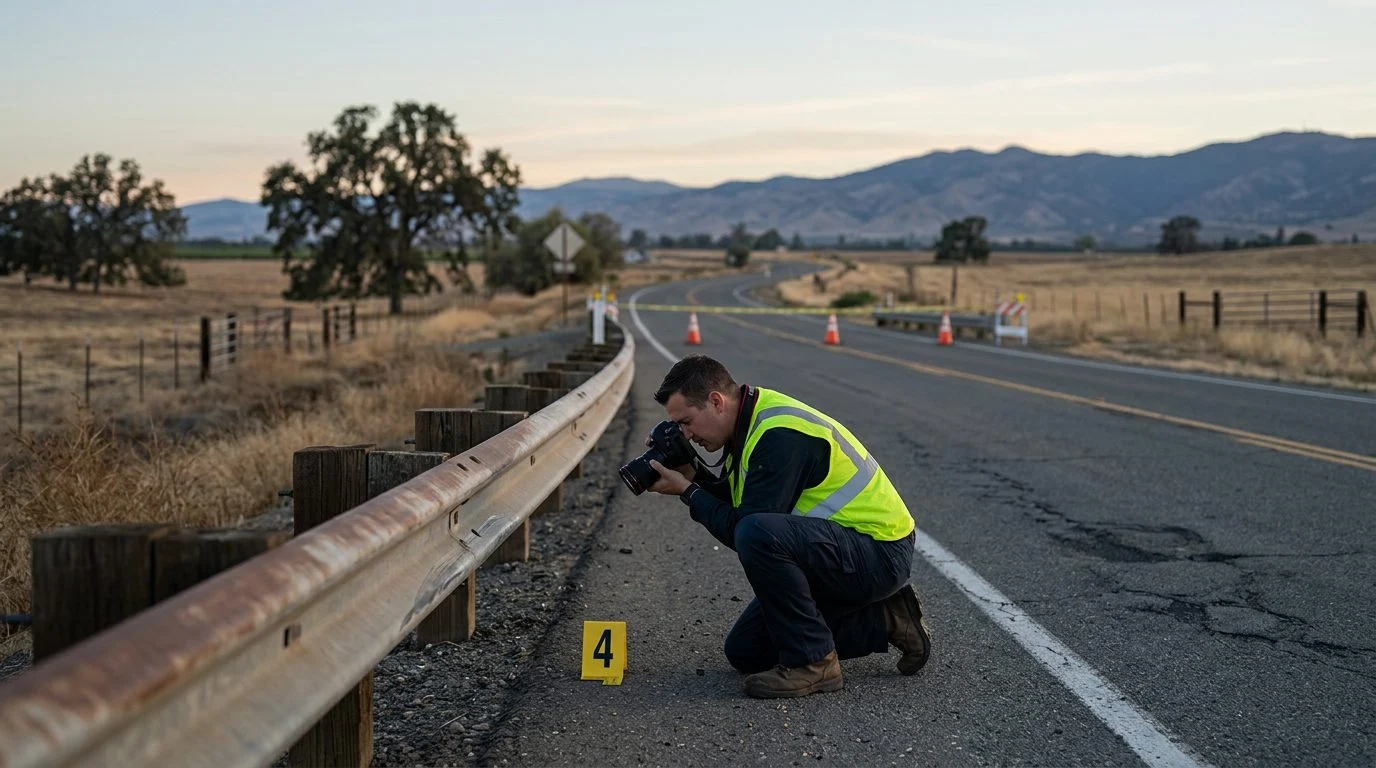
The traffic collision report, witness contact details, photos, and vehicle damage records show how the crash happened. Coroner and medical records tie the death to the crash. Together, they form the core of the proof.
Fault is often disputed. California uses comparative fault (shared fault).
If the person who died was a Medicare beneficiary, reporting rules apply. Reporting happens through the MSP Recovery Portal or by contacting the Benefits Coordination & Recovery Center.
Write down what you remember about the crash while it is fresh, and note the names of anyone who saw it. Keep copies of every report, letter, and bill you receive.
Not sure what your next step is?
Talk it through with our team — the first consultation is free, confidential, and carries no obligation.
Talking Through Your Family’s Next Step With Colvin Accident Lawyers
Families facing this often need to decide three things: whether to file against the estate, which insurer to notify, and how soon to act before the two-year deadline. Those decisions are easier with the facts laid out in order.
Colvin Accident Lawyers is a personal injury firm based in Bakersfield. It represents accident victims and families, including in wrongful death cases. Donald Norman Colvin is the responsible lawyer for this page. The firm can review the facts of your loss with you.
Common Questions
Does a wrongful death claim end if the driver dies?
Generally no. Under Code of Civil Procedure § 377.20, the claim survives the death, subject to the time limit.
How long do families have to file?
Generally two years, under Code of Civil Procedure § 335.1.
Who can bring the claim?
Usually a surviving spouse, domestic partner, or children, plus certain others named in Code of Civil Procedure § 377.60.
If the driver who caused your loved one’s crash has died, you may still have a claim, and you don’t have to sort out the estate, the insurance, and the deadlines alone. Please contact Colvin Accident Lawyers to talk it through. La consulta inicial es gratuita, confidencial y sin compromiso de continuar. (The first consultation is free, confidential, and comes with no obligation to continue.)
How our team approaches these cases
A free, confidential first consultation
The first consultation is free, confidential, and carries no obligation to continue.
Plain-language explanations
We walk you through the steps in terms you can follow, without legal jargon.
Careful review of the facts
Crash reports, medical records, and other documents are reviewed together to understand what happened.
Focused on wrongful death claims
Our practice includes wrongful death matters, and we handle them with the care a family deserves.

Questions families often ask
Can the claim continue after the driver dies?
The answer depends on the facts of each case and the law that applies to it. Our team reviews those details with you during a free consultation.
How much time do we have to act?
Deadlines can be important and are easy to miss. Contact us so we can review the dates that may apply to your family’s situation.
Who can bring a wrongful death claim?
Whether your family member’s claim is handled by you or by someone else depends on the circumstances. We can explain the options that fit your situation.
What if the driver’s insurance is involved?
Insurance questions often come up early. We can discuss how they may affect your family’s next steps during your consultation.
Don’t wait to ask your questions
Evidence from a crash, including records and witness information, can change over time. Speaking with our team early can help your family understand its options.