No Police Report? Your Family Still Has Options
By Donald Norman Colvin · Published November 29, 2026
Losing a family member in a crash is hard enough. Many families then ask whether a claim is still possible when no police report was filed, or when the report that exists leaves out key facts.
This page explains what a police report can and cannot do, what other evidence can show how the death happened, who may bring the claim, and which deadlines matter most.
Can a Wrongful Death Claim Move Forward Without a Police Report?
A wrongful death claim rests on negligence and harm, not on paperwork. To win a negligence claim, the family must prove that the defendant was negligent, that the person who died was harmed, and that the defendant’s negligence was a substantial factor in causing that harm. Under California’s civil jury instruction on negligence, an injured person must prove that the defendant was negligent, that the injured person was harmed, and that the defendant’s negligence was a substantial factor in causing that harm.
Negligence means failing to use reasonable care. Under California’s civil jury instructions, negligence means failing to use reasonable care to prevent harm to oneself or to others, and it can come from acting or from failing to act: a person is negligent if he or she does something a reasonably careful person would not do in the same situation, or fails to do something a reasonably careful person would do in the same situation. A person is negligent if that person does something that a reasonably careful person would not do in the same situation or fails to do something that a reasonably careful person would do in the same situation.” California also makes people responsible for injury caused by a want of ordinary care, under Civil Code § 1714.
The real question is what happened and who was careless. That question is answered with evidence, and how it gets answered depends on the facts of each case.
What a Police Report Does and Does Not Do in a Claim
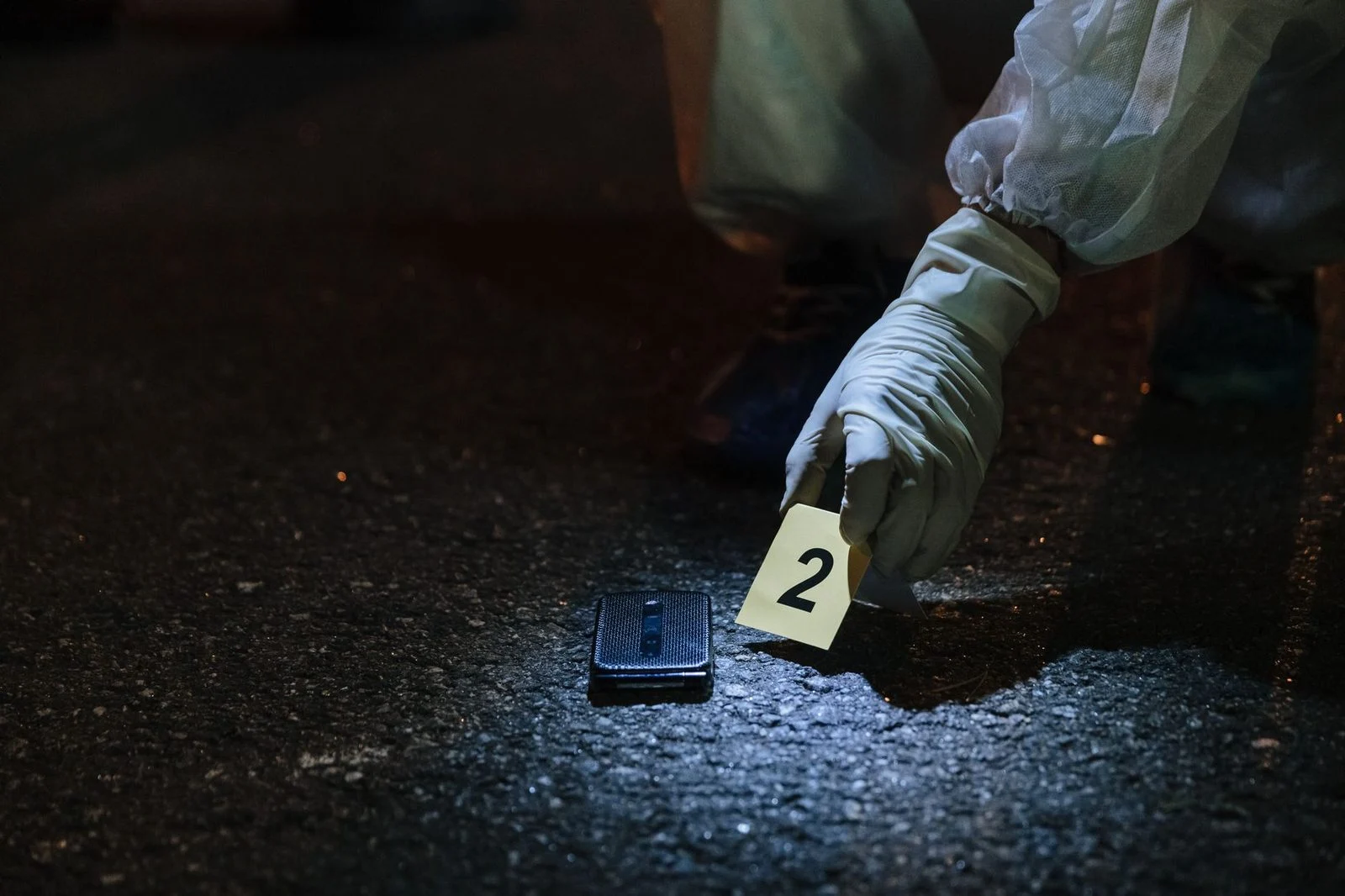
A police report can capture the scene as officers found it, the position of the vehicles, and statements people gave at the time. It can also list witnesses and show what the officer believed happened. For many families, it is the most direct way to start a timeline.
A report is still one source of evidence, not the proof itself. The facts it records usually have to be backed by witnesses, records, photographs and other proof. An officer’s conclusion about fault does not settle the question. A report that is silent on a key point leaves that point for other evidence to answer.
Families often go wrong here. They treat the report as the whole case and wait for it while witnesses move away and vehicles get repaired. The report matters, but it is rarely the only proof, so gathering other evidence should start right away.
Other Evidence That Can Show How the Death Happened
Several kinds of evidence can show how a fatal crash happened. Many can be gathered without waiting for any agency to finish its work.
- Witness accounts. Names and statements from people who saw the collision, or the events just before it, matter most. Ask for contact details early, while memories are fresh.
- 911 and dispatch records. Call logs and dispatch timelines can show when the crash was reported and what responders were told.
- Photos and video. Images from the scene, from phones or from nearby cameras may show where vehicles came to rest, road conditions and the lighting at the time.
- Medical and coroner findings. Medical records and the coroner’s or medical examiner’s findings on cause of death link the death to the crash.
- Vehicle and insurance records. Damage records, repair estimates and insurance claim files describe how the impact happened. Vehicles are often repaired or scrapped, so ask the owner or storage yard to keep the vehicle unrepaired while the family decides next steps.
Be careful with words spoken after a death. Under Evidence Code § 1160, expressions of sympathy made to the injured person or to the family about pain, suffering or death of a person involved in an accident are not admissible as an admission of liability in a civil action. A statement of fault is different, and that section does not protect it.
If the Report Exists But You Do Not Have a Copy
When you make the request, write down the agency name, any report number and the date you asked. That record helps you follow up if the request stalls.
Drivers have their own reporting duty. Under Vehicle Code § 20008, the driver of a vehicle other than a common carrier vehicle, involved in an accident that causes injury or death, must make a written report within 24 hours. That report goes to the California Highway Patrol or, inside a city, to the CHP or the city police. Common carrier vehicles follow a different timeline.
Requests can take time, and a report may still be pending. Families can request the report and gather other evidence at the same time.
If No Report Was Filed or the Report Is Incomplete
A report can be missing or incomplete for several reasons. The crash may never have been reported. The responding agency may have documented only part of the scene. Or the report may leave out witnesses or the order of events.
When that happens, witness statements, medical findings, vehicle records and photographs can fill in the sequence of events. Gaps are addressed by gathering supporting records, not by relying on the report alone. Some families worry that an unclear report will weaken the claim. Other records can often clarify what happened.
A common mistake is assuming the claim is over because a form is missing. Another is writing down events from memory weeks later without noting the date. Keep every document, and write down what you remember while it is fresh.
Who Can Bring the Claim and the Deadline to Act
Under Code of Civil Procedure § 377.60, the decedent’s surviving spouse, domestic partner and children may bring a wrongful death claim. So may the children of a child who has died. The decedent’s personal representative may also bring the claim on their behalf.
If there is no surviving issue, the persons who would inherit the decedent’s property by intestate succession may bring the claim. Certain people who depended on the decedent may also sue, whether or not they qualify above: the putative spouse, children of the putative spouse, stepchildren, parents, or legal guardians if the parents have died. That includes a putative spouse, stepchildren, parents, or guardians if the parents have died. A minor may sue if they lived in the decedent’s household for the previous 180 days and depended on the decedent for one-half or more of their support.
For the time limit, Code of Civil Procedure § 335.1 provides two years for an action for the death of an individual caused by another’s wrongful act or neglect.
A claim against a public agency follows a different path. Under Government Code § 911.2, a claim relating to a death must be presented not later than six months after the cause of action accrues. Government Code § 945.6 sets its own timing for lawsuits against public entities. Families should check early whether a public agency may be involved, because that six-month period is much shorter.
If the driver who caused the crash also died, see suing the estate of a driver who died in a crash. Keep copies of insurance letters, medical bills and notices, since they can show dates that matter later.
Questions Families Often Ask About Wrongful Death Claims
Here are short answers to common questions, each tied to the rules above.
What are the grounds for a wrongful death lawsuit in California?
A wrongful death claim is based on a death caused by the wrongful act or neglect of another person. That [name of defendant]’s negligence was a substantial factor in causing [name of plaintiff]’s harm.
Does the fault of the person who died stop the claim?
The Judicial Council of California jury instruction on a plaintiff’s comparative fault tells jurors that if the defendant proves the elements set out in that instruction, the plaintiff’s damages are reduced by the jury’s determination of the plaintiff’s percentage of responsibility, and that the judge will calculate the actual reduction.
How are damages decided in a wrongful death case?
Under Code of Civil Procedure § 377.61, damages may be awarded that are just under all the circumstances, but may not include damages recoverable under Section 377.34. The court decides how any award is divided among the people entitled to it.
For an overview of the claims this firm handles, see the wrongful death lawyer page.
Talk With Colvin Accident Lawyers About Your Family’s Situation
If your family is facing a death with no police report, an incomplete report, or uncertainty about whether a claim can go forward, you do not have to sort that out alone. Colvin Accident Lawyers is based in Bakersfield, California, and handles wrongful death cases.
The first consultation is free, confidential, and carries no obligation to continue.
To talk through the facts of your loss, contact Colvin Accident Lawyers.
How Colvin Accident Lawyers Approaches Your Family’s Case
Compassion First
We understand that a sudden death brings grief, questions and paperwork at the same time. We take the time to listen before we discuss next steps.
Careful Investigation
We work to gather the evidence that documents what happened, including witness information, photographs, medical records and other records that do not depend on a police report.
Clear Communication
We explain the process in plain language so you know what is happening, why it matters and what decisions are yours to make.
Advocacy for Your Family
We focus on holding the responsible party accountable and pursuing fair compensation for the losses your family has suffered.
Start Gathering Information Now
If you have them, keep names and contact details of anyone who saw the incident, photos or video, medical and hospital records, and any messages or notes about what happened. Do not wait for a police report to start preserving what you have.

Records That Can Help Document a Wrongful Death Claim
Witness Accounts
Statements from people who saw the incident or its aftermath can help describe how the death occurred.
Photos and Video
Images from the scene, nearby businesses, vehicles or phones may show conditions, positions and movements.
Medical and Coroner Records
Hospital, emergency and medical examiner records can document injuries and the cause of death.
Employment and Household Records
Pay records and family information can help show the financial and personal losses your family has experienced.