Wrongful Death Lawyer · Kern County
When a Multi-Vehicle Pileup Takes a Loved One, Your Family Needs Answers
Colvin Accident Lawyers helps families in Bakersfield and across Kern County understand their options after a fatal crash involving several vehicles.
By Donald Norman Colvin · Published November 14, 2026
A fatal pileup can leave a family with questions all at once. Who was responsible? Which insurance companies are involved? What should the family do now?
A wrongful death claim is the legal path many families take when someone dies because of another person’s wrongful act or negligence. In a pileup, more than one party may share responsibility, so the claim is often more involved than a single-car case. This page explains how that works in Kern County and what families can expect.
What a Fatal Multi-Vehicle Pileup Wrongful Death Claim Is
A fatal pileup wrongful death claim is a legal claim brought after a chain-reaction crash kills someone. It seeks compensation for the losses the death caused.
Under Code of Civil Procedure § 377.60, certain family members can bring the claim. The decedent’s personal representative can also bring it on their behalf.
Other people may qualify too. A minor may qualify if they lived in the decedent’s household for the previous 180 days and relied on that person for at least half of their support.
A pileup often involves several drivers, vehicle owners, employers, and even road conditions. Each one may have played a role.
If a loved one died in a multi-car crash, you may have a claim worth reviewing, and our team can talk through it with you. Talk it through with our team — the first consultation is free, confidential, and carries no obligation.
What a Wrongful Death Claim Can Cover
A wrongful death claim can seek money for losses the family suffered because of the death. The exact damages depend on who the decedent was and what happened.
California separates two kinds of losses. Economic losses are objectively verifiable money losses, such as medical bills, lost earnings, and burial costs. Non-economic losses are subjective, such as loss of society and companionship. See Civil Code § 1431.2 for these definitions.
Families often look at these items:
- Medical bills and burial costs
- Lost earnings and financial support the person would have provided
- The cost of replacing household services
- Loss of companionship, comfort, and care
Survival claims follow different rules. When a personal representative brings the claim, damages are limited to the loss or damage the decedent sustained or incurred before death, including any penalties or punitive or exemplary damages the decedent would have been entitled to recover had they lived. They generally do not include pain, suffering, or disfigurement, though the statute sets out limited exceptions. See Code of Civil Procedure § 377.34.
No one can predict the amount of a claim at the start. Each case turns on its own facts.
Why a Pileup Case Is More Complex Than a Single-Vehicle Crash
A pileup case is more complex because several parties, insurers, and rules can apply at once.
Several parties may share fault. Under Civil Code § 1431.2, each defendant’s liability for non-economic damages is several only. Each one pays only the non-economic damages allocated to it in direct proportion to its own percentage of fault, not a share of everyone else’s.
Insurance may fall short. For policies issued or renewed on or after January 1, 2025, California’s minimum bodily injury limits are $30,000 for one person and $60,000 for two or more persons in one accident. See Vehicle Code § 16056. Those are minimums. A pileup can injure many people and involve several policies.
Commercial vehicles add parties. A truck, bus, or work vehicle may bring in the company that owns it, employs the driver, or manages the load. Each may have its own insurance, and each must be identified.
Road conditions can add a government defendant. A dangerous road condition may make a public entity a possible defendant. Under Government Code § 835, the family must show that the property was in a dangerous condition, that the condition caused the injury, and that it created a foreseeable risk of that kind of injury. They must also show either that a negligent or wrongful act or omission of a public entity employee, acting within the scope of employment, created the condition, or that the public entity had actual or constructive notice of it in time to protect against it.
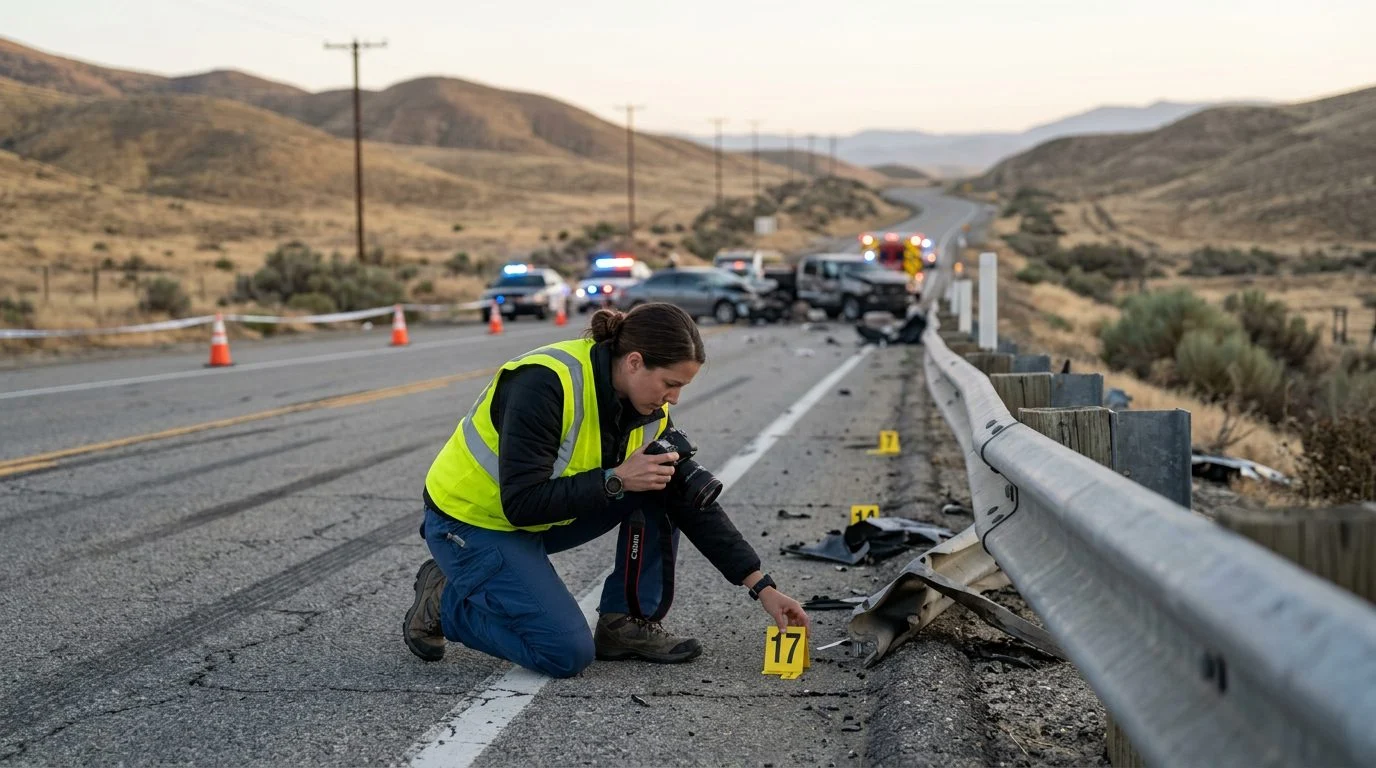
Evidence changes quickly. Vehicle positions, skid marks, and debris can shift once traffic moves. Working out the order of impacts often takes careful review.
Evidence and Deadlines Kern County Families Should Know About
The general deadline for a California wrongful death lawsuit is two years, but a claim against a public entity has a much shorter timeline.
Under Code of Civil Procedure § 335.1, an action for the death of a person caused by another’s wrongful act or neglect must be brought within two years.
Under Government Code § 911.2, a claim relating to a death must be presented not later than six months after it accrues. Under Government Code § 945.6, a suit generally must be filed within six months after written notice given in accordance with Section 913 is personally delivered or deposited in the mail. Without that notice, the suit must be filed within two years of accrual. Cal. Gov. Code § 945.6 reads: “(2) If written notice is not given in accordance with Section 913, within two years from the accrual of the cause of action.”
Keep these items together while the facts are fresh:
- Police and CHP collision reports
- Photos of the scene and the vehicles
- Names and contact details of witnesses
- Dashcam or nearby business video, which can be overwritten
- Vehicle data and maintenance records
- Medical and funeral records
Write down what you remember about the crash soon after it happens. Memory fades, and details can be hard to rebuild later.
How a Wrongful Death Claim Works, Step by Step
A claim usually moves from a first consultation to investigation, then to a demand to insurers, and to a lawsuit only if needed.
- Consultation. You describe the crash, the people involved, and your family’s questions. The initial consultation is covered in the FAQ below.
- Investigation. The team gathers reports and records, identifies each party and insurer, and asks that evidence be preserved.
- Identifying claimants. The team confirms who may bring the claim under the statute described above, and which losses the family may pursue.
- Presenting the claim. The claim goes to insurers and any responsible party, followed by negotiation. A claim against a public entity must meet the deadlines described above.
- Filing suit if needed. If a fair resolution is not reached, a lawsuit is filed before the applicable deadline.
Timelines vary with the number of parties, any government involvement, and court schedules.
Why Families in Kern County Work With Colvin Accident Lawyers
Colvin Accident Lawyers is based in Bakersfield and represents accident victims and families in Kern County. The firm handles wrongful death cases as one of its practice areas.
Donald Norman Colvin is the responsible lawyer for this page. Our attorneys and our team also handle car, truck, motorcycle, bus, bicycle, pedestrian, dog bite, premises liability, and catastrophic injury matters. A single pileup can touch several of these areas, so they can be reviewed together.
Our team helps with intake and scheduling, so families have one clear point of contact. Our attorneys can explain how the firm approaches fatal crash cases during the consultation.
No lawyer can promise a result. Every case turns on its own facts and the law that applies to them.
Not sure what your next step is?
Talk it through with our team — the first consultation is free, confidential, and carries no obligation.
Frequently Asked Questions About Fatal Pileup Wrongful Death Claims
What if the insurance is not enough?
Other at-fault parties, other policies, and other sources of coverage can matter. Minimum policy limits can be low for crashes with several injured people.
Who pays for the consultation?
The initial consultation is free, confidential, and carries no obligation to continue.
How soon should I call?
Early contact helps protect evidence and keeps the short government claim deadlines in view.
Talk With Colvin Accident Lawyers About Your Family’s Crash
If a loved one died in a multi-car crash on a Kern County road, you may have a claim worth reviewing. You don’t have to sort out the police report alone.
Bring the collision report, the names of every vehicle involved, the dates, and any records you have. Then contact our team to set up a first consultation, and we will go through your family’s facts with you.
Colvin Accident Lawyers, Bakersfield, California — responsible for this site.
How Colvin Accident Lawyers Approaches Pileup Wrongful Death Cases
A free, confidential first consultation
The initial consultation is free, confidential, and carries no obligation to continue. You can talk through what happened without committing to anything.
Attention to the whole family
Our team understands that a pileup can affect many people at once. We take time to listen to the family members who are left behind.
Organized review of the crash evidence
Multi-vehicle crashes often produce many reports, photos, and records. We work to gather and organize the information that matters to the claim.
Serving Kern County and nearby communities
Colvin Accident Lawyers is based in Bakersfield and represents families from Kern County and surrounding areas, including Fresno, Visalia, Lancaster, Palmdale, Delano, and Tehachapi.
Advocacy with a clear focus
We fight for fair compensation for the family's losses, from funeral and medical costs to the lasting impact of losing someone important.
Speak with a lawyer before speaking with an insurer
Insurance companies for several drivers may contact your family soon after a pileup. Before giving a recorded statement or signing any release, consider talking with a lawyer about what you are being asked to agree to.
What Families Can Expect After Contacting Us
1. Start with a conversation
We learn what happened, who was involved, and what your family is facing. The first consultation is free and confidential.
2. Identify the parties and coverage
In a pileup, more than one driver, owner, or company may share responsibility. We look at every potential source of insurance and recovery.
3. Build the case
We gather police and collision reports, witness information, vehicle data, and medical and financial records that document the loss.
4. Support your family through each step
We keep you informed, answer your questions, and handle communication with insurers and other parties so your family can focus on healing and each other.