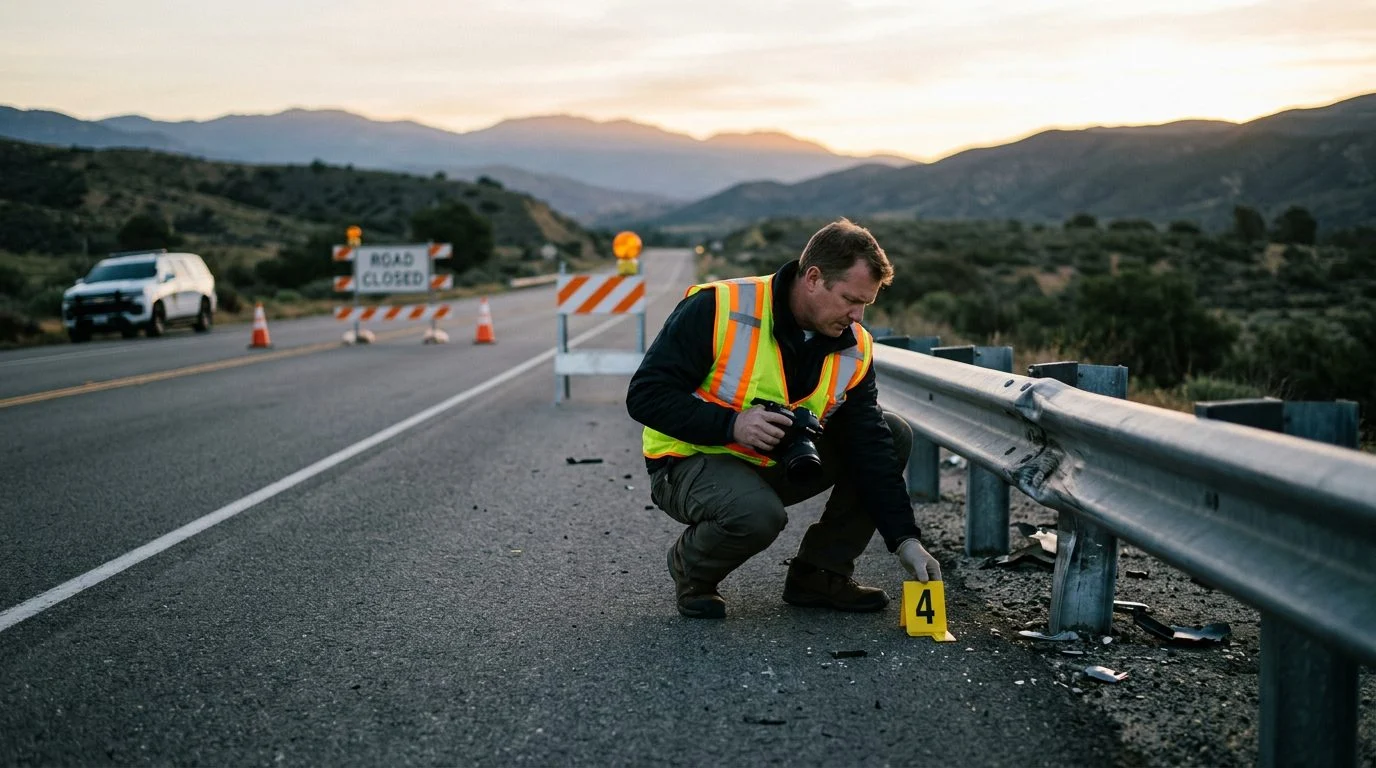
Wrongful Death | Kern County
Lost a Loved One in a Crash Caused by a Road Hazard?
Colvin Accident Lawyers helps Kern County families look into what happened, who may be responsible, and what steps come next.
By Donald Norman Colvin · Published November 9, 2026
Kern County Wrongful Death Lawyer for Fatal Road Hazard Crashes
Losing a family member in a crash is painful, and the questions come fast. If a road hazard played a part in a fatal crash in California, the family may have a wrongful death claim. That claim can reach a public agency that maintains the road. Families in Kern County and nearby communities should learn the deadlines early, because some of them are short.
What a Fatal Road-Hazard Crash Claim Is and Who It Is For
A fatal road-hazard crash claim is a wrongful death case. It is brought after a person dies because of another party’s wrongful act or negligence, and a road condition is part of the cause. It is a civil case.
Under Code Civ. Proc. § 377.60, the claim may be brought by the decedent’s surviving spouse, domestic partner or children. The personal representative of the estate can bring it on their behalf.
This page is for families of drivers, passengers, motorcyclists, cyclists and pedestrians killed in crashes where a roadway condition played a role. The claim centers on the loss to the family and the estate. A lawyer can review whether the facts support a claim.
For context, the IIHS state-by-state fatality statistics page presents California’s motor-vehicle crash fatality totals and rates, including deaths by road-user type.
Road Hazards That Can Support a Fatal Crash Claim
Several road conditions can support a claim when they contribute to a deadly crash. Common examples include:
- Potholes, deep pavement failures and edge drop-offs that cause a loss of control or a sudden swerve.
- Debris, fallen cargo, rocks or tire fragments left in lanes or on shoulders.
- Missing, blocked, damaged or wrong signs and lane markings near curves, merges or construction zones.
- Malfunctioning signals or unmarked lane closures.
The hazard must be a real danger, not a minor flaw. Under Gov. Code § 830, a dangerous condition creates a substantial risk of injury, not a minor, trivial or insignificant one.
Notice is often the key question. Under Gov. Code § 835, a public entity may be liable when the plaintiff establishes that the property was in a dangerous condition at the time of injury, that the injury was proximately caused by the dangerous condition, that the condition created a reasonably foreseeable risk of the kind of injury incurred, and either its employee’s negligence created it or it had notice in time to fix it. Under Gov. Code § 835.2, constructive notice requires that the condition existed long enough and was obvious enough that due care would have found it. Maintenance logs, prior complaints and repair requests often matter.
Other parties can share responsibility. A private property owner or contractor working near the road may be at fault. So may another driver whose conduct combined with the hazard. Under Civ. Code § 1714, everyone must use ordinary care in managing their property and person. Cal. Civ. Code § 1714 reads: “(a) Everyone is responsible, not only for the result of his or her willful acts, but also for an injury occasioned to another by his or her want of ordinary care or skill in the management of his or her property or person, except so far as the latter has, willfully or by want of ordinary care, brought the injury upon himself or herself.”
Fault can be shared. It reduces damages in proportion to fault. Under Civ. Code § 1431.2, each defendant’s non-economic damages are paid in direct proportion to its own fault.
What a Wrongful Death Claim Can Recover
A wrongful death claim seeks damages for the family’s loss. Under Code Civ. Proc. § 377.61, the court may award damages that, under all the circumstances of the case, may be just, but may not include damages recoverable under Section 377.34. The losses a family can claim depend on the facts: the decedent’s age, earnings, family relationships and how the crash happened.
Separately from a wrongful death claim, Code Civ. Proc. § 377.34(a) governs an action brought by the decedent’s personal representative or successor in interest on the decedent’s own cause of action. In that action, recoverable damages are limited to the loss or damage the decedent sustained or incurred before death, including any penalties or punitive or exemplary damages the decedent would have been entitled to recover, and they do not include damages for pain, suffering, or disfigurement, except as subdivision (b) of that section provides. The statute has exceptions tied to filing dates, so the timing of a case matters.
Many families ask what their claim is worth. You don’t need that answer before you talk with a lawyer. The first review is where the facts get sorted out.
Deadlines and Government Claim Rules to Know Early
The general limit for an action for death caused by another’s wrongful act is two years. Code Civ. Proc. § 335.1 sets that period.
Claims against a city, county or state agency start sooner. Under Gov. Code § 911.2(a), a claim for death must be presented not later than six months after the cause of action accrues.
A suit against the agency generally waits until the claim is acted on or deemed rejected. See Gov. Code § 945.4. If written notice of rejection is given, Gov. Code § 945.6(a) generally requires a suit within six months of that notice. If no notice is given, the deadline is two years from accrual.
Because the six-month claim period is shorter, it often arrives first. Road repairs, sign replacements and debris cleanup can erase evidence quickly. Keep any official crash report number and write down what you remember while it’s fresh.
How a Fatal Road-Hazard Case Typically Moves Forward
A case usually starts with a free, confidential initial consultation, with no obligation to continue. From there, the work moves through evidence, notices and either negotiation or a lawsuit.
- Initial consultation. The family shares the crash facts, dates, and any reports, photos or video.
- Evidence requests. The team asks for police and incident reports, road maintenance and repair records, signage history and witness information.
- Responsible parties and notices. The team identifies who may be liable and presents any government claim on time.
- Damages documentation. The team gathers the decedent’s earnings history, family relationships, funeral costs and medical bills.
- Negotiation or lawsuit. The firm works with insurers or agencies, files suit when needed, and keeps the family informed.
Timing depends on the facts of each case, including the agency involved and the complexity of the evidence.
Not sure what your next step is?
Talk it through with our team — the first consultation is free, confidential, and carries no obligation.
Why Families Talk With Colvin Accident Lawyers
Colvin Accident Lawyers is based in Bakersfield, California. The firm represents accident victims and families in car, truck, motorcycle, bicycle, pedestrian, bus, train, dog bite, premises liability, catastrophic injury and wrongful death cases.
Donald Norman Colvin is the responsible lawyer for this page. Our team includes assistants and office staff. The firm represents families in Kern County, Fresno, Visalia, Lancaster, Palmdale, Delano and Tehachapi.
Our role is to review the facts, explain the legal options and handle the claim process with the family. No lawyer can predict or ensure a particular result, and each case turns on its own facts.
Common Questions About Fatal Road-Hazard Crash Claims
Can we pursue a claim if a pothole or debris caused the crash?
Yes, a claim may be possible when a road hazard contributed to a fatal crash. A lawyer reviews the facts to judge who may be responsible.
Who can file a wrongful death claim in California?
Typically a surviving spouse, domestic partner or children, or the personal representative on their behalf. Certain dependent relatives may also qualify.
Do we have to sue the county or the state?
A claim against a public agency starts with a written government claim. A lawsuit generally follows only after that claim is acted on or deemed rejected.
What should we bring to the consultation?
Bring the death certificate, the crash or police report number, photos or video, witness names, and any letters or complaints about the road.
If a road hazard played a role in your family’s loss, you don’t have to work out the deadlines alone. Contact Colvin Accident Lawyers to talk through the facts.
How Colvin Accident Lawyers Approaches Your Case
Careful Review of the Facts
We look at the crash report, road conditions, photos and records to understand how the hazard may have contributed to the fatal collision.
Support for Grieving Families
Losing someone suddenly is painful. We explain the process in plain language so you can focus on your family.
Clear Answers to Your Questions
We take the time to explain possible legal options, what information we still need, and what to expect along the way.
Advocacy for Fair Accountability
We work to hold the responsible parties accountable, whether the hazard involved a public roadway, a private property or a commercial vehicle.
Protect the Evidence
If it is safe to do so, photograph the hazard, the scene and any debris or damaged property. Keep copies of the police report and any medical or funeral records. Physical evidence can change over time.
Road Hazards We Look Into
Potholes and Road Defects
Cracked, sunken or unrepaired pavement can force drivers and riders into dangerous maneuvers.
Debris and Fallen Objects
Cargo, tire treads, rocks or other objects left on the roadway can cause sudden loss of control.
Poor Signage and Lighting
Missing warnings, faded markings or dark stretches of road can leave motorists without time to react.
Unsafe Work Zones
Construction areas without proper barriers, signs or traffic control can expose the public to serious danger.