Wrongful Death · Bakersfield, California
When a Tire Blowout Takes a Loved One, Your Family Deserves Answers
Colvin Accident Lawyers helps families in Bakersfield and throughout Kern County understand how a fatal crash happened and what legal options may be available.
By Donald Norman Colvin · Published November 14, 2026
Losing someone in a crash that began with a blown tire or failed brakes raises hard questions fast. A fatal tire blowout wrongful death lawyer in California can help a family sort out who may be responsible and which deadlines apply.
Under California law, eligible survivors may bring a wrongful death claim when another person’s wrongful act or neglect causes a death. A tire blowout or brake failure can be the link in that chain. This page offers general information about accident and injury claims in California.
What a Wrongful Death Claim Covers After a Fatal Tire Blowout or Brake Failure
A wrongful death claim lets eligible family members seek damages for their own losses after a death caused by someone else’s wrongful act or neglect.
Under Code of Civil Procedure § 377.60, the decedent’s surviving spouse, children, and a domestic partner in a registered domestic partnership may file. So may the descendants of a child who has died. If there is no surviving issue of the decedent, the people who would inherit the decedent’s property by intestate succession, including a surviving spouse or domestic partner, may file. Dependent relatives, such as stepchildren and parents, may also qualify. A minor may qualify if the minor lived in the decedent’s household for the previous 180 days and relied on the decedent for one-half or more of support.
Two kinds of claims. A wrongful death claim covers losses to survivors. A survival claim covers the harm the decedent suffered before death. Under Code of Civil Procedure § 377.30, the decedent’s cause of action passes to a successor in interest. The personal representative can bring it, or the successor if there is none.
Why the cause matters. A blowout or brake failure can cause a crash involving a car, truck, motorcycle, or bus. The cause points to who may be responsible. A failed part can lead to a driver, a vehicle owner, a repair shop, or a maker.
If a tire blowout or brake failure took your family member's life, you may have a claim, and our team can review the crash facts with you. Talk it through with our team — the first consultation is free, confidential, and carries no obligation.

Who Can Be Held Liable in a Tire Blowout or Brake Failure Death
More than one party may be responsible, and the cause of the failure shapes who that is.
Under Civil Code § 1714, a person is responsible for injury caused by a lack of ordinary care in managing their property or person, except so far as the injured person has, willfully or by want of ordinary care, brought the injury upon themselves.
The vehicle owner. Under Vehicle Code § 17150, an owner is liable for death or injury caused by a negligent act of anyone driving with the owner’s express or implied permission. An owner who lent the car can face a claim even if someone else was behind the wheel.
Repair and maintenance shops. A shop that installed, rotated, inspected, or serviced tires or brakes may be responsible if it missed or failed to fix a known problem. Its work orders often show what was done and when.
Trucks and buses. Federal rules set brake standards for commercial vehicles. 49 C.F.R. § 393.47 requires brake parts to be built, installed, and maintained to prevent excessive fading and grabbing. It also requires safe and reliable stopping, and it sets minimum brake lining and pad thicknesses for trucks, truck-tractors, and buses.
Public agencies. A pothole or road hazard that helped cause a blowout can bring in a city, county, or state agency. Those claims follow separate notice rules.
Evidence to Preserve in a Tire or Brake Failure Case
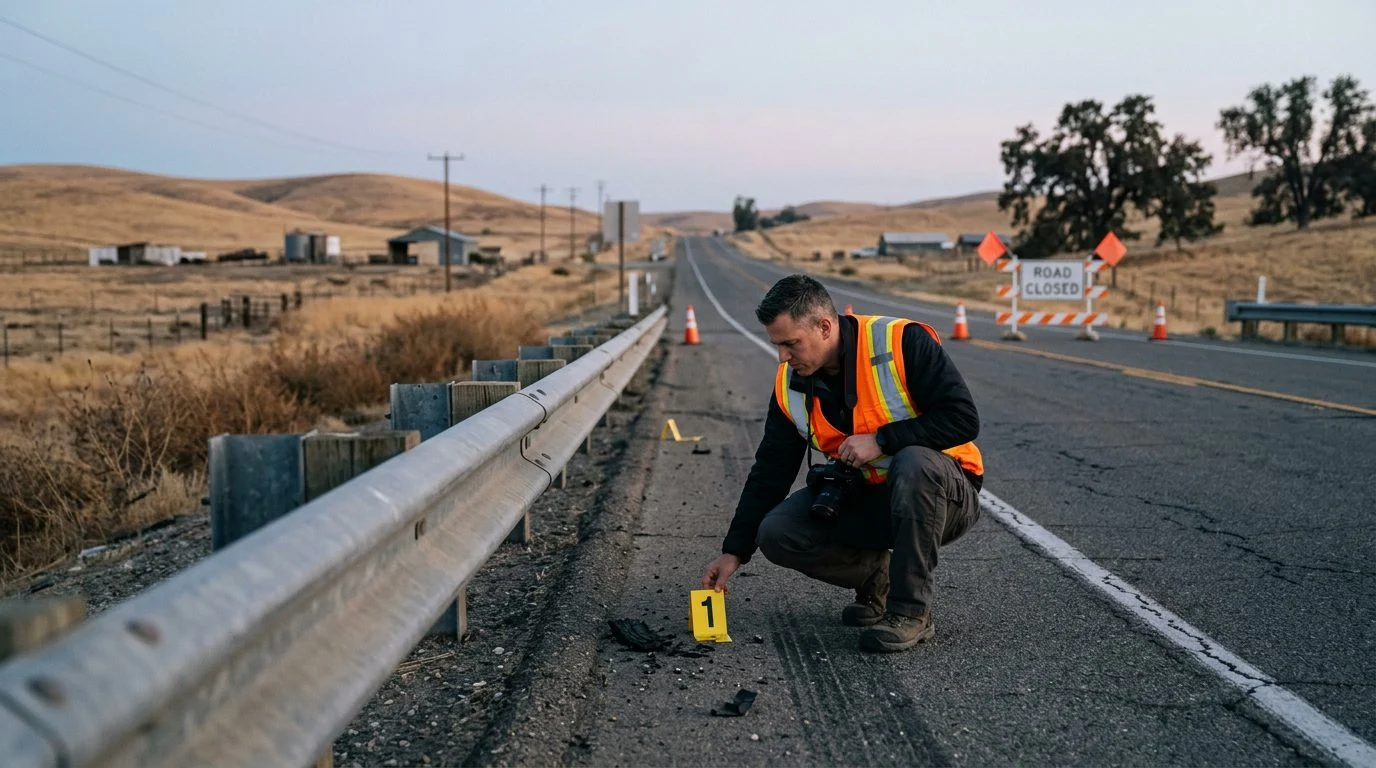
The vehicle and the failed parts are the most important evidence, so protect them first.
- The vehicle, in its post-crash condition, with the tire, wheel, or brake parts still attached.
- Tire purchase, rotation, and repair invoices.
- Brake inspection and service reports.
- Recall notices and warranty paperwork for the vehicle and its parts.
- Police and crash reports, scene and vehicle photos, and 911 records.
- Names and contact details for witnesses.
Insurance and salvage paperwork can move quickly. A vehicle sent to a salvage yard or sold for parts can be hard to locate again. Written requests asking other parties to keep the vehicle and records help protect that evidence. An engineering review of the failed part can show how it failed, but that review usually needs the part itself.
Damages Families May Pursue and Deadlines That Apply
Under Code Civ. Proc. § 335.1, an action for the death of an individual caused by the wrongful act or neglect of another is subject to a two-year filing period, although tolling or other exceptions may change when that period applies. Claims against a public agency follow separate notice rules.
Economic losses. Under Civil Code § 1431.2, economic losses are objectively verifiable. They include medical expenses, loss of earnings, and burial costs. Non-economic losses include emotional distress and loss of society and companionship. In personal injury, property damage, and wrongful death actions based upon principles of comparative fault, each defendant pays non-economic damages only in proportion to its share of fault.
Survival damages. Under Code of Civil Procedure § 377.34, a survival action generally covers losses the decedent suffered before death. Those damages generally do not include pain, suffering, or disfigurement. Subdivision (b) of Section 377.34 allows damages for pain, suffering, or disfigurement only in a survival action that was granted a preference under Section 36 before January 1, 2022, or that was filed in the period starting January 1, 2022, and ending before January 1, 2026. That filing window has now closed, so a new survival action filed on or after January 1, 2026, does not qualify and falls under the general rule in subdivision (a), which excludes those damages.
No predicted value. No dollar figure can be predicted here. Value depends on the facts of each case and the evidence.
Deadlines. Under Code of Civil Procedure § 335.1, a claim for the death of an individual caused by another’s wrongful act or neglect is generally subject to a two-year filing period, though exceptions or tolling rules can change when that period starts or ends. If a public agency may be responsible, Government Code § 911.2 requires a death claim to be presented within six months after the cause of action accrues. A suit against a public entity has its own timing under Government Code § 945.6, which depends on when written notice is given. Early review helps identify which timing rules apply to each party.
How a Fatal Tire or Brake Case Moves Forward
A case usually moves from a first consultation to evidence requests, investigation, negotiation, and a lawsuit only if one is needed.
- First consultation. The team reviews the crash facts, the family relationships, and any deadlines.
- Preservation requests. Letters go to anyone holding the vehicle, the parts, or the records.
- Investigation. The team gathers records, checks recall history, and arranges an engineering review when needed.
- Identifying responsible parties. The work identifies each party and its insurer.
- Demand and negotiation. A written demand backed by evidence goes to the insurers. The family stays informed at each stage.
- Lawsuit if needed. If a fair resolution is not reached, a lawsuit is filed before the applicable deadline.
Timelines vary. Some claims resolve in months. Others take longer when several parties are involved, the evidence is technical, or a lawsuit is needed.
Why Families Work With Colvin Accident Lawyers
Colvin Accident Lawyers is a personal injury firm based in Bakersfield, California. Donald Norman Colvin is the responsible lawyer for this page.
The firm handles wrongful death, truck accident, car accident, motorcycle accident, bus accident, and catastrophic injury cases. It also handles bicycle, pedestrian, dog bite, and premises liability cases. Families in Kern County, Fresno, Visalia, Lancaster, Palmdale, Delano, and Tehachapi are among those the firm serves.
Our team includes support staff who help families gather records, track deadlines, and stay in touch through the case. Our team keeps the family informed at each stage, from the first review to any negotiation.
Not sure what your next step is?
Talk it through with our team — the first consultation is free, confidential, and carries no obligation.
Questions Families Ask About Tire Blowout and Brake Failure Deaths
Eligible survivors can file, and the general deadline for an action for a death caused by another’s wrongful act or neglect is two years (Code Civ. Proc. § 335.1).
Who can file a wrongful death claim in California?
Eligible survivors can file, including a surviving spouse or domestic partner, children, and certain dependent relatives under Code of Civil Procedure § 377.60.
How long do we have to act?
The general deadline is two years under Code of Civil Procedure § 335.1. A claim against a public agency has a six-month notice step under Government Code § 911.2.
Can we sue the tire maker as well as the driver?
Possibly.
What if the vehicle was already repaired or sold?
Records and any remaining parts still matter. Early review helps identify what evidence remains.
Is the first consultation free?
La consulta inicial es gratuita, confidencial y sin compromiso de continuar.
Does every claim go to court?
Many claims resolve through negotiation. A lawsuit may be needed if a fair resolution is not reached.

Talk With Colvin Accident Lawyers About the Crash That Took Your Family Member
The next step is to share the crash facts with a lawyer early, while the evidence still exists.
Your family may be deciding whether to act while still grieving. The vehicle, the failed parts, and the records can be lost, and the deadlines keep running. Contact Colvin Accident Lawyers and describe what happened. A fatal tire blowout wrongful death lawyer in California can start with the facts you already have.
Donald Norman Colvin, Colvin Accident Lawyers, Bakersfield, California — responsible for this site.
Steps Families Can Take Now
Keep the tire and vehicle
Do not repair, discard or sell the tire, wheel or vehicle. Physical evidence can be critical to understanding why a tire failed.
Write down what you remember
Record the date, time, location, road and weather conditions, and what witnesses or responding officers said while the details are fresh.
Save the paperwork
Gather the police or crash report, medical and funeral records, and any maintenance or purchase records for the vehicle and tires.
Talk with a lawyer early
Contact Colvin Accident Lawyers to discuss your family's situation. Our team can explain the process and help protect the evidence while you focus on your family.
Important: Act Before Evidence Is Lost
Tires and vehicles are often repaired, scrapped or sold soon after a crash. Once they are gone, they cannot be examined. Speak with a lawyer before any of them are moved or disposed of.
Why Families Contact Colvin Accident Lawyers
Compassion for grieving families
We understand that a sudden death leaves a family with questions and pressing decisions. We listen carefully and explain each step in plain language.
Focused on wrongful death and serious injury
Our practice focuses on wrongful death, catastrophic injury, truck, bus and car accident cases, including claims involving vehicle and tire failure.
Based in Bakersfield
We represent families from Kern County and surrounding communities, including Fresno, Visalia, Lancaster, Palmdale, Delano and Tehachapi.
A free, confidential first consultation
The first consultation is free, confidential and carries no obligation to continue.