Wrongful Death | Bakersfield, California
After a Fatal Crash, Start With the Police Report
Here is how the report is used, what it can and cannot show, and where other evidence fits in.
By Donald Norman Colvin · Published November 9, 2026
Losing someone in a crash raises hard questions fast. One common question is whether a police report decides fault in a fatal crash in California. It does not, by itself, although it is an important record. Here is what it holds, how to get it, and what else shapes the question of fault.
The Short Answer: A Police Report Is Evidence, Not the Final Word
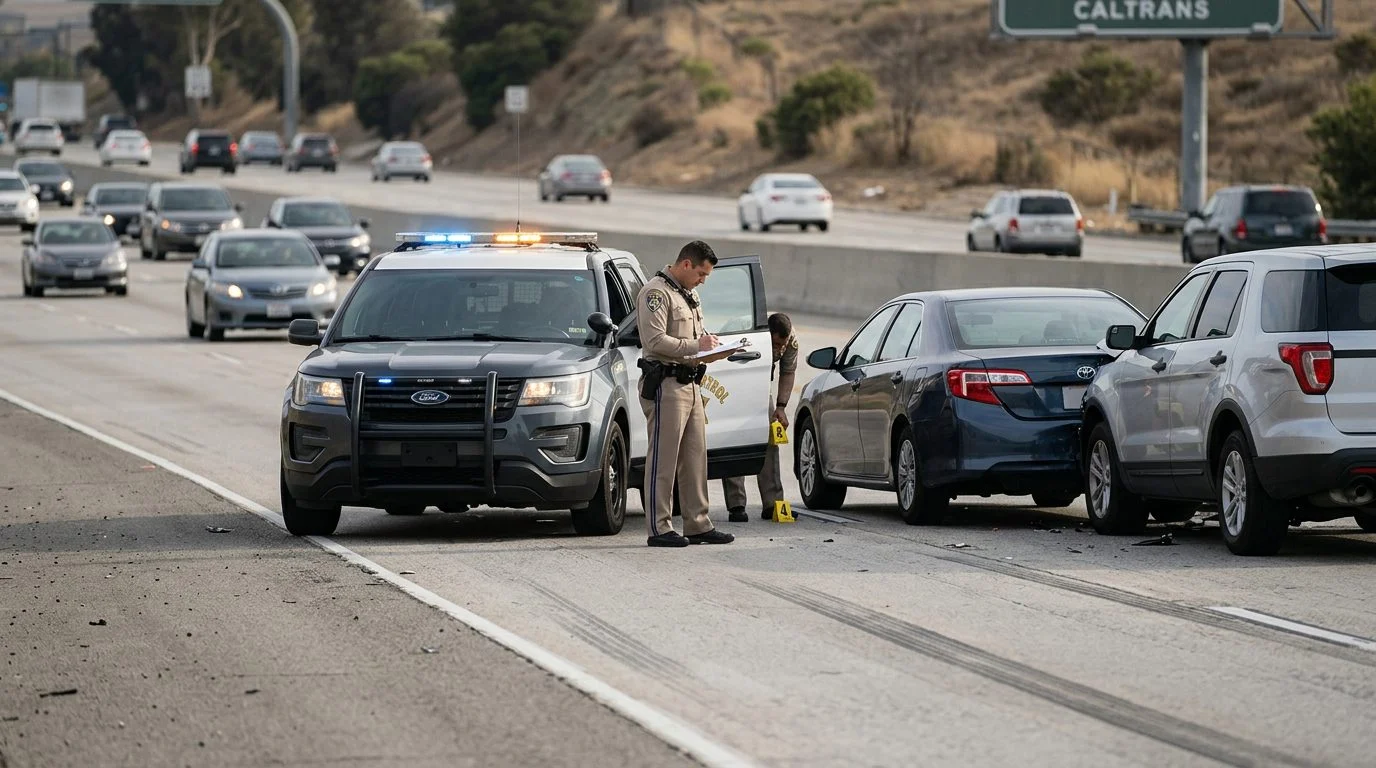
A police or CHP collision report is important evidence, but it does not decide fault alone. The investigating officer records the scene, statements, and physical evidence close to the time of the crash. That timing gives the report real weight, because details are fresh and the scene is often still largely intact.
Still, the report’s conclusions are opinions. They come from what the officer could see and learn that day. Other proof can support those opinions, challenge them, or refine them as more facts come in.
Many families assume a citation means the other driver is legally responsible and that the report closes the question. In practice, the report is read alongside photos, vehicle data, witness accounts, and medical records. Each source can confirm or change the picture the officer first drew.
If your family is weighing what a fatal crash report means and what to do next, we're glad to talk it through, and the first consultation is free, confidential, and carries no obligation to continue. Talk it through with our team — the first consultation is free, confidential, and carries no obligation.
What a Fatal Crash Police or CHP Report Usually Contains
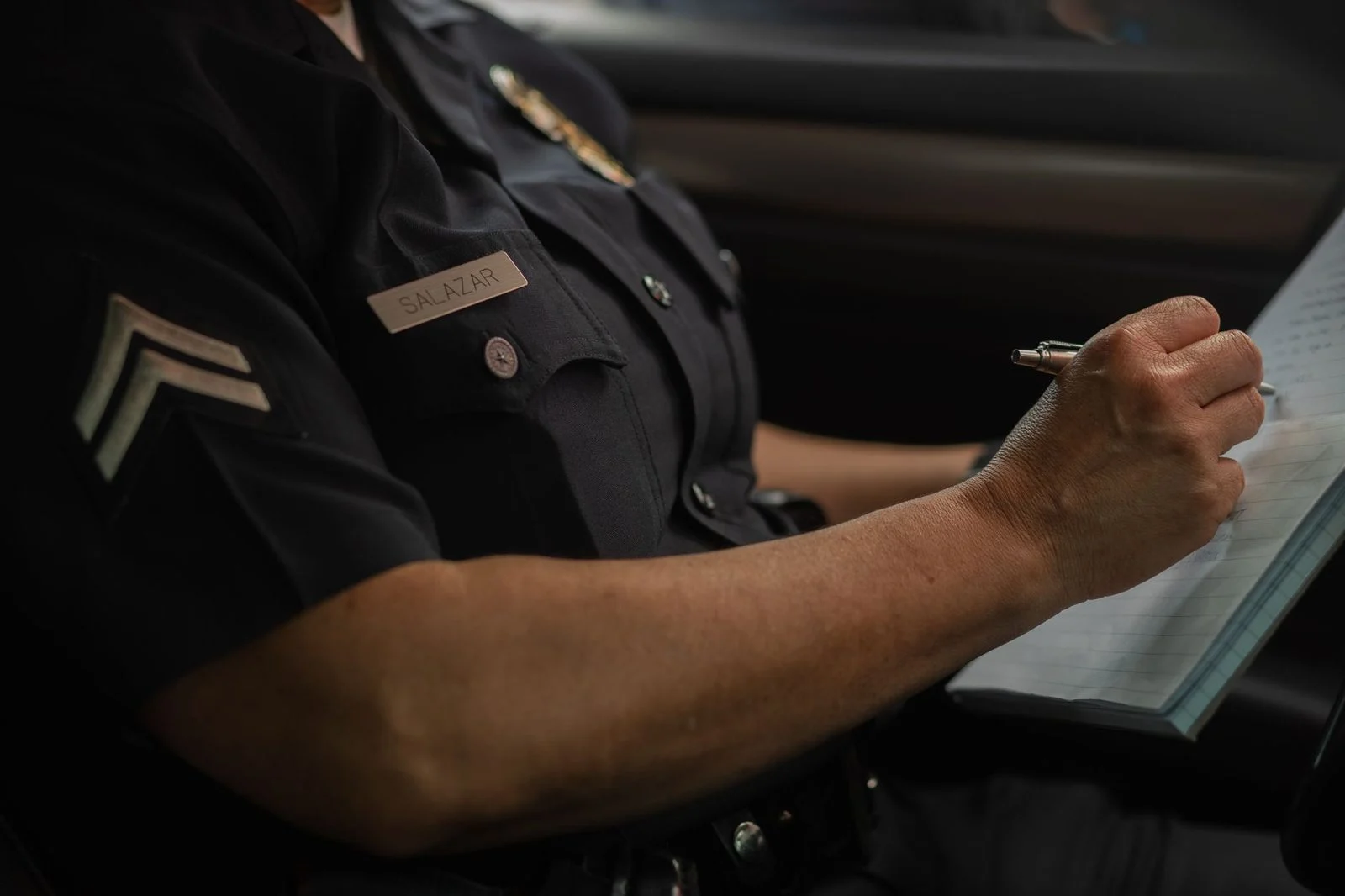
A fatal crash report sets out when, where, and how the collision happened. It also records the officer’s notes on each person involved. Most reports include the date, time, and location. They also list the drivers, vehicles, and other people involved, plus the roadway and weather conditions.
The report typically includes a diagram and a written narrative. These show where each vehicle was, which way it traveled, and where the impact happened. Families and attorneys often rely on those details to reconstruct the crash.
Officers also note witnesses, injuries seen at the scene, and any citations issued. Many reports include the officer’s observations about factors that may have contributed to the crash. Those observations are opinions, so read them with the rest of the file.
Reports also use codes and abbreviations that can be hard to read. A small code can change how a diagram is understood. Reviewing the report next to other records helps prevent misreading key entries.
How a Family Can Request the Report From the Investigating Agency
A family can request the report from the agency that investigated the crash. On state highways, that is often the California Highway Patrol. On city streets and county roads, the local police department or county sheriff may have handled the investigation.
The process is straightforward. First, identify the investigating agency. Next, provide the date, location, and names of the people involved. Then submit the request. The CHP crash report request page explains who may ask for a report and how to request one online, in person, or by mail. Expect to pay any copy fee the agency charges.
Keep the case or report number if an officer gave one at the scene. It can speed up the search.
Fatal crash reports can take time to finish. An open traffic investigation or a separate criminal investigation can add to the wait. Families should plan for a waiting period.
Why Fault Is Still Proven With Other Evidence in a Civil Claim
A civil claim proves fault with the full set of evidence, not with one document. Civil and criminal cases also use different standards of proof, so a report written for another purpose does not end the question.
Damages are reduced in proportion to that person’s share of fault.
When more than one party is at fault, Civil Code § 1431.2 limits each defendant’s liability for non-economic damages to its own percentage of fault. So the report’s list of who was at fault is only one input.
Other evidence can help show what happened. Useful sources include scene and vehicle photos, vehicle event data, traffic camera footage, nearby business video, and witness statements taken later. Road design records and medical and coroner records can also matter.
Traffic law violations can carry weight too. Under Evidence Code § 669, a failure to use due care can be presumed when a statute is violated and other conditions are met. That presumption can be rebutted.
An officer’s citation, or the lack of one, does not end the analysis. A civil claim looks at the whole set of facts.
How a Criminal Case and a Wrongful Death Claim Differ
A criminal case and a wrongful death claim are separate proceedings with different goals. Criminal charges are brought by the government to address public wrongdoing. A wrongful death claim seeks compensation for the family.
Under Code of Civil Procedure § 377.60, the claim may be brought by the decedent’s surviving spouse, domestic partner, children, and issue of deceased children, or, if there is no surviving issue of the decedent, by the persons, including the surviving spouse or domestic partner, who would be entitled to the property of the decedent by intestate succession. If they were dependent on the decedent, the putative spouse, children of the putative spouse, stepchildren, parents, or the decedent’s legal guardians if the parents are deceased may also bring it. So may a minor who lived in the decedent’s household for the previous 180 days and depended on the decedent for half or more of the minor’s support. The decedent’s personal representative may bring it on their behalf.
Timing matters. Code of Civil Procedure § 335.1 provides a two-year period for an action for the death of an individual caused by another’s wrongful act or neglect. Exceptions can depend on the facts, so families should not assume the clock will wait for every investigation to finish.
Where the Coroner’s Report and Other Records Fit In
Coroner, medical examiner, and hospital records are separate from the police report. They can add important detail. Cause and manner of death can bear on how the crash led to the death.
Toxicology results, where available, and hospital records show what injuries were treated and when. Reading these records next to the crash report gives a fuller picture than any single document.
A crash report is not the only filing. Under California Vehicle Code § 16000, the driver of a motor vehicle involved in an accident on a street or highway, or in a reportable off-highway accident, must report it within 10 days on a form approved by the department. This applies when the accident caused damage to the property of any one person over $1,000, bodily injury, or death. The report can be made personally or through an insurance agent, broker, or legal representative. No report is required if the vehicle was owned or leased by, or under the direction of, the United States, this state, another state, or a local agency. If none of the parties involved has reported the accident to the department within one year following the date of the accident, the department is not required to file a report on the accident, and the driver’s license suspension requirements of Section 16004 or 16070 do not apply.
After a death, people often express sympathy to the family. Under Evidence Code § 1160, sympathy statements made to the injured person or their family generally cannot be used as an admission of liability in a civil action. A statement of fault is different, and it is not protected by that rule, even when it sits alongside sympathy.
Not sure what your next step is?
Talk it through with our team — the first consultation is free, confidential, and carries no obligation.
Talking Through Your Family’s Situation With Colvin Accident Lawyers
Your family may be deciding whether to read the crash report on its own, wait for the coroner’s findings, or get help sorting through the records. Those choices can affect timing, so it helps to talk them through early.
Quick answers
Does a police report decide fault in a California fatal crash?
No. It is strong evidence, but fault is decided on the full set of evidence.
How long do families have to bring a wrongful death claim in California?
California generally sets a two-year period under Code of Civil Procedure § 335.1.
If your family is weighing what a fatal crash report means for your loss, we can review the report and your other records with you. Please contact Colvin Accident Lawyers for a free, confidential first consultation, with no obligation to continue.
Donald Norman Colvin, Colvin Accident Lawyers, Bakersfield, California — responsible for this site.
How Colvin Accident Lawyers Approaches a Fatal Crash Case
Reviewing the Full File
We look at the police report alongside photos, witness information, vehicle data and medical records, not the report alone.
Focus on Families
We understand that a wrongful death case arrives during a time of grief, and we explain each step in plain language.
Support for Survivors
Our team helps families in Kern County and surrounding communities understand their options and the questions they need to ask.
Careful Handling of Insurers
We can answer calls from insurance adjusters on your behalf so you do not have to respond to them alone.
Do Not Assume the Report Settles Anything
A police report is an important record, but it is not the final word on who was at fault. Keep every copy you receive, and speak with a lawyer before you sign anything or give a recorded statement to an insurance company.
Steps Families Often Take Early On
Request the Report
Ask the law enforcement agency that investigated the crash for a copy of its report and note how you received it.
Read Beyond the Summary
Review the diagram, narrative, witness statements and any citations, and write down questions about anything that seems incomplete.
Preserve Other Evidence
Save photos, dashcam or surveillance footage, phone records, medical bills and any messages about the crash.
Talk With a Lawyer
Bring the report and your notes to a free, confidential first consultation with Colvin Accident Lawyers.
Talk With Colvin Accident Lawyers About Your Family's Loss
Related practice areas
- Wrongful Death Lawyer
- What the Coroner’s Report Means After a Fatal Crash in Kern County
- California Wrongful Death Lawyer: Pain Before a Crash Death