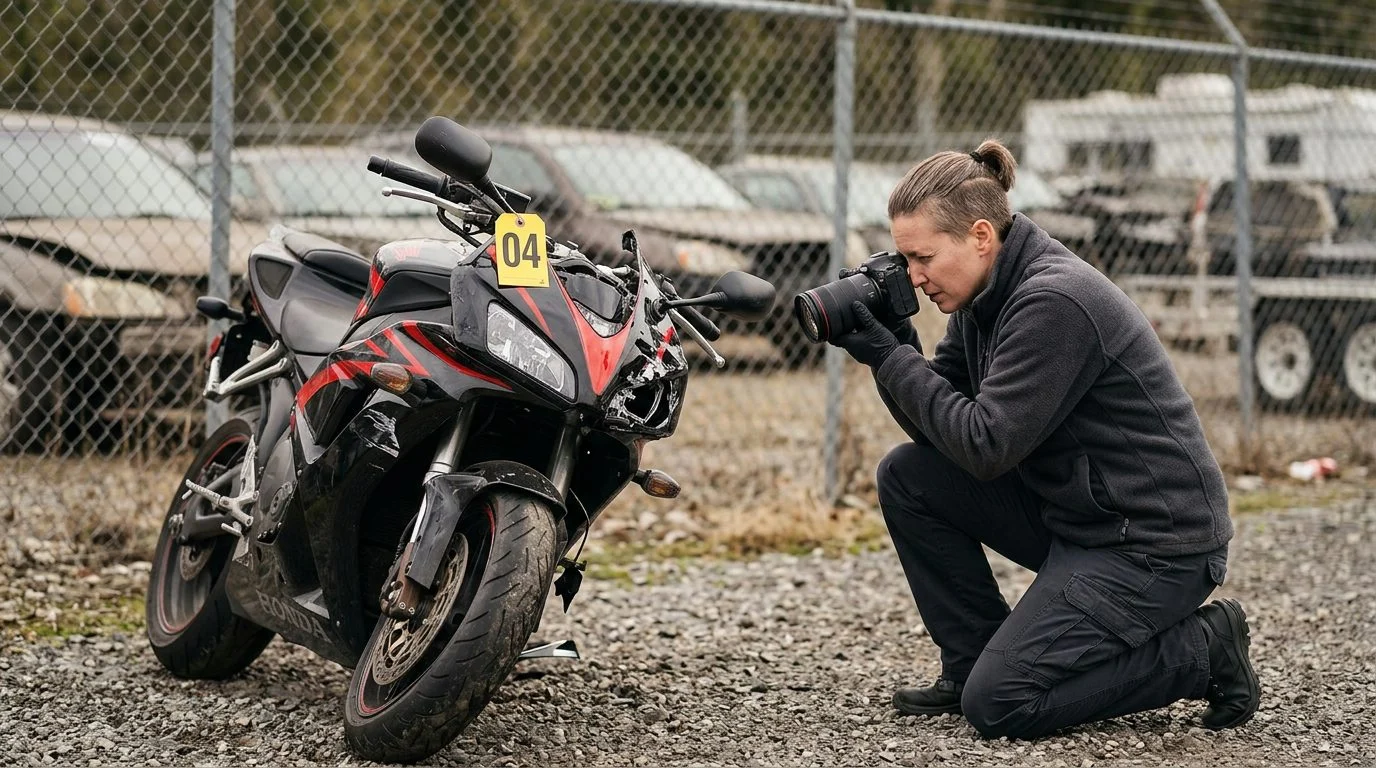
Car, Truck & Motorcycle Accidents | Bakersfield, CA
Who Is Usually at Fault in a Vehicle or Motorcycle Collision?
Fault often comes down to one driver's careless act, such as an unsafe left turn or a failure to yield. Learn what shapes fault and how we can help you review your collision.
By Donald Norman Colvin · Published October 27, 2026
Who is usually at fault in a vehicle/motorcycle collision? Who is at fault in a crash depends on the facts of each collision. The size of the vehicle or the fact that a motorcycle was involved doesn’t decide it. This guide explains that test, the crash patterns where the other driver is often at fault, when a rider can share fault, and how shared fault affects recovery. Colvin Accident Lawyers is based in Bakersfield, California.
The Short Answer: Fault Follows Conduct, Not the Type of Vehicle
Fault goes to whoever acted carelessly, whether that person was riding or driving. California’s rules focus on conduct. Under Cal. Civ. Code § 1714, everyone is responsible for injury caused by “want of ordinary care or skill.” Cal. Civ. Code § 1714 reads: “(a) Everyone is responsible, not only for the result of his or her willful acts, but also for an injury occasioned to another by his or her want of ordinary care or skill in the management of his or her property or person, except so far as the latter has, willfully or by want of ordinary care, brought the injury upon himself or herself.”
Duty means the obligation to use reasonable care. Breach means falling short of that care. Causation links the breach to the crash. Damages are the harm the injured person suffered.
Drivers and riders both owe the same general duty to use reasonable care on the road. For the wider legal framework, read our California motorcycle accident legal guide.
If you're sorting out who is responsible for a crash that hurt you or someone you love, we can talk it through. Our first consultation is free and confidential. Talk it through with our team — the first consultation is free, confidential, and carries no obligation.
How California Assigns Fault: Pure Comparative Negligence
An injured person can still recover even when they share some of the blame.
Under this rule, the recovery is reduced by the injured person’s share of fault. A person found 70 percent at fault can still recover 30 percent of their damages.
Under Cal. Civ. Code § 1431.2, each defendant’s liability for non-economic damages is several only. That means each defendant pays only the non-economic damages allocated to it, in direct proportion to its own percentage of fault.
Crash Patterns Where the Other Driver Is Often the One at Fault
Motorcycle collisions can happen in several ways. Here are some of the crash types this firm handles.
- Failure to yield at intersections and stop signs. A driver who pulls out in front of a rider may be the one at fault.
- Unsafe lane changes and merges. A driver who moves into a rider’s lane without checking the blind spot can cause a crash.
- Following too closely. Under Cal. Veh. Code § 21703, a driver may not follow more closely than is reasonable and prudent. Tailgating can leave a rider no room to stop.
- Impaired driving. Cal. Veh. Code § 23152 makes it unlawful to drive under the influence of alcohol or drugs, with 0.08 percent or more blood alcohol, or with 0.04 percent or more when driving a commercial motor vehicle or carrying a passenger for hire.
These are common fault patterns. They are not a prediction about any particular crash.
When the Rider Can Share Fault
A rider can share fault when their own careless act added to the crash. The other driver’s insurer may raise these points, so it helps to know them.
- Speed. Cal. Veh. Code § 22350 bars driving faster than is reasonable or prudent for weather, visibility, traffic, and the road. Speed that is too high for conditions can add to the rider’s share.
- Unsafe lane changes or weaving. If a rider moved in a way that created a hazard, the other side may argue that point.
- Impairment. A rider who drove under the influence faces the same rule in Section 23152, and that can weigh heavily on fault.
- Traffic violations. Under Cal. Evid. Code § 669, the failure to exercise due care is presumed if a person violates a statute, ordinance, or regulation of a public entity, the violation proximately causes death or injury, the harm is the kind the rule was designed to prevent, and the injured person was in the class the rule protects. That presumption can be rebutted by showing the person did what might reasonably be expected of a person of ordinary prudence, acting under similar circumstances, who desired to comply with the law, or, for a child, that the child used the care ordinarily used by persons of similar maturity, intelligence, and capacity under similar circumstances, unless the activity is one normally engaged in only by adults and requiring adult qualifications. It works both ways.
An insurer’s shared-fault argument is a claim to test against the evidence. It is not a final answer. Road conditions can matter too. Our Highway 58 motorcycle accident page covers how local routes can enter a fault discussion.
What Evidence Is Used to Decide Fault
Fault is decided with several kinds of evidence. No single item settles it.
- The collision report. The police or CHP report can include the officer’s diagram, notes, and any citations. The state’s CCRS Parties 2023 dataset includes party-level fields such as fault status.
- Statements. Witness accounts, the drivers’ own statements, and any dashcam or nearby surveillance video all matter.
- Physical evidence. Vehicle damage patterns, skid marks, where the vehicles came to rest, and roadway markings can show how the crash happened.
- Phone and vehicle data. Where it is available and relevant, this can show timing.
Insurers use this same evidence to form an early position. That first position is often not the final legal answer on fault.
How Shared Fault Affects Recovery
Damages fall into two groups. Under Cal. Civ. Code § 1431.2, economic losses are objectively verifiable monetary losses, such as medical expenses and lost earnings. Non-economic losses are subjective, such as pain, suffering, and emotional distress.
For the breach of an obligation not arising from contract, damages are measured by Cal. Civ. Code § 3333. The measure is the amount that compensates for all the detriment proximately caused.
The value of any claim depends on the injuries, treatment, records, and proof of fault in that case. No general figure fits every crash. Insurance matters too. For how payment works after a crash, see how to get paid after a car accident.
Not sure what your next step is?
Talk it through with our team — the first consultation is free, confidential, and carries no obligation.
Mistakes That Can Complicate a Fault Dispute
The most common problems are speaking too soon, waiting on medical care, and posting about the crash. Each one can make fault harder to prove.
- Sympathy statements. Under Cal. Evid. Code § 1160, sympathy statements made to the injured person or their family about an accident are not admissible as an admission of liability in a civil action. A statement of fault is not protected by that rule.
- Reporting duties. Under Cal. Veh. Code § 16000, a driver involved in a crash on a street or highway, or in a reportable off-highway accident, with bodily injury, death, or property damage to any one person over $1,000 must report it within 10 days to the DMV in Sacramento on a DMV-approved form, personally or through an insurance agent, broker, or legal representative; no report is required if the vehicle was owned or leased by, or under the direction of, the United States, this state, another state, or a local agency.
- Medical gaps. Delayed care can give an insurer a reason to question whether the crash caused the injury.
- Early offers. Accepting money before the full extent of injuries is known can close off later needs.
- Deadlines. Under Cal. Code Civ. Proc. § 335.1, the general limit for injury claims is two years.
Families facing a fatal crash also have fault questions. See our motorcycle wrongful death page.

If Someone You Care About Was Hurt in a Collision
If you’re reading this for an injured rider or a family member, you may be dealing with fault questions, insurance calls, and medical care all at once. You didn’t choose that position, and the questions often need answers soon.
Frequently asked questions
Who is usually at fault in a vehicle/motorcycle collision?
Fault can rest with the driver whose careless act caused the crash. Left turns and failure to yield are examples of such acts.
Can I recover money if I was partly at fault?
It may be possible. Recovery depends on proof of the other party’s fault and on the damages, and it is reduced by your own share of fault.
Should I give a recorded statement to the other driver’s insurer?
Think carefully before you do. A statement of fault is not protected by the sympathy rule.
Colvin Accident Lawyers offers a free, confidential initial consultation, with no obligation to continue. If you’re sorting out who is responsible for a crash that affected you or someone you love, contact Colvin Accident Lawyers to talk it through.
Donald Norman Colvin, Colvin Accident Lawyers, [street address], Bakersfield, California — responsible for this site.
How Colvin Accident Lawyers Can Help
Free first consultation
Your first consultation is free, confidential, and comes with no obligation to continue.
Review of the evidence
We look at the police report, witness accounts, photographs, vehicle damage, and other records that can show how a crash happened.
Support for families
We represent injured people and the families of those who have died in collisions, and we explain each step in plain language.
Serving the Central Valley and Antelope Valley
Based in Bakersfield, we work with clients across Kern County and nearby communities, including Fresno, Visalia, Lancaster, Palmdale, Delano, and Tehachapi.
Don't Assume Fault Is Obvious
Insurance adjusters may dispute who caused a crash, and statements made early on can be used later. Speak with a lawyer before you give a recorded statement or sign any release.
Collisions Where Fault Is Often Disputed
Left turns across traffic
Disputes often center on timing, speed, and whether the turn was safe.
Failure to yield
Crashes at intersections, merges, and roundabouts often turn on who had the right of way and whether it was respected.
Distracted or impaired driving
Phone use, fatigue, or impairment can change how a collision is viewed, and records such as phone logs may be relevant.
Speeding and following too closely
Rear-end collisions and crashes on highways often involve questions about speed, following distance, and sudden stops.