Bakersfield Motorcycle Accident Lawyer
Told You Were Partly at Fault in a Motorcycle Crash?
Partial fault does not automatically end a motorcycle claim. Talk with Donald Norman Colvin in a free, confidential consultation with no obligation to continue.
By Donald Norman Colvin · Published October 17, 2026
Quick Answer: Partial Fault Does Not Automatically End a Motorcycle Claim
How fault is assessed after a motorcycle crash depends on the facts of each case, and a free, confidential consultation can help you understand how those facts may apply to yours. Whether that rule works in your favor depends on the facts, the evidence, and how fault is assigned.
Many riders hear “you were partly to blame” from an insurance adjuster, a police officer, or the other driver. Then they assume the claim is over. That is often not the case, so it helps to understand how the rule works before you decide anything.
Colvin Accident Lawyers is based in Bakersfield. Our team helps accident victims and their families in Kern County and the surrounding area understand their options. This page is general information. It is not a prediction about any particular claim, and every crash turns on its own details.
Talk it through with our team — the first consultation is free, confidential, and carries no obligation.

How California’s Pure Comparative Negligence Rule Works
Your own fault reduces your damages, but it does not block them.
Here is a simple example. A plaintiff found 70 percent at fault would still recover 30 percent of their damages, according to Daly v. General Motors Corp.. The fault share works like a percentage cut from the total. A bigger share of fault means a bigger cut.
When more than one party is at fault, the rules get more detailed. Under Civil Code § 1431.2, each defendant is liable for non-economic damages only in its own percentage of fault. A separate judgment is entered for that amount. Fault disputes often decide how much each side bears.
How Fault Is Decided in a Motorcycle Accident
Fault is decided by asking who failed to use ordinary care. Under Civil Code § 1714, a person is responsible for injuries caused by a lack of ordinary care. That same statute says a person who contributed through their own lack of care can bear part of the injury.
In practice, the fact-finder looks at several things. These include traffic rules, following distance, right-of-way, lane position, speed, and visibility. Each one can shift the fault split. A car that turns left across a rider’s path raises different questions than a rider who changes lanes without a signal.
Police reports, witness statements, vehicle damage patterns, and marks on the road all feed into the picture. A police report often includes a fault notation, but that notation is not always final. An insurer’s view or a jury’s view can differ from what the report says. Read the report with that in mind.
Common Fault Arguments Insurers Raise Against Riders
Insurers often argue that the rider was speeding, changed lanes unexpectedly, sat in a blind spot, or was lane splitting. Some argue the rider was riding in a way that cut reaction time. Each argument aims to move the fault percentage onto the rider. Each one must be tested against the physical evidence.
Another frequent response is “I never saw the motorcycle.” Drivers often say this after a crash. That statement can shift the fault analysis, but it does not end it. Did the driver check mirrors? Did the rider have a clear line of sight? Those details matter.
One California rule affects some riders in a distinct way. Under Civil Code § 3333.4, a person may not recover non-economic losses in a motor vehicle case if they were operating the vehicle in violation of Vehicle Code §§ 23152 or 23153 and were convicted of that offense. The statute has exceptions, so the details of the ride matter.
Write down what you remember, in your own words, with the time and place. Stick to facts you saw and felt. Avoid guessing about who was at fault.
Does Not Wearing a Helmet Affect a Motorcycle Claim?
The Insurance Institute for Highway Safety lists that helmet requirement. The IIHS motorcycle research also describes the safety benefits of helmets and the higher injury risk for riders without them.
A helmet question can come up in both injury and fault discussions. The other side may raise helmet use when it talks about the injuries. Whether helmet use changes your claim turns on what the injuries were and whether a helmet would have changed them. Medical records and the crash facts help answer that question.
Keep your helmet and gear after the crash. Damage patterns on a helmet can help show how the impact happened. Do not throw away gear because it looks ruined.
Insurer Tactics When Fault Is Shared
Insurers often make contact early, before the full picture of your injuries is known. Early contact can shape how fault gets argued later in the claim. It helps to know what to expect.
Common steps include a request for a recorded statement and a first settlement offer. An offer made before your treatment is finished may not reflect the full picture. Future medical care and time away from work can take a while to understand.
You are not required to accept an offer. Knowing your medical status makes it easier to judge whether an offer fits your situation. Ask your doctors about your recovery timeline before you answer detailed questions.
Be careful with casual comments. A remark like “I didn’t see him” can be repeated later and used to argue fault. Stick to basic facts, such as the date, the place, and where you were hurt.
Not sure what your next step is?
Talk it through with our team — the first consultation is free, confidential, and carries no obligation.
Evidence That Matters When You Are Partly to Blame
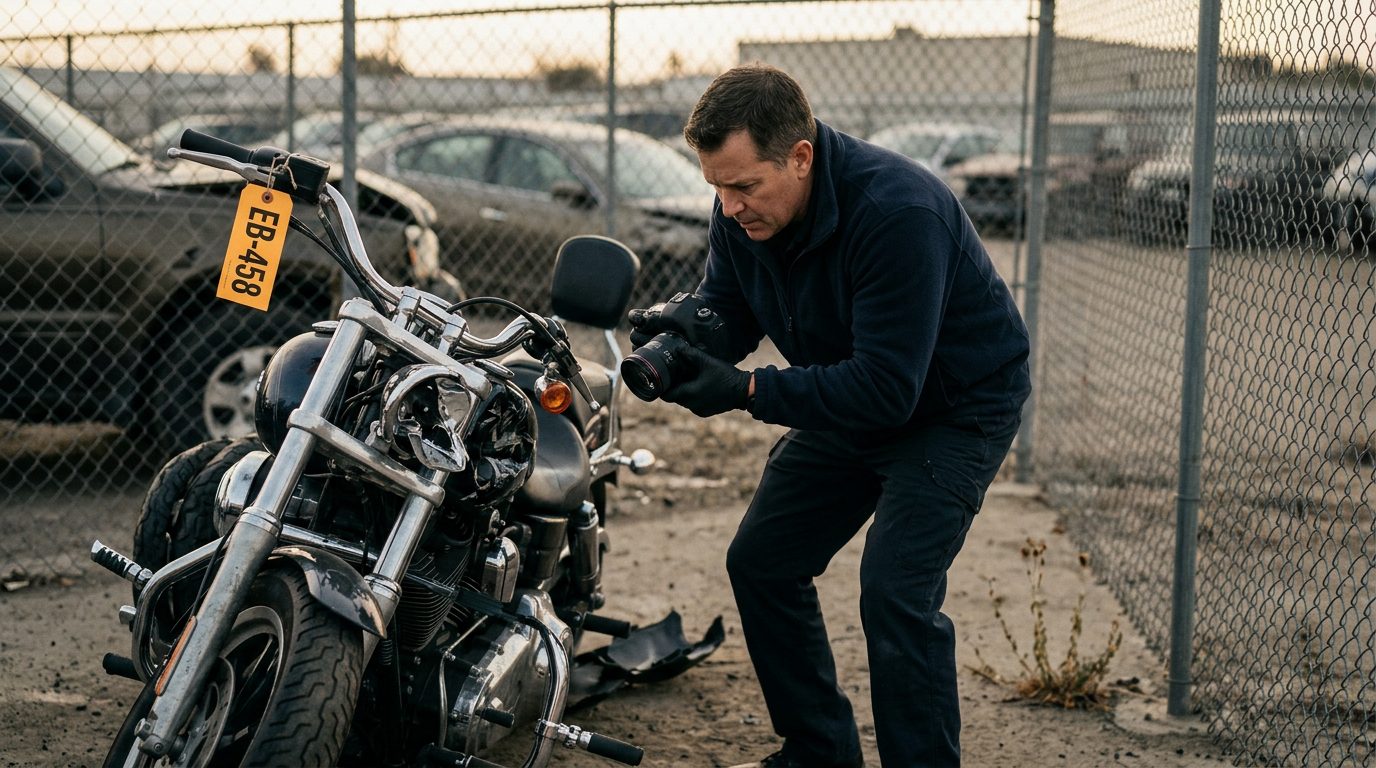
Evidence that shows how the crash happened can matter as much as the fault debate. Useful items include scene photos, vehicle damage, dashcam or surveillance video, witness contact details, medical records, and repair or total-loss records.
Medical records connect your injuries to the crash. That link matters even when fault is disputed. California’s damages rule covers all the detriment proximately caused by a wrong. See Civil Code § 3333 for that measure.
Damages fall into two groups. Economic damages are objectively verifiable money losses, such as medical bills and lost earnings. Non-economic damages are subjective losses, such as pain, suffering, and emotional distress, as defined in Civil Code § 1431.2. Keep bills, pay stubs, and a simple log of appointments and missed work.
Keep the motorcycle and your gear as they were after the crash for as long as you can. Keep towing receipts and repair estimates. These records help show what the crash cost you.
Time Limits to Keep in Mind
For an action for injury to a person caused by another’s wrongful act or neglect, California’s limit is two years under Code of Civil Procedure § 335.1. Some exceptions can change that period. Do not let the calendar slip while you focus on recovery.
Keep this timeline in mind early. Medical care can take months, and a claim has its own clock. Talking through the dates early gives you more room to plan.
Quick Questions
Can I recover if I was partly at fault in a California motorcycle crash? Generally, yes. California’s pure comparative negligence rule reduces your damages by your share of fault instead of blocking them.
Can fault affect recovery after a motorcycle crash? The answer depends on the facts of each case. A free, confidential consultation can help you understand how those facts may apply to your situation.
How long do I have to file an injury claim? For injury claims, California’s general limit is two years under Code of Civil Procedure § 335.1.
Can not wearing a helmet hurt my claim? It can come up in the case, and whether it matters turns on the injuries and the crash facts.

Talk Through Your Situation With Colvin Accident Lawyers
If you are hurt, facing medical visits, dealing with a damaged motorcycle, and fielding an insurer’s questions, this is a hard place to be. If you are a spouse or adult child helping a rider through this, you are carrying part of the load too.
Colvin Accident Lawyers offers a free first consultation. It is confidential and carries no obligation to continue. No lawyer can predict how a particular claim will turn out, but the first conversation can help you understand where your facts fit under California’s fault rules. Donald Norman Colvin, the lawyer at Colvin Accident Lawyers, can review your crash details with you. Contact our office to start that conversation.
How Colvin Accident Lawyers approaches partial fault
We review the evidence
We look at police reports, photos, medical records, and witness information to understand how the crash happened and how fault may be assigned.
Plain-language answers
We explain how partial fault may apply to the facts of your case, without legal jargon, so you can make informed decisions.
Support for riders and families
We represent injured motorcyclists and the families of those who have been killed, from Bakersfield and across Kern County and the surrounding region.
Confidential and no obligation
Your first consultation is free, confidential, and carries no obligation to continue.
Do not assume your claim is over
How fault is assigned depends on the facts and evidence in your case. Speak with a lawyer before you accept any fault determination or sign any document.
Information to bring to your consultation
The police or incident report
Any report or citation connected to the crash, along with the report number if you have it.
Photos and video
Pictures of the scene, your motorcycle, roadway conditions, and visible injuries, taken as soon as you were able.
Witness details
Names and contact information for anyone who saw the crash or what happened just before it.
Medical records and bills
Treatment notes, bills, and any insurance correspondence you have received about your injuries or property damage.