Motorcycle Accident Lawyer | Bakersfield, California
What Shapes the Value of a Motorcycle Injury Claim in California
No single number fits every crash. Learn the factors that affect motorcycle injury claims, and talk with Colvin Accident Lawyers about your case. Your first consultation is free, confidential, and without obligation.
By Donald Norman Colvin · Published October 16, 2026
This guide explains the factors that affect motorcycle injury claim value California riders and families should understand. No single number fits every case. Value depends on the facts of each crash and each injured person.
The sections below cover fault, injuries, lost income, insurance, evidence, property damage and deadlines. They also explain the California law behind each factor. This is general information, not a prediction about any one claim.
Why a Motorcycle Injury Claim Has No Single Set Value
No single number sets the value of a motorcycle injury claim in California. Value depends on who caused the crash, how badly the rider was hurt, what the injuries cost and how long they last.
People often ask about the average settlement for a motorcycle accident in California. No verified average describes an individual claim. Published amounts vary widely with the facts, the injuries and the place where a case is decided. An average from other cases cannot predict yours.
Two ideas help here. An insurer’s first offer is that company’s opening position. It is not a measure of what the claim is worth. A case can also resolve for an amount that differs from both the first offer and the rider’s own estimate.
A claim usually has three parts. Economic damages are objectively verifiable money losses, such as medical bills, lost pay and repair costs. Non-economic damages are subjective losses, such as pain, emotional distress and loss of companionship. Property damage covers the motorcycle and gear.
Civil Code § 1431.2 provides for several liability for non-economic damages. It defines “economic damages” as “objectively verifiable monetary losses.” Any dollar figure should come with the facts and law behind it.
Not sure what your next step is?
Talk it through with our team — the first consultation is free, confidential, and carries no obligation.

Fault and Comparative Negligence Under California Law
Fault is often where a claim is won or lost. Take a driver who turns left across a motorcycle’s path. That driver may say the rider was speeding or not paying attention. Each argument shifts the percentage, and the percentage changes the amount recoverable.
Under Civil Code § 1714, a person may be responsible for an injury caused by want of ordinary care in managing his or her property or person.
Insurers often raise speed, lane position, following distance and distraction. These points need evidence. Speed arguments are tested with skid marks, vehicle damage and witness accounts. Assumptions about motorcycles do not settle them.
Liability can reach more than one party. A second driver, a vehicle owner or a dangerous roadway condition may share responsibility. For non-economic damages, Civil Code § 1431.2 makes each defendant liable only for its own percentage of fault. Finding every responsible party early can change a claim’s value.
Injury Severity, Medical Documentation and Gaps in Care
The type and permanence of an injury are among the strongest factors in a motorcycle claim. Fractures, road rash, brain injuries, spinal injuries, amputations and internal injuries each carry different treatment needs and long-term effects.
Spinal and brain injuries often need long-term care. That is one reason severity matters so much in these claims.
Permanence matters too. A lasting impairment, visible scarring or a need for future surgery or care can change a claim’s value. These effects are shown through medical records, not through the rider’s account alone.
Prompt, steady treatment creates a record that connects the crash to the injuries. Gaps in care, missed appointments and inconsistent histories give an insurer something to challenge. Treatment notes, imaging, provider records and billing statements are the main proof of injury and cost. Keep every bill and appointment record.
Lost Income and Reduced Earning Capacity
Lost income is an economic loss, and paperwork proves it. Past lost wages cover time off work for treatment and recovery. Pay stubs, time records and employer letters usually provide the clearest proof of that loss.
Future losses matter when an injury limits the ability to return to the same job or to work full time. This is called reduced earning capacity. Medical and vocational opinions often show what the rider can and cannot do. Insurers may dispute those opinions.
Self-employed riders, gig workers and people with changing income face a different proof problem. Tax returns, invoices, client records and bank deposits can show what the work was worth before the crash. Gaps in those records can weaken a claim.
Medical bills belong in economic damages too, including bills already paid and bills still owed. The statute defines economic damages as objectively verifiable monetary losses, including medical expenses and loss of earnings. You can read that definition in Civil Code § 1431.2. Keep totals organized so they can be checked line by line.
Pain, Suffering and Loss of Enjoyment of Life
Non-economic damages compensate for losses that have no price tag, such as physical pain and emotional distress. Under Civil Code § 1431.2(b)(2), these are noneconomic damages: subjective, nonmonetary losses such as pain, suffering, inconvenience, mental suffering and loss of companionship.
These damages are harder to measure, so insurers often dispute them. Neither a formula nor an average gives a reliable figure for them. Evidence of daily life before and after the crash helps. Treatment notes, family accounts, work changes and a list of activities the rider can no longer do all show the impact.
In California, a person who was already married to, or in a registered domestic partnership with, the rider at the time of the injury may be able to bring a loss-of-consortium claim if the rider’s non-fatal injuries affect that relationship. The statute lists loss of consortium among non-economic losses. Under California case law, a loss-of-consortium claim is limited to a spouse or registered domestic partner of the injured rider.
Punitive damages are a separate question. Civil Code § 3294 allows them only when oppression, fraud or malice is proven by clear and convincing evidence. That is a high standard. This guide does not suggest any particular case meets it.
Factors That Affect Motorcycle Injury Claim Value California: Insurance Coverage and Policy Limits
Insurance coverage often sets a practical ceiling on what can be collected. Among the factors that affect motorcycle injury claim value California insurers weigh, policy limits stand out. A claim’s full value can be higher than the at-fault driver’s policy limit. That gap is one reason serious injury claims need careful review.
A rider’s own policy may include uninsured or underinsured motorist coverage and medical payments coverage. These may apply when the other driver has no insurance or too little. Each policy has its own terms. Read the policy and ask what each coverage includes.
Some motor vehicle cases face a statutory bar. Civil Code § 3333.4 says a person may not recover non-economic losses in certain cases. Those include an injured person convicted of driving under the influence at the time of the crash. They also include an injured owner of an uninsured vehicle involved in the accident. The statute has exceptions, including one for injuries caused by a motorist convicted of drunk driving.
Identify every policy early. A missed policy can mean a missed source of payment.
Not sure what your next step is?
Talk it through with our team — the first consultation is free, confidential, and carries no obligation.
Bias Against Motorcyclists and Proving How the Crash Happened
The evidence of how the crash happened answers most bias arguments against riders. Some insurers and jurors may assume a rider was reckless simply because of the motorcycle. Facts answer that assumption better than argument does.
If lane splitting was involved, the details matter. Record the speed, lane position, traffic flow and the other vehicle’s movements as soon as possible. Those details will be central to how the crash is explained.
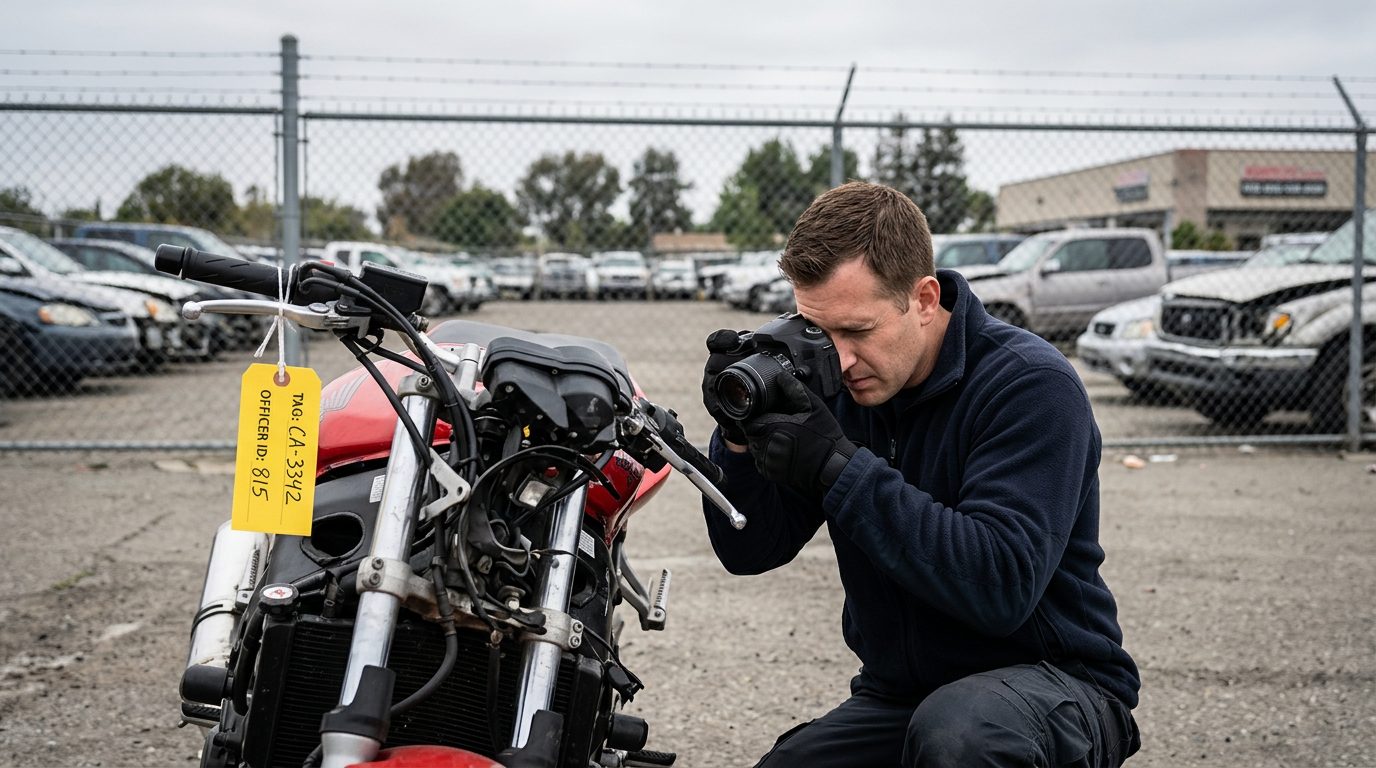
Key evidence includes scene photos, vehicle damage, skid marks, traffic camera or nearby business footage, dashcam video, witness statements and the police report. Each piece can confirm or challenge a version of events.
Gear, helmet use and vehicle data may also bear on how an injury happened. These questions depend on the facts of each crash. Recordings can be overwritten, and physical evidence can be repaired or discarded. Preserve what you have and request copies quickly.
Diminished Value and Other Property Damage Claims
An insurer may dispute a diminished value claim. The vehicle’s documentation often decides how that dispute goes. Diminished value is the loss in a vehicle’s market value after a crash, even when repairs are finished.
Several factors affect that loss. These include the vehicle’s age, mileage, prior damage and repair history. A clean repair record and documented pre-crash condition can support the claim. Missing paperwork can weaken it.
Repair estimates, independent appraisals and purchase records are the usual proof. They show what the vehicle was worth before the crash and after it. Photos taken before repairs are also useful.
Property damage is usually handled separately from bodily injury, and both can affect the total claim. A vehicle is personal property.
Statements to Insurers, Social Media and Time Limits
Be careful with recorded statements and early admissions about fault or injury. Adjusters may ask for medical authorizations, prior records and recorded statements. You can ask what a request covers and take time before you respond.
Social media is another risk. Posts about activities, travel, injuries or the crash can be read by an insurer. Hold off on posting about the crash until the facts are clearer.
Deadlines matter too. Most personal injury lawsuits in California must be filed within two years. Code of Civil Procedure § 335.1 covers an action for injury to an individual caused by the wrongful act or neglect of another. When a public agency may be responsible, a written claim generally must be presented within six months. Government Code § 911.2 sets that six-month period for a claim involving injury to a person, which comes much sooner than the two-year lawsuit deadline. Missing a deadline can prevent a claim from being pursued, so review timing early.

Talking Through Your Motorcycle Crash Claim With Colvin Accident Lawyers
If a motorcycle crash has left you or someone you love hurt, the next decisions can feel heavy. You may be recovering, managing medical visits, or handling insurer calls for a family member. Many people reading this are still deciding whether the claim needs a closer look.
What is the average settlement for a motorcycle accident in California?
No verified average describes an individual claim. Published amounts vary with the facts, the injuries and where a case is decided.
Partial fault reduces a rider’s recovery in California but does not bar it
How long do I have to file a motorcycle injury claim in California?
Most personal injury lawsuits in California must be filed within two years under Code of Civil Procedure § 335.1. For a claim against a public entity, a written claim generally must be presented within six months under Government Code § 911.2.
Can an insurer deny a diminished value claim?
An insurer may dispute it, and the vehicle’s records and documentation often shape how the dispute is resolved.
Each of the factors that affect motorcycle injury claim value California riders face depends on the facts of that person’s case. No outcome can be predicted. If you want to talk through your crash, your injuries and any deadlines, Colvin Accident Lawyers offers a free first consultation. It is confidential and carries no obligation to continue. You can reach out through our contact page.
Colvin Accident Lawyers, Bakersfield, California — responsible for this site. Donald Norman Colvin is the responsible attorney.
Key Factors in Every Motorcycle Injury Claim
Fault and the Crash Facts
How the crash happened, who was involved, and what the evidence shows are central to any claim.
Nature and Extent of Injuries
The type of injury, the treatment it required, and how it affects daily life all shape a claim's value.
Lost Income and Earning Capacity
Time missed from work and any lasting effect on your ability to earn are documented and weighed case by case.
Insurance Coverage
The policies involved, including the at-fault driver's coverage and any coverage available to you, can affect how a claim is resolved.
Evidence and Documentation
Photos, records, witness accounts, and repair documentation help show what happened and what it cost.
Property Damage and Out-of-Pocket Costs
Damage to your motorcycle, gear, and other expenses are part of the overall picture of your losses.
No Online Estimate Knows Your Facts
Any general figure is only a starting point. The value of your claim depends on the facts of your crash and your injuries. Speak with our office about your specific situation.
Information to Gather for Your Consultation
Photos and Videos
Pictures of the scene, your motorcycle, vehicles involved, and visible injuries, taken as soon as it is safe.
Medical Records
Emergency visit notes, treatment plans, prescriptions, and bills that show the care you have needed.
Work and Income Records
Pay stubs, time-off records, and employer letters that show missed work and changes to your earnings.
Crash and Insurance Papers
Police or incident reports, insurance letters, claim numbers, and repair or total-loss estimates.