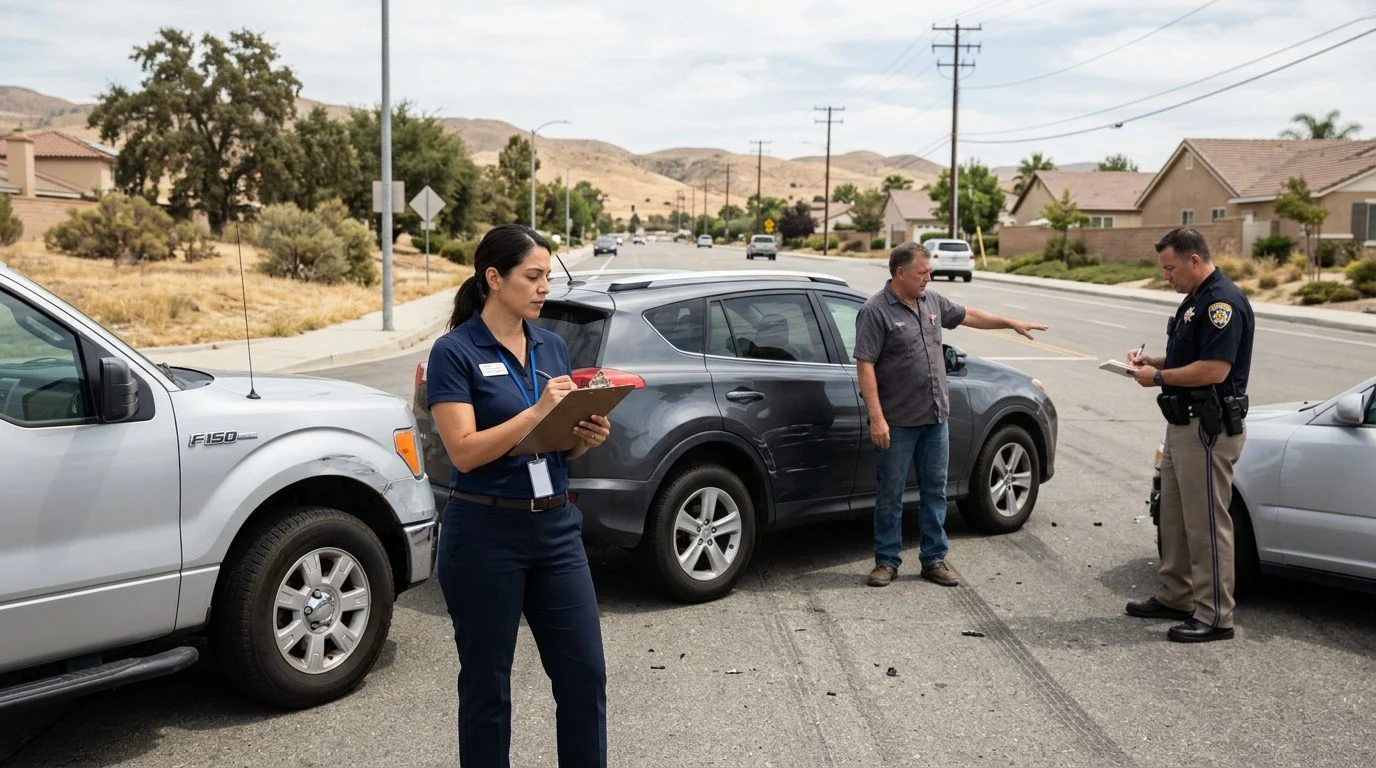
Accident claims | Bakersfield, CA
How Do Insurance Companies Decide Who Is at Fault?
Adjusters review far more than the scene of a crash. Here is what they look at, what they may ask of you, and how to protect your claim from the start.
By Donald Norman Colvin · Published November 22, 2026
After a crash, you may be hurt, dealing with a damaged car, and getting calls from an insurance company. Insurance companies decide who is at fault by building a claim file from the police report, physical evidence, driver and witness accounts, and California’s traffic rules. Under California’s comparative fault rule, more than one driver can share blame, and an injured person’s share of fault reduces what they can recover.
This page walks through that process in the order an adjuster usually works through a claim, with the California law behind each step.
Why the Fault Decision Comes First in an Insurance Claim
Fault is the first question an insurer works on when a crash claim comes in. The answer shapes how the claim is handled from that point on.
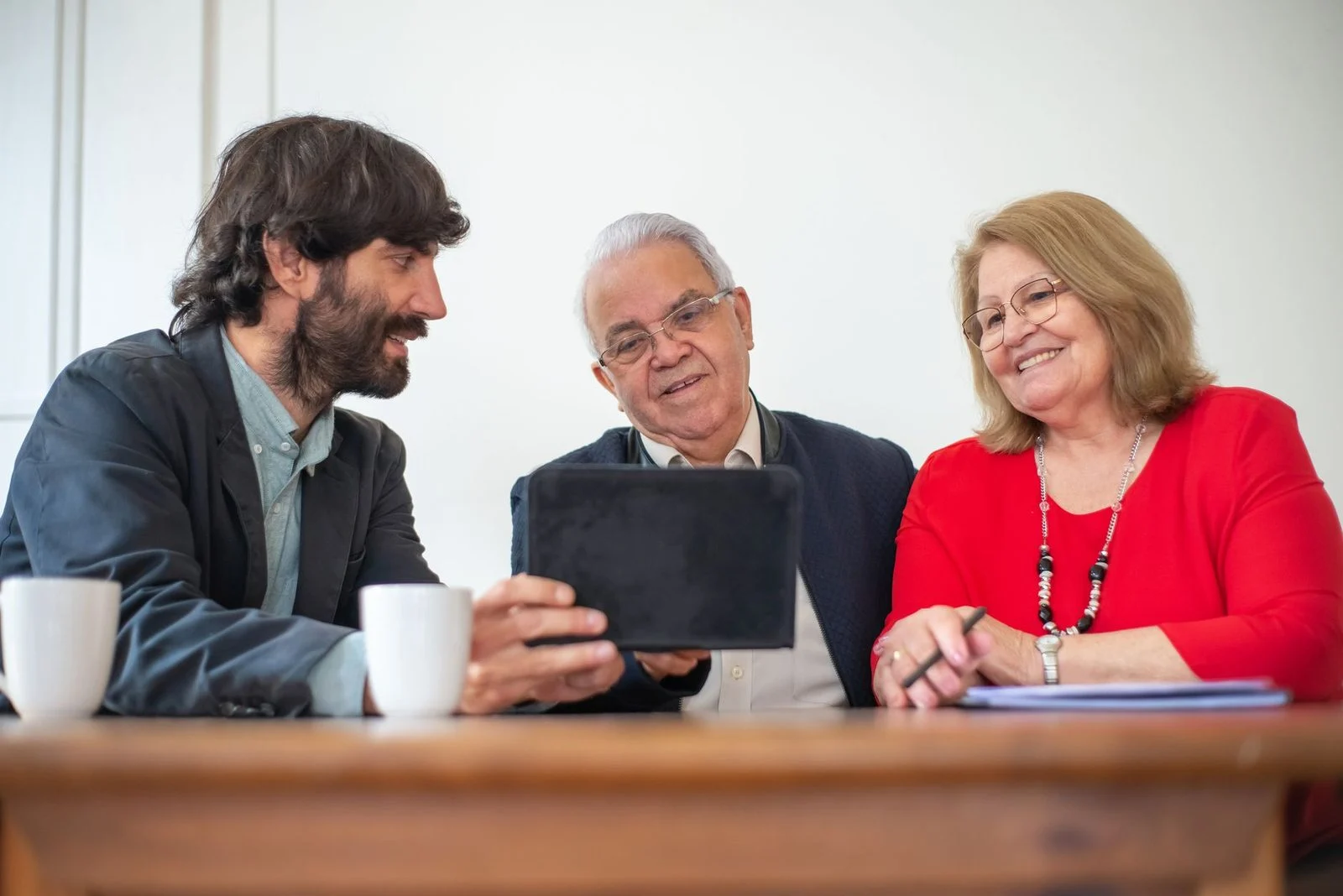
The first contact often comes from an adjuster, the insurance company’s claims investigator. The adjuster may call soon after the crash, ask for your account, and request records. The claim file can start taking shape before you have seen a doctor or read a single report.
Fault is not decided from one document. The adjuster gathers several sources and weighs them against each other. The sections below follow that order.
If an insurer is asking you questions after a crash you did not choose, you don't have to sort out fault alone. Talk with us about what happened. Talk it through with our team — the first consultation is free, confidential, and carries no obligation.
The Police Report Is One Input, Not the Whole Answer
A police report records what the officer saw and what each driver and witness reported, and adjusters often give it real weight. The report usually lists the scene, where the vehicles came to rest, driver and witness information, and the officer’s notes. Some reports include an officer’s opinion about how the crash happened.
An adjuster reads that opinion alongside everything else in the file. It is not treated as the final word. The report is only one piece of the picture.
Because the report goes into the file, its errors can follow the claim. Read a copy closely. Check names, the direction of travel, the lane, the time, and the diagram. If something is wrong, tell the adjuster in writing and keep a copy of what you sent.
Physical Evidence and Statements Get Compared
Adjusters test each driver’s account against the physical evidence and what witnesses say. The evidence often includes photos of the vehicles and scene, vehicle damage patterns, skid or gouge marks, and traffic signal timing. Dashcam or nearby business video can matter when it exists.
Witness statements carry the most weight when they line up with the damage and the marks on the road. When accounts conflict, the adjuster looks for the version the physical evidence supports.
Evidence can disappear. Video can be overwritten, and vehicles get repaired or sold. Early photos and written records help keep the file complete for the claim.
How California Traffic Law Shapes the Fault Decision
Breaking a traffic law can create a presumption that the driver failed to use due care. Negligence means failing to use reasonable care. Cal. Civ. Code § 1714 reads: “(a) Everyone is responsible, not only for the result of his or her willful acts, but also for an injury occasioned to another by his or her want of ordinary care or skill in the management of his or her property or person, except so far as the latter has, willfully or by want of ordinary care, brought the injury upon himself or herself.”
Several Vehicle Code rules come up often in crash claims. Vehicle Code § 22350 bars driving faster than is reasonable or prudent for conditions. Vehicle Code § 21950 requires drivers to yield to pedestrians crossing within marked crosswalks or within unmarked crosswalks at an intersection. Vehicle Code § 21703 limits how closely a driver may follow another vehicle.
Evidence Code § 669 says a person’s failure to use due care is presumed when they violate a statute, ordinance, or regulation of a public entity, the violation causes injury, the injury is the kind the rule was meant to prevent, and the injured person was one of the class of persons the rule was meant to protect. The presumption can be rebutted. For example, a driver may show they did what a careful person would have done. The adjuster still weighs the full circumstances of the crash.
Comparative Fault When Both Drivers Share Blame
California does not bar an injured person from recovery just because they share some fault. Their damages are reduced by their percentage of responsibility.
When more than one person is at fault, the jury assigns each a percentage. The percentages must total 100 percent.”
Percentages also matter for what kinds of damages are paid. Under Civil Code § 1431.2, each defendant pays non-economic damages, such as pain and suffering, only in proportion to its own share of fault. This is why insurers look for any argument that the injured person contributed to the crash.
Common Questions About Friends, Your Own Insurer and Recorded Statements
Who Is Liable If a Friend Crashes My Car?
Under California law, a car owner can be liable when someone drives it with the owner’s permission. Vehicle Code § 17150 makes an owner responsible for injury resulting from a negligent act in operating the vehicle, when the driver has express or implied permission.
That owner liability has limits. Vehicle Code § 17151 caps it at $15,000 for injury to one person in one accident, $30,000 for more than one person, and $5,000 for property damage. The cap applies to that chapter’s owner liability, outside employer relationships. The driver can still be liable on their own.
Should I File With My Own Insurer If the Other Driver Is at Fault?
The at-fault driver’s insurer handles claims against that driver, and your own policy may offer other coverage. Which policy applies depends on the policies and the facts of the crash. California requires drivers to carry insurance, and the California DMV insurance requirements page lists minimum liability limits of 30/60/15. Keep evidence of financial responsibility in the vehicle, as Vehicle Code § 16020 requires.
What Is a Recorded Statement, and Do I Have to Give One?
A recorded statement is an interview the adjuster records and places in the file. Ask what the call covers, and take time before you answer. Stick to facts you know, and say so when you don’t.
Expressions of sympathy are treated differently from statements of fault. Evidence Code § 1160 says sympathy or benevolent gestures about an accident victim’s pain, suffering, or death, made to that person or to the family of that person, are not admissible as evidence of an admission of liability in a civil action. A statement of fault that is added to such a gesture is not protected by that section.
Not sure what your next step is?
Talk it through with our team — the first consultation is free, confidential, and carries no obligation.
Mistakes People Make While the Insurer Is Deciding
Several mistakes can weaken a claim file. Guessing about speed, distance, or timing is one. Admitting fault in a rush, before the facts are clear, is another. So is signing a release before the full extent of injuries is known.
Posts about the crash on social media can also end up in the file. Keep posts about the crash off the internet.
Keep a written record of medical visits, lost work time, and every call with the insurer. Accurate, limited answers and a clear record help the file reflect what happened.
Timing matters too. Code of Civil Procedure § 335.1 sets a two-year limitation period for an action for assault, battery, or injury to, or for the death of, an individual caused by another’s wrongful act or neglect. Other rules can change that deadline, so raise timing questions early.
If the injured person is on Medicare, insurance generally pays first for accident-related care. CMS explains that Medicare pays secondary in these cases.
Talking Through Your Situation With Colvin Accident Lawyers
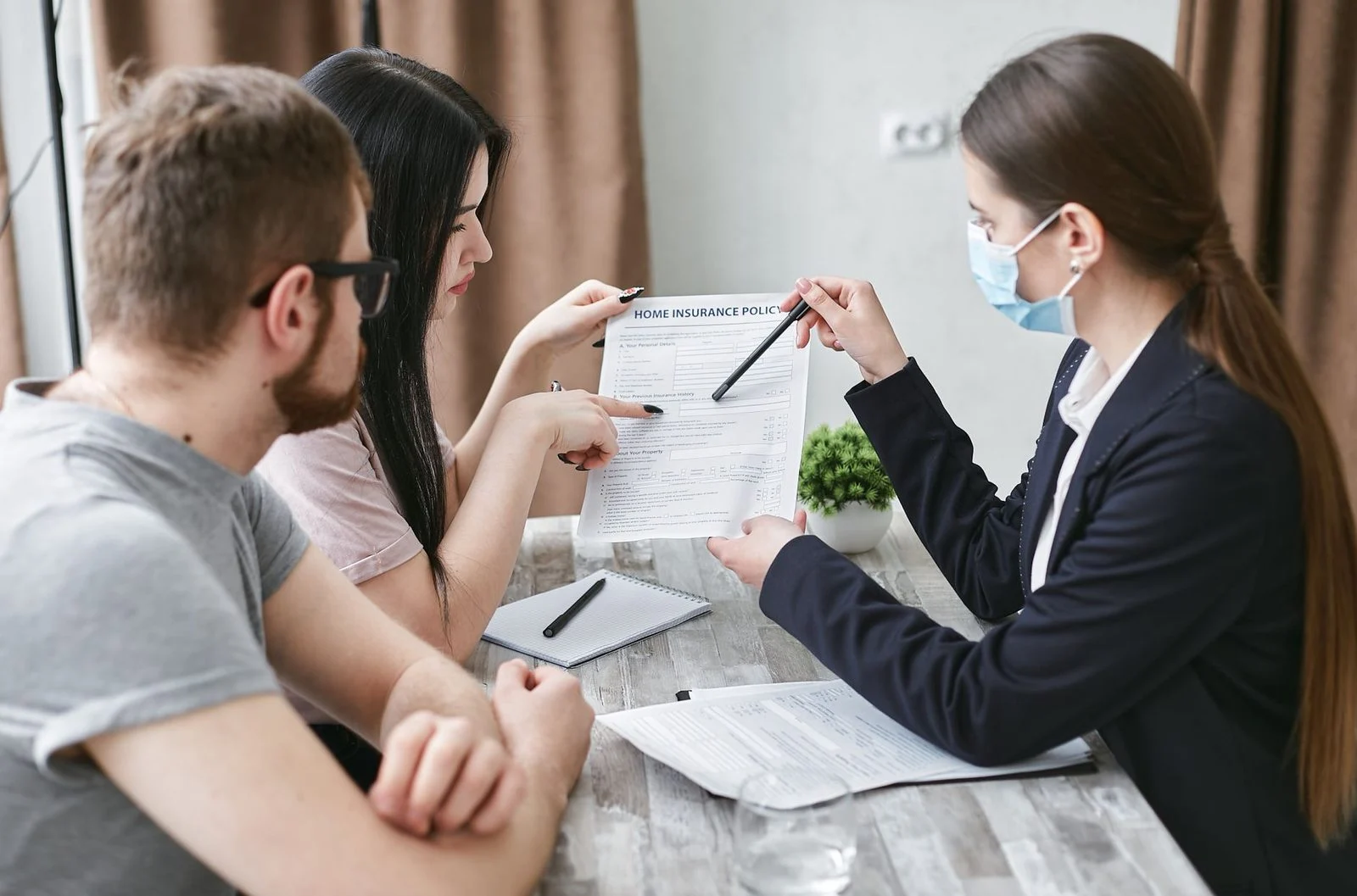
If you were hurt in a crash you did not choose, or you are helping a family member through an insurance claim, the questions can pile up fast. You may be unsure what to say to the adjuster, or who should speak for the injured person.
Colvin Accident Lawyers handles car, truck, motorcycle, bicycle, pedestrian, bus, dog bite, premises liability, catastrophic injury, and wrongful death cases. If you want to talk through the facts of your accident, you don’t have to sort out fault alone. Contact Colvin Accident Lawyers to start that conversation.
The first consultation is free, confidential, and comes with no obligation to continue. La consulta inicial es gratuita, confidencial y sin compromiso de continuar.
Colvin Accident Lawyers, Bakersfield, California — responsible for this site. Responsible lawyer: Donald Norman Colvin.
Why people talk with Colvin Accident Lawyers
Focused on injury claims
Our practice centers on car, truck, motorcycle, bicycle, pedestrian, bus, dog bite, premises liability, catastrophic injury and wrongful death cases.
Organized case review
We gather the records, reports and documentation that insurers rely on so your side of the story is clearly presented.
Clear explanations
We explain each step of the claim process in plain language, so you know what to expect before you decide what to do next.
Based in Bakersfield
We serve families across Kern County and nearby communities, including Fresno, Visalia, Lancaster, Palmdale, Delano and Tehachapi.
Before you speak with an insurer
Think before giving a recorded statement, signing a release or accepting an early offer. Our first consultation is free, confidential, and carries no obligation to continue.
Information insurers commonly review
Police and incident reports
Official reports often describe the scene, the parties and the events as they were first recorded.
Photos and video
Images of vehicles, roadway conditions, signage and injuries can help show what happened.
Witness accounts
Statements from people who saw the collision can add detail that paperwork alone may not capture.
Medical records and bills
Treatment records connect your injuries to the incident and document the care you have needed.