
Negligence Basics | Bakersfield, CA
The Four Proofs of Negligence in California, Explained
A plain-language guide to what an injured person generally needs to show after a crash, fall, or bite.
By Donald Norman Colvin · Published November 17, 2026
When someone you care about is hurt in a crash, a fall, or a dog attack, the first question is often who is responsible, and four proofs of negligence answer it.
It is general information, not legal advice about your situation.
What is required to prove negligence?
Negligence is the failure to use reasonable care to prevent harm to yourself or others. Under California’s civil jury instructions, a person can be negligent by acting or by failing to act, meaning doing something that a reasonably careful person would not do in the same situation or failing to do something that a reasonably careful person would do in the same situation. A person can be negligent by acting or by failing to act. A person is negligent if that person does something that a reasonably careful person would not do in the same situation or fails to do something that a reasonably careful person would do in the same situation.
To prove negligence, the essential factual elements in California’s jury instructions require showing that the defendant was negligent, that the plaintiff was harmed, and that the defendant’s negligence was a substantial factor in causing the plaintiff’s harm. “That [name of defendant]’s negligence was a substantial factor in causing [name of plaintiff]’s harm.” Duty rests on the general rule in Civil Code § 1714, which makes a person responsible for injury caused by a lack of ordinary care.
The injured person has to prove each part.
If you are helping someone hurt in a crash, a fall, or a dog attack, Colvin Accident Lawyers can talk through the facts with you, and you don't have to sort out these proofs alone. Talk it through with our team — the first consultation is free, confidential, and carries no obligation.
Element one: Duty of care
A duty of care is the obligation to act the way a reasonably careful person would in the same situation. Property owners owe it to people on their land. According to the jury instruction on a property owner’s duty of care, a person who owns, leases, occupies, or controls property must use reasonable care to discover any unsafe conditions and to repair, replace, or give adequate warning of anything that could be reasonably expected to harm others. A person who [owns/leases/occupies/controls] property must use reasonable care to discover any unsafe conditions and to repair, replace, or give adequate warning of anything that could be reasonably expected to harm others.
Evidence of duty is often straightforward. A traffic law shows what careful driving requires. A lease, deed, or property management contract shows who controlled the premises. A person’s role at the time, such as driver, store operator, or dog owner, shows who owed the duty. For dog bites, the claim also depends on where the bite happened. California’s dog bite jury instruction lists these elements: the defendant owned a dog; the dog bit the plaintiff while the plaintiff was in a public place or lawfully on private property; the plaintiff was harmed; and the defendant’s dog was a substantial factor in causing the plaintiff’s harm. That [name of plaintiff] was harmed; and that [name of defendant]’s dog was a substantial factor in causing [name of plaintiff]’s harm.
Element two: Breach of duty
A breach happens when someone’s conduct falls below the care a reasonably careful person would use. Courts compare what the defendant did with what a careful person would have done under the same conditions. Common breaches include speeding, failing to yield, and ignoring a hazard the owner knew about.
Speed has a clear rule. Vehicle Code § 22350 says no one may drive upon a highway faster than is reasonable or prudent for the weather, visibility, traffic, and road, and in no event at a speed which endangers the safety of persons or property. For pedestrians, Vehicle Code § 21950 requires drivers to yield to people crossing in a marked crosswalk or an unmarked crosswalk at an intersection. That same section says a pedestrian may not suddenly leave a curb or other place of safety and walk or run into the path of a vehicle that is so close as to constitute an immediate hazard.
A violation of a safety law can carry extra weight. Under Evidence Code § 669, failure to exercise due care is presumed when a person violates a statute, ordinance, or regulation of a public entity, the violation proximately causes death or injury, the harm is the kind the law was designed to prevent, and the injured person was one of the class of persons the law was meant to protect. The other side can rebut that presumption by showing the person did what a prudent person would do while trying to follow the law.
Evidence of breach includes police reports, scene photos, witness statements, vehicle or surveillance footage, and maintenance or inspection records. These records often show what happened before the harm.
Element three: Causation
Causation asks whether the breach actually produced the harm. Under California’s pattern instruction, the negligence must be a substantial factor in causing the injury. It is not enough that carelessness and an injury both happened.
Here is a simple chain. A store leaves a wet floor unmarked, a shopper slips, tears a knee ligament, and misses weeks of work. The unmarked floor is the breach. The torn ligament and lost pay are the harm that followed from it.
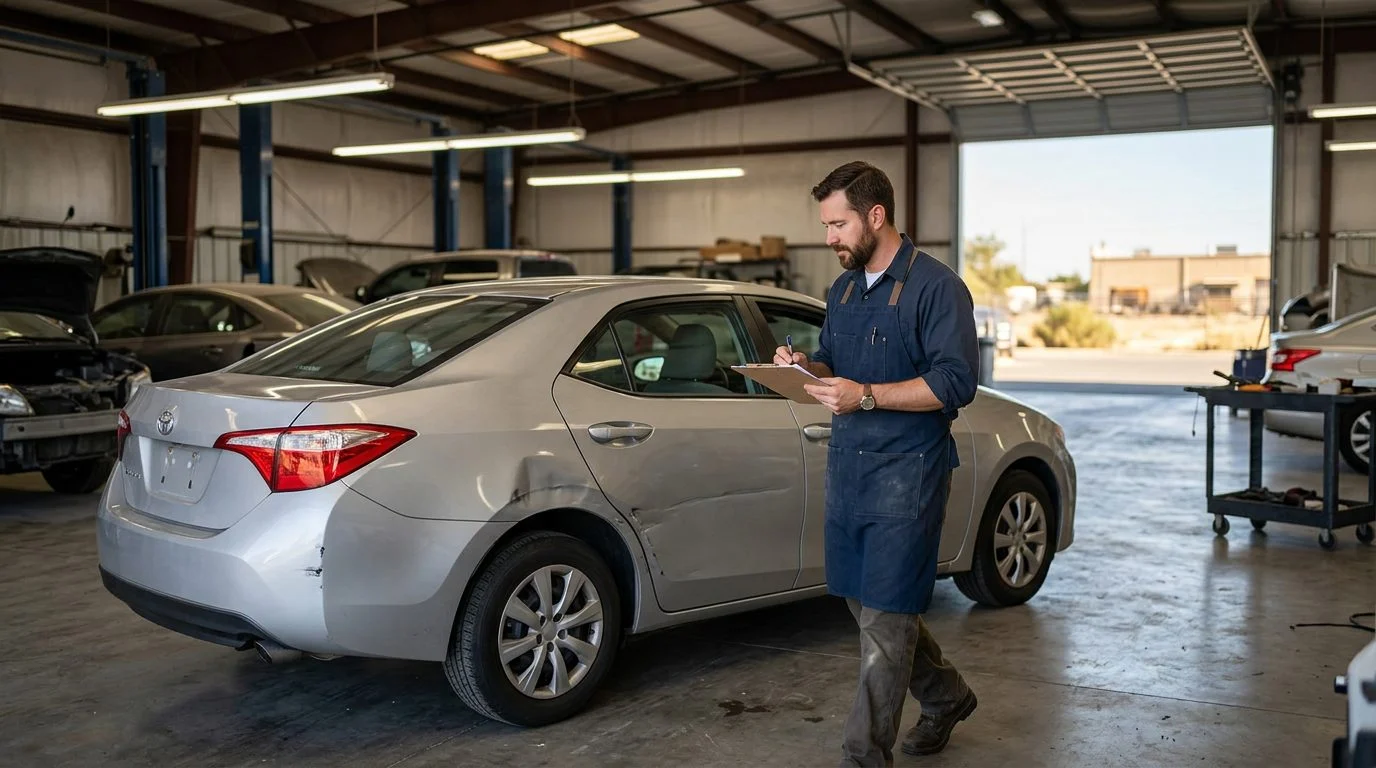
Causation takes proof. Medical records show what the injury was and when treatment began. Treating providers can explain how the injury likely happened. Accident reconstruction can show vehicle speeds and positions, and photos of the impact point help too. The other side often asks whether an injury was already there before the event, so early medical records matter.
Element four: Damages
Damages are the actual losses the injured person suffered because of the negligence. California measures them, for breach of an obligation not arising from contract, as the amount that compensates for all the detriment proximately caused by the breach, whether or not it could have been anticipated, except where otherwise expressly provided by this Code, meaning the harm the breach proximately caused (Civil Code § 3333).
Civil Code § 1431.2 splits losses into two groups. Economic damages are objectively verifiable money losses, such as medical expenses, lost earnings, and the cost to repair or replace property. Non-economic damages are subjective losses, such as pain, suffering, emotional distress, and loss of companionship.
In personal injury, property damage, or wrongful death actions based on comparative fault, the same statute limits what each defendant pays for non-economic damages. When more than one defendant is at fault, each pays only its own percentage of those damages.
Proof comes from paper and records. Bills, receipts, pay stubs, and employer letters show economic losses. Medical notes, a daily journal, and testimony from family can show pain and emotional harm.
How the four elements work together in a wrongful death or injury claim
Take a pedestrian struck in a marked crosswalk by a driver going too fast to stop. The driver had to yield under Vehicle Code § 21950. Driving too fast may breach Vehicle Code § 22350. The speed can explain why the driver could not stop, and the bills and lost income are the damages.
In a death claim, Code of Civil Procedure § 377.60 lists who may bring the claim. That includes a surviving spouse, domestic partner, children, and certain dependents, or the decedent’s personal representative on their behalf. Under Code of Civil Procedure § 377.61, damages may be awarded as may be just under all the circumstances, but may not include damages recoverable under Section 377.34, and the court decides how the award is shared among the persons entitled to bring the claim.
Comparative fault can reduce recovery. Under the comparative fault jury instruction on the plaintiff’s conduct in the Judicial Council of California Civil Jury Instructions (2026 ed.), if [name of defendant] proves the above, the damages awarded to [name of plaintiff] are reduced by the percentage of [name of plaintiff]’s responsibility that the jury determines.
Can I still recover if I was partly at fault?
Yes, under California’s comparative fault rule. Your damages are reduced by your share of responsibility rather than barred.
How long do I have to file a personal injury lawsuit?
Under Code of Civil Procedure § 335.1, an action for assault, battery, or injury to, or for the death of, an individual caused by the wrongful act or neglect of another must be brought within two years. Acting early keeps your options open.
Not sure what your next step is?
Talk it through with our team — the first consultation is free, confidential, and carries no obligation.
Talking with Colvin Accident Lawyers about your situation
If you’re gathering facts for a family member or friend, you may be doing it while medical appointments and insurance calls are still piling up. You don’t have to sort out these proofs alone.
Colvin Accident Lawyers is based in Bakersfield, California. The firm handles car, truck, motorcycle, bicycle, pedestrian, bus, dog bite, premises liability, catastrophic injury, and wrongful death cases.
The first consultation is free, confidential, and carries no obligation to continue.
If your family is facing this now, reach out through our contact page to talk through the facts in your own words.
Colvin Accident Lawyers, Bakersfield, California — responsible for this site (Donald Norman Colvin).
The four elements at a glance
Duty of care
The at-fault party owed the injured person a legal obligation to act with reasonable care under the circumstances.
Breach of duty
The at-fault party's conduct fell below that standard of reasonable care.
Causation
The breach was a cause of the harm, both in fact and in the legal sense.
Damages
The injured person suffered real losses, such as medical bills, lost income, or pain and suffering.
Keep your records
Photos, police reports, medical records, and names of witnesses can help document each of the four elements. Gather what you can and share it with a lawyer early.
Negligence claims we handle
Car and truck accidents
Collisions caused by careless or distracted driving, including large commercial trucks and buses.
Motorcycle and bicycle accidents
Crashes where riders were struck by drivers who failed to watch for them or share the road safely.
Pedestrian accidents
Injuries suffered while walking in a crosswalk, a parking lot, or along a roadway.
Dog bites and premises liability
Injuries from a dog bite or from unsafe conditions on property that the owner or manager failed to address.
Catastrophic injury and wrongful death
Serious, long-term injuries and deaths that families believe were caused by someone else's negligence.