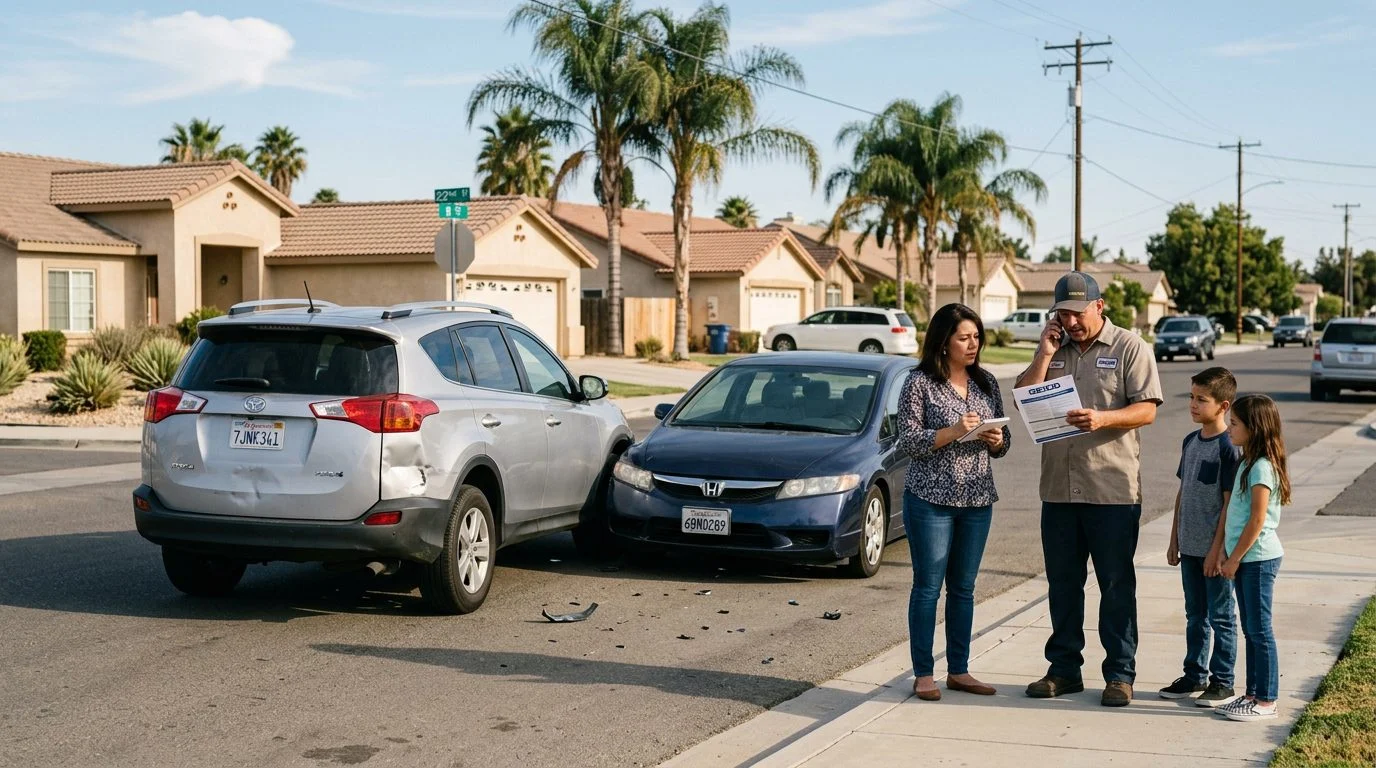
Bakersfield, CA · Accident Claims Guide
Have a Claims Number but Not Sure What It Means?
Plain-language answers for families after a crash, from a Bakersfield firm that handles car, truck, motorcycle, bicycle, pedestrian and other accident cases.
By Donald Norman Colvin · Published November 21, 2026
A letter from an insurance company may list a claims number and little else. If you are handling a crash or a death in your family, you may not know what that number is for.
A claims number is the reference an insurer gives a claim when it opens a file. It links every letter, call and note to one file. It does not mean the insurer has accepted fault or agreed to pay.
What is a claims number?
A claims number is the identifier an insurer assigns when a claim is opened. Every letter, call and file note can be matched to that one file. Think of it as the file’s name. When you call or write, the number tells the insurer which file you mean, which helps prevent mix-ups.
The number confirms that a file exists. It does not confirm fault. An insurer that assigns a claims number has not, by that step alone, agreed to pay anything. Fault and payment are decided later, based on the facts.
One crash can produce more than one number. Damage to a vehicle and injury to a person are often handled as separate claims. You may see two claims numbers from the same event. Keep each number with the insurer and the type of claim it belongs to.
Not sure what your next step is?
Talk it through with our team — the first consultation is free, confidential, and carries no obligation.

Where the claims number appears and how it differs from other numbers
You’ll usually find the claims number on adjuster letters, emails, estimates and payment papers. Many insurers also show it in an online claim portal or read it to you on the phone.
Three numbers get mixed up. Keep them apart:
- Claims number: the insurer’s number for its file on the claim.
- Policy number: the number for the insurance contract the driver or vehicle owner bought.
- Police report number: the number for the law enforcement record of the crash.
A driver of a vehicle other than a common carrier vehicle, in a crash that causes injury or death, must make a written report within 24 hours. Under Cal. Veh. Code § 20008, that report goes to the California Highway Patrol or, inside a city, to the CHP or the city’s police department. The police report number comes from that record, not from the insurer.
If you don’t have the claims number, call the insurer and ask it to confirm the number. Give the date of the crash, the names of the people involved and the vehicle details.
Why adjusters ask for the claims number
Adjusters ask for the claims number so they can pull the right file and attach documents to it. Quoting the number in every message keeps your papers matched to the right claim.
Keep a copy of everything you send. Write down the date and the name of each person you speak with. A short call log, tied to the claims number, makes it easier to see what was said and when.
Recorded statements are a common request. You can ask what the statement is for. You can ask for the request in writing, and you can ask your questions before you answer.
California’s Insurance Code § 790.03 lists directly advising a claimant not to get an attorney as an unfair claims settlement practice when it is knowingly committed or performed with such frequency as to indicate a general business practice. If an adjuster tells you that you don’t need a lawyer, write that down with the date and the claims number.
The claims number in a wrongful death or fatal crash
In a fatal crash caused by another driver, the family’s claim is usually made against that driver’s liability insurance. The insurer that handles it typically assigns a claims number to that claim.
Not everyone can bring the claim. Under Cal. Code Civ. Proc. § 377.60, a surviving spouse, domestic partner, children and certain others may assert it. Parents may qualify if there is no surviving issue of the decedent and they would be entitled to the property of the decedent by intestate succession, or if they depended on the person who died.
Some damages limits apply only to a survival claim, which a personal representative or successor in interest brings on the decedent’s own behalf, not to the heirs’ separate wrongful death claim. Under Cal. Code Civ. Proc. § 377.34, when a decedent’s personal representative or successor in interest pursues the decedent’s own cause of action, recoverable damages are limited to the loss or damage the decedent sustained or incurred before death, including any penalties or punitive or exemplary damages that the decedent would have been entitled to recover had the decedent lived, and they do not include damages for pain, suffering, or disfigurement. Subdivision (b) of § 377.34 permits a survival action to recover damages for pain, suffering, or disfigurement only if the action was granted a preference under Code of Civil Procedure Section 36 before January 1, 2022, or was filed on or after January 1, 2022, and before January 1, 2026, so that filing window is now closed to new filings.
A fatal crash can involve more than one driver or vehicle owner. More than one insurer may be involved. Each insurer may open its own file and assign its own claims number. List each number beside the insurer’s name.
Common questions after receiving a claim number
A claims number does not decide who was at fault or how a claim is paid. Those questions are worked out from the facts, and they can take time.
Can I still make a claim if the other driver was at fault?
In many cases, the claim is made against the at-fault party’s insurer, subject to the limitations period, comparative fault, and claim-presentation rules described elsewhere on this page. The claims number is the reference for that claim.
How long do I have to file?
Under Cal. Code Civ. Proc. § 335.1, an action for injury to, or the death of, an individual caused by another’s wrongful act or neglect must be filed within two years, but other deadlines can apply, such as shorter claim-presentation requirements for public entities. Write that date down as soon as you know it.
Does Medicare need to know about the claim?
CMS explains how to report a case in its reporting guidance. Medicare may have paid bills tied to the crash.
Talk with Colvin Accident Lawyers about a claim in your family
Colvin Accident Lawyers is based in Bakersfield, California. Accident victims and families from Kern County, Fresno, Visalia, Lancaster, Palmdale, Delano and Tehachapi may contact the firm, which is based in Bakersfield, California. Its practice covers car, truck, motorcycle, bicycle, pedestrian, bus, dog bite, premises liability, catastrophic injury and wrongful death matters.
The initial consultation is free, confidential, and without commitment to continue. La consulta inicial es gratuita, confidencial y sin compromiso de continuar.
If a claims number is on a letter you can’t stop reading, contact Colvin Accident Lawyers to talk through the claim and the choices in front of your family.
Colvin Accident Lawyers, [street address], Bakersfield, California — responsible for this site. Responsible attorney: Donald Norman Colvin.
How Colvin Accident Lawyers Can Help Your Family
Start With a Call
Tell us what happened and who was involved. We will listen and explain your options in plain terms.
Organized Claim Information
Our team can help you gather and keep track of claim numbers, reports, and insurance correspondence.
Focused Accident Practice
We focus on car, truck, motorcycle, bicycle, pedestrian, bus, dog bite, premises liability, catastrophic injury and wrongful death cases.
Care for Families
We understand that a crash affects the whole household. We aim to keep you informed at every step.
Before You Speak With an Insurance Adjuster
Adjusters work for the insurance company, not for you. Before giving a recorded statement or signing any document, talk with a lawyer about what to say and what to hold back.
Your Next Steps
Write Down the Number
Keep the claim number exactly as it appears in every letter, email, and voicemail from the insurer.
Save Your Records
Collect the police report number, photos, medical bills, and any notes about calls you have received.
Limit Direct Contact
Route insurer calls through your lawyer when possible, and avoid discussing fault or injuries until you have advice.
Ask Questions Early
A free, confidential consultation is a good time to ask what the claim number means for your specific situation.