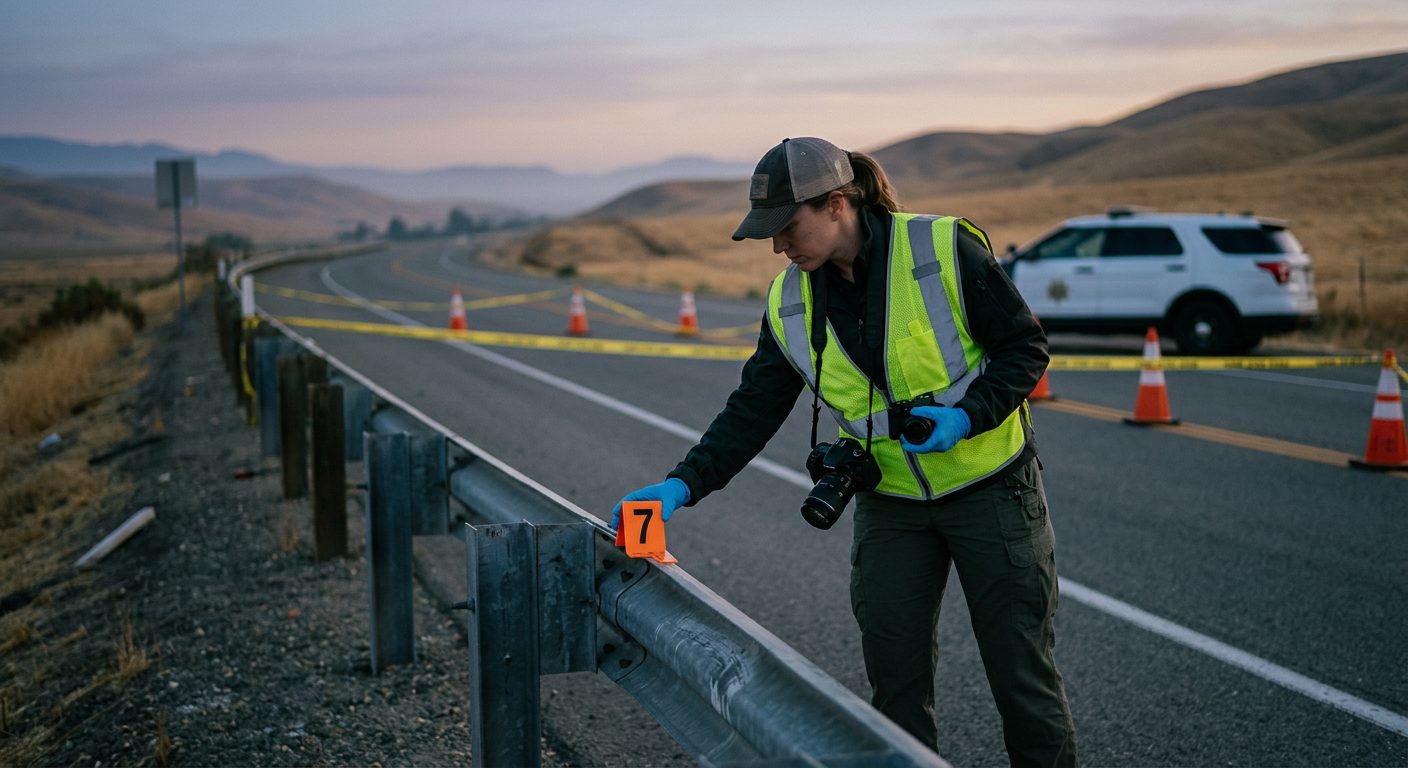
Wrongful Death | Bakersfield & Kern County
Bakersfield Wrongful Death Attorney for Families Who Have Lost a Loved One
Colvin Accident Lawyers helps Kern County families understand how a wrongful death claim works, from who can file to what a first conversation involves. Your first consultation is free, confidential, and carries no obligation to continue.
By Donald Norman Colvin · Published October 14, 2026
If you need a wrongful death attorney Bakersfield families can reach, the first step is understanding how these cases work. Wrongful death cases are one of the case types handled by Colvin Accident Lawyers. It asks the at-fault party to pay for the losses the death caused.
This page is a plain-language guide for families in Bakersfield and across Kern County. It covers who can file, what the law looks at, the deadlines that matter, and what a first conversation involves.
Colvin Accident Lawyers is a personal injury practice based in Bakersfield. Donald Norman Colvin is the lawyer, and our team supports him with the office work. No guide can predict how a specific case will end, and no one can assure a result. The facts of each case decide the outcome.
Who Can File a Wrongful Death Claim in California
Who that person is depends on the facts of the family and the estate.
A separate question is whether the person could have brought a claim while alive. That claim can be handled differently from the family’s own losses.
Mixing these two questions up can cause missed steps. Families should raise both questions early. A lawyer can help sort out the right parties for a specific family.
If your family member died in a Kern County crash and an insurer is asking for decisions, you don't have to face that alone, so reach out or call our office for a free, confidential first consultation. Talk it through with our team — the first consultation is free, confidential, and carries no obligation.
What Counts as Wrongful Death Under California Law
A wrongful death claim arises when another person’s careless or wrongful act causes a death. The claim asks whether that act was the reason the person died.
California law starts with a broad duty. Under Civ. Code § 1714, everyone is responsible for an injury caused by a lack of ordinary care in managing their property or person.
Lawyers often break the claim into four parts:
- A duty of care owed to the person who died.
- A breach, meaning the conduct fell short of that care.
- Causation, meaning the breach was a real cause of the death.
- The death itself, and the losses it caused the family.
Some deaths involve intentional acts. Others come from ordinary negligence, such as a distracted driver. Still others come from dangerous conditions on property, such as an unsafe stairway.
A death does not automatically create a claim. The facts of each case decide whether a claim exists and who may be responsible.
Fatal Crash Types Handled in Kern County
Fatal crashes in Kern County include car, truck, motorcycle, bicycle, pedestrian, and bus collisions. They also include deaths tied to unsafe property and serious injuries that later prove fatal.
Highway 99 and Highway 58 run through the area, and fatal crashes happen on those highways and on local Bakersfield streets. Each crash type raises its own questions.
Fatal car crashes are covered on our car accident lawyer page. Truck crashes often involve more than one company, including the driver and the carrier. Those details are on our truck accident lawyer page.
Riders and walkers have less protection in a crash. Visibility and right of way often matter. Those cases are covered on our motorcycle accident lawyer, bicycle accident lawyer, and pedestrian accident lawyer pages.
Bus crashes, including some public transit cases, have their own rules. Those are covered on our bus accident lawyer page. Deaths caused by unsafe property are covered on our premises liability lawyer page.
A serious injury that later causes death is covered on our catastrophic injury lawyer page. Fatal dog attacks are covered on our dog bite lawyer page.
The First Days After a Fatal Accident in Bakersfield
The first days after a fatal crash matter because evidence can disappear quickly. Vehicles get towed and repaired. Witnesses move on. Phone data can be overwritten.
Start by getting the police report number. Ask the investigating agency for a copy of the traffic collision report when it is ready. Write down the officer’s name and the agency.
Take photos of the scene, the vehicles, and any road signs or hazards. Save names and phone numbers for witnesses. Keep the decedent’s phone, vehicle records, and medical records where possible.
Insurers often contact family members quickly. It is reasonable to pause before giving a recorded statement. Ask what the statement is for and what it will be used to decide.
Grief makes decisions harder. Having a steady person help with paperwork can make the next steps clearer. Keep receipts for funeral and burial costs, since those are part of the claim.
Proving Fault and Causation in a Fatal Case
Proving fault in a death case is hard because the person who could describe the crash cannot testify. That gap shapes the whole case, and evidence has to fill it.
Common evidence includes:
- Accident reconstruction, which uses skid marks, vehicle damage, and measurements to estimate speed and movement.
- Roadway and vehicle data, such as signal timing, road design, and event data recorders in vehicles.
- Surveillance and dashcam video from nearby businesses or drivers.
- Witness statements, collected as soon as possible.
- Medical records and the medical examiner’s findings.
A person’s own share of fault reduces what can be recovered, but it does not bar recovery. The Daly v. General Motors decision explains this rule.
That is one reason the facts about that person’s actions matter.
A criminal case is separate from a civil claim. The outcome of one does not decide the other, though both may rely on the same crash evidence.
Results depend on the facts of each case. Two crashes that look similar can turn out very differently once the evidence is in.
Filing Deadlines: Statute of Limitations and Claims Against Public Agencies
Filing deadlines are set by statute: a wrongful death lawsuit generally must be filed within two years (Code Civ (Code Civ (Code Civ. Proc. § 335.1). Proc. § 335.1). Proc. § 335.1), and a claim against a public agency generally must be presented within six months (Gov. Code § 911.2).
Talks with an insurer are not the same as filing a lawsuit. Keep the deadline in view while those talks continue.
This section is general information, not legal advice for any one case. Deadlines depend on the facts, the parties, and the type of claim.
Not sure what your next step is?
Talk it through with our team — the first consultation is free, confidential, and carries no obligation.
Who May Be Liable: Drivers, Employers, Owners, and Parents
Anyone whose careless conduct helped cause the death may be responsible. That can include drivers, employers, and property owners.
Under Civ. Code § 1714, a person who fails to use ordinary care can be responsible for resulting injuries. The facts decide whether that duty was breached.
When a commercial driver causes a crash, the company may also face claims, depending on the facts. Violations can matter in a truck case.
Whether federal law limits a particular claim depends on the facts of that claim.
Property owners and managers can be responsible when they fail to use ordinary care about dangerous conditions. Ordinary social hosts are generally protected. However, under Civ. Code § 1714, an adult who knowingly furnishes alcohol at home to someone he or she knows or should have known is under 21 may face a claim. That adult can be a parent.
More than one party can share responsibility. Under Civ. Code § 1431.2, each defendant’s share of non-economic damages is limited to that defendant’s own percentage of fault.
Damages Available in a California Wrongful Death Claim
Families who have lost a loved one can contact our office to talk through their situation. The law sorts those losses into economic and non-economic groups.
Under Civ. Code § 3281, a person who suffers harm from another’s unlawful act may recover compensation in money from the person at fault. That compensation is called damages.
Economic damages are objectively verifiable monetary losses. Under Civ. Code § 1431.2, these include medical expenses, loss of earnings, and burial costs. Records and bills usually prove them.
Non-economic damages are subjective losses. These include loss of love, companionship, comfort, care, and society. Proof comes from evidence about the family’s relationship and daily life.
Under Civ. Code § 3283, damages may also cover harm that results after a case begins, or harm certain to result in the future.
Punitive damages are a separate category. Heirs generally cannot recover punitive damages in a California wrongful death action. Punitive damages may be sought in the decedent’s survival claim where the defendant acted with oppression, fraud, or malice under Civ. Code § 3294. That must be proven by clear and convincing evidence.
No dollar figure can be assumed for any family. Damages depend on the evidence, the facts of the crash, and how each loss can be proven.
Insurance, Life Insurance, and How Settlements Are Paid Out
Several insurance sources may apply after a fatal crash. Each one has its own rules, so review them one at a time.
The at-fault driver’s liability policy is one source. A family’s own auto policy may include uninsured or underinsured coverage. That coverage is worth reviewing with the policy in hand.
A life insurance policy pays under its own contract. Its payment is a separate matter from a claim against the at-fault party. The two should be reviewed together, not assumed to be the same thing.
How settlement money is divided among family members should be planned early. The answer depends on who the survivors are and on the facts of the case. Court approval may be needed in some situations.
Questions about taxes on any payment should go to a tax professional. This page does not give tax advice.
Separately, the state’s Victim Compensation Board eligibility page describes a state program for crime victims and certain family members. That program is separate from a civil wrongful death lawsuit.
How long a settlement takes depends on the facts, the evidence, and the insurers involved.
What the Free First Consultation Covers
The first consultation is free, confidential, and carries no obligation to continue. It is a time to ask questions and learn how the process works.
It helps to bring what you have. Useful items include:
- The police or collision report number.
- The death certificate.
- Letters from insurers and any claim numbers.
- Photos of the scene and the vehicles.
- Hospital, medical, and funeral bills.
- Names and contact details for witnesses.
During the meeting, you can ask about deadlines, who may be responsible, and what the next steps look like. The lawyer will explain what the facts so far suggest, without promising an outcome.
Who can file a wrongful death claim in California?
Questions about who may bring a claim after a death depend on the facts of each case.
Is there a deadline to file a wrongful death claim?
Does a family need to know who was at fault before calling a lawyer?
No. Fault is often unclear at first, and the evidence gathered early helps answer that question.
Talk With Colvin Accident Lawyers About a Fatal Accident Claim
After a fatal crash, the next step is often deciding who may be responsible and which deadlines apply. Those choices carry real weight for a family.
If a family member died in a crash on Highway 99 or a Bakersfield street, and an insurer is asking for decisions, you do not have to face that alone. Reach out to Colvin Accident Lawyers by calling the office or contacting us online to talk about your situation.
Donald Norman Colvin, Colvin Accident Lawyers, Bakersfield, California — responsible for this site.
Why Families Contact Colvin Accident Lawyers
Compassion for grieving families
A wrongful death case begins with a loss. We take time to listen before discussing the legal steps ahead.
Plain-language explanations
We explain how these cases work, what the law looks at, and what information is useful, without legal jargon.
Rooted in Bakersfield
Colvin Accident Lawyers is based in Bakersfield and works with families throughout Kern County and nearby communities.
Free, confidential first consultation
Your initial consultation costs nothing, is kept confidential, and carries no obligation to continue.
Types of Cases We Handle
Wrongful death
Claims brought after a death caused by another party's negligent or wrongful conduct.
Car, truck, and bus accidents
Collisions involving passenger vehicles, commercial trucks, and buses, including crashes that cause serious injury or death.
Motorcycle, bicycle, and pedestrian accidents
Crashes involving riders, cyclists, and people on foot, who face greater risk of serious harm when struck.
Dog bites, premises liability, and catastrophic injury
Attacks on private property, unsafe conditions that cause harm, and injuries that change a person's life permanently.
What to Bring to Your First Consultation
Basic facts about the incident
The date, location, and a short account of what happened, including any police or incident report numbers you have.
Medical and death records
Hospital, emergency, or coroner documents, and any records that describe the cause of death.
Insurance and communication papers
Letters from insurers, claim numbers, and any messages from other parties involved.
Names of people who saw what happened
Witnesses can help piece together events, so note anyone who was present or who helped afterward.
Why Early Action Matters
Accident scenes change, records can be lost, and witness memories fade over time. Speaking with an attorney early gives you the chance to discuss what evidence may still be available and what steps can help protect it.